



 Call For Appointment
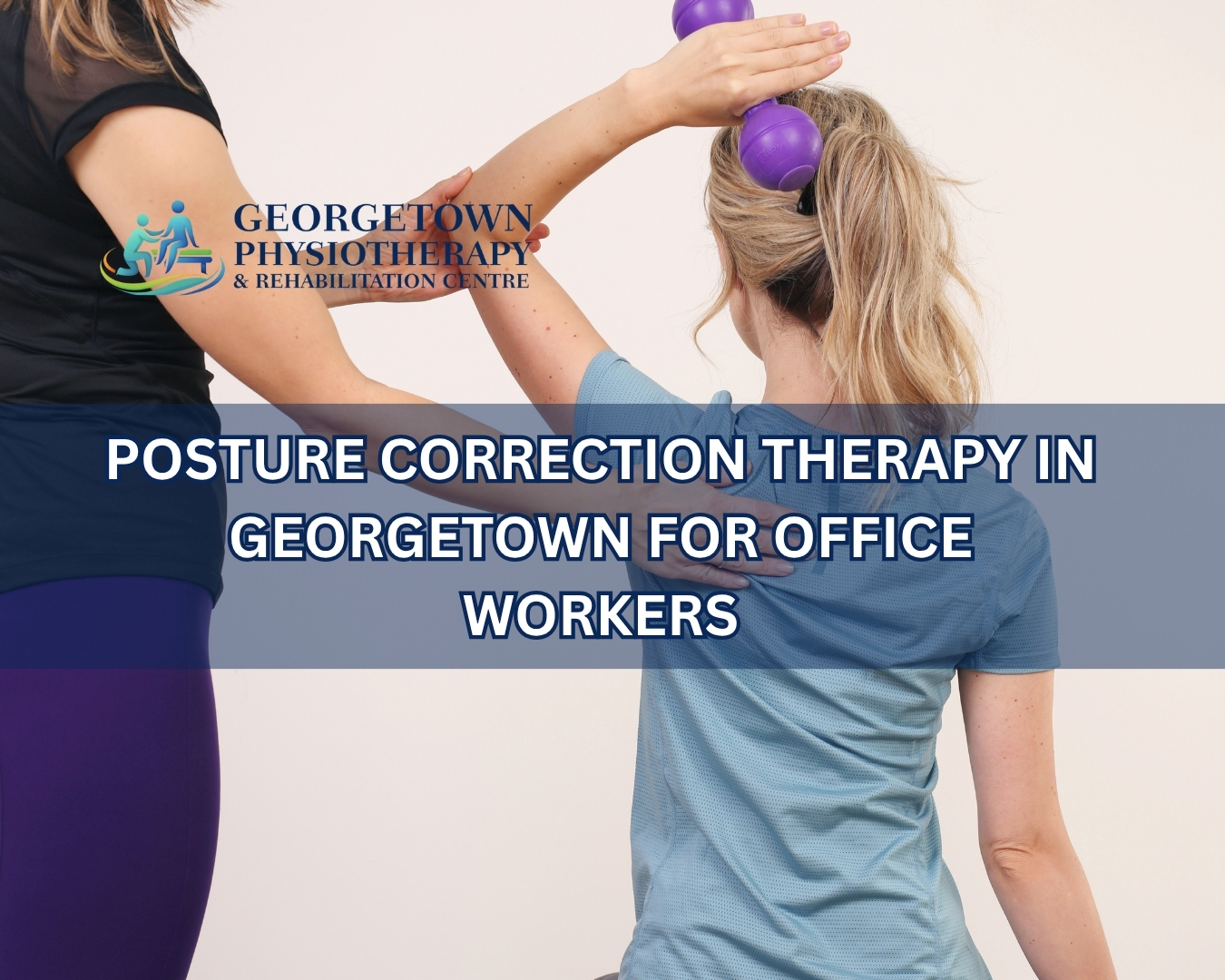
Posture Correction Therapy in Georgetown for Office Workers
Modern office work has changed how people spend their daily lives. Many office workers in Georgetown now spend long hours sitting at desks, using computers, attending virtual meetings, and working on laptops with minimal physical movement throughout the day. While technology has improved productivity, it has also increased posture-related problems such as neck pain, shoulder tension, lower back discomfort, headaches, and muscle stiffness.
Poor posture may seem harmless initially, but over time it can place excessive strain on muscles, joints, and the spine. Many office workers develop chronic pain and reduced mobility without realizing that their daily work habits are the underlying cause.
Posture correction therapy in Georgetown helps office workers improve spinal alignment, reduce pain, and prevent long-term musculoskeletal problems through physiotherapy, rehabilitation exercises, ergonomic guidance, and movement training.
At Georgetown Physiotherapy & Rehabilitation Centre, posture correction programs are designed to help patients improve movement, reduce discomfort, and support healthier workplace habits.
Why Office Workers Develop Poor Posture
Office workers often maintain the same sitting position for several hours each day. Over time, poor workstation setup and prolonged sitting can create muscle imbalances and spinal strain.
Common causes of poor posture include:
- Long hours sitting at a desk
- Looking down at laptops
- Improper monitor height
- Weak core muscles
- Lack of movement breaks
- Slouching while sitting
- Poor chair support
- Stress-related muscle tension
Research shows that prolonged poor posture may contribute to neck pain, shoulder tension, reduced mobility, and chronic back discomfort.
Common Posture Problems in Office Workers
Forward Head Posture
Forward head posture occurs when the head moves too far in front of the shoulders, commonly caused by looking down at screens.
This may lead to:
- Neck pain
- Headaches
- Shoulder tension
- Upper back stiffness
Rounded Shoulders
Slouching while sitting may cause the shoulders to round forward, creating muscle imbalance and upper back strain.
Lower Back Strain
Poor sitting posture may place excessive pressure on the lumbar spine and surrounding muscles.
Muscle Tightness and Weakness
Certain muscles become overworked while others weaken, affecting posture and movement patterns.
Signs You May Need Posture Correction Therapy
Many people ignore early posture-related symptoms until discomfort becomes chronic.
Common warning signs include:
- Neck stiffness after work
- Frequent headaches
- Shoulder tightness
- Upper or lower back pain
- Fatigue while sitting
- Reduced flexibility
- Poor sitting posture
- Tingling or numbness in the arms
Ignoring these symptoms may eventually lead to long-term spinal and mobility problems.
How Physiotherapy Helps Posture Correction
Physiotherapy is one of the most effective non-invasive approaches for improving posture and reducing workplace-related pain.
Physiotherapy programs focus on:
- Improving spinal alignment
- Strengthening weak muscles
- Improving flexibility
- Correcting movement patterns
- Reducing muscle tension
- Improving mobility
- Preventing recurring pain
Studies suggest that posture correction exercises combined with ergonomic education can significantly improve pain and physical function.
Benefits of Posture Correction Therapy
Reduced Neck and Back Pain
Correcting posture reduces unnecessary stress on the spine and surrounding muscles.
Improved Mobility
Stretching and strengthening exercises improve flexibility and movement quality.
Better Workplace Comfort
Improved posture may help office workers sit and work more comfortably for longer periods.
Reduced Muscle Tension
Posture correction helps relax overworked muscles and reduce stiffness.
Improved Energy and Confidence
Better posture often improves breathing, movement efficiency, and overall body mechanics.
Common Physiotherapy Treatments for Posture Correction
At Georgetown Physiotherapy & Rehabilitation Centre, posture correction programs may include:
- Manual therapy
- Stretching exercises
- Strengthening programs
- Core stabilization exercises
- Ergonomic guidance
- Postural retraining
- Mobility exercises
- Soft tissue therapy
Treatment plans are customized depending on the patient’s posture habits, pain level, and work environment.
Best Exercises for Office Worker Posture
Chin Tucks
Chin tucks help improve forward head posture and strengthen neck muscles.
Wall Slides
Wall slide exercises improve shoulder positioning and upper back mobility.
Shoulder Blade Squeezes
These exercises help strengthen upper back muscles and reduce rounded shoulders.
Core Strengthening Exercises
Strong core muscles help support the spine and improve sitting posture.
Chest Stretches
Stretching tight chest muscles may improve shoulder alignment and posture.
Physiotherapists often recommend personalized exercise routines based on posture assessment findings.
Ergonomic Tips for Office Workers
Proper workstation setup is extremely important for preventing posture-related pain.
Adjust Monitor Height
The monitor should be positioned at eye level to avoid forward head posture.
Use a Supportive Chair
A chair with proper lumbar support helps maintain spinal alignment.
Keep Feet Flat on the Floor
Proper sitting position reduces lower back stress.
Avoid Prolonged Sitting
Taking short movement breaks every 30–60 minutes helps reduce stiffness.
Maintain Neutral Wrist and Elbow Position
Proper arm positioning reduces strain on the shoulders and neck.
Ergonomic adjustments combined with physiotherapy may significantly reduce workplace discomfort.
Massage Therapy for Office Workers
Massage therapy helps relieve muscle tension caused by prolonged sitting and stress.
Benefits may include:
- Reduced neck stiffness
- Relaxed shoulder muscles
- Improved circulation
- Better flexibility
- Stress reduction
Massage therapy is often combined with posture correction physiotherapy for improved results.
Chiropractic Care for Spinal Alignment
- Improve spinal alignment
- Reduce joint stiffness
- Improve neck mobility
- Relieve back pain
- Improve posture awareness
Many Georgetown office workers combine chiropractic care with physiotherapy and rehabilitation exercises.
Local rehabilitation and chiropractic providers in Georgetown include:
- Eramosa Physiotherapy Associates Georgetown
- CBI Health – Georgetown
- Chiropractic & Sports Injuries Centre of Georgetown
- Life Chiropractic Centre
- True Health Physiotherapy & Wellness
Laser Therapy for Chronic Muscle Tension
- Reduce inflammation
- Improve circulation
- Support tissue healing
- Reduce chronic pain symptoms
Integrated rehabilitation approaches often provide better long-term outcomes.
How Often Should Office Workers Move?
Movement is essential for spinal health. Experts generally recommend standing, stretching, or walking briefly every 30–60 minutes during desk work.
Simple movement habits may help:
- Improve circulation
- Reduce stiffness
- Improve posture awareness
- Reduce muscle fatigue
Even small posture improvements throughout the day can significantly reduce long-term strain.
When to Seek Professional Help
Office workers should seek professional rehabilitation support if they experience:
- Persistent neck or back pain
- Frequent headaches
- Reduced mobility
- Poor posture habits
- Shoulder stiffness
- Tingling or numbness
- Pain affecting work performance
Early treatment often prevents posture-related discomfort from developing into chronic pain conditions.
Why Georgetown Residents Choose Georgetown Physiotherapy & Rehabilitation Centre
Many Georgetown office workers choose Georgetown Physiotherapy & Rehabilitation Centre for personalized rehabilitation and posture correction care.
Services include:
- Physiotherapy
- Posture Correction Therapy
- Massage Therapy
- Chiropractic Care
- Laser Therapy
- Workplace Rehabilitation
Treatment plans are designed to improve spinal health, mobility, and long-term physical comfort.
Final Thoughts
Poor posture is one of the leading causes of neck pain, back pain, and muscle tension among office workers today. Long hours sitting at desks without proper ergonomics can gradually affect spinal alignment and overall mobility.
With proper physiotherapy, ergonomic adjustments, stretching exercises, and rehabilitation support, Georgetown office workers can improve posture, reduce discomfort, and support long-term spinal health naturally.
Contact Information
Georgetown Physiotherapy & Rehabilitation Centre
333 Mountainview Rd S, Unit #2, Georgetown, ON L7G 5S5, Canada
Phone: +1 905 702 6633
Email: info@georgetownphysiotherapy.ca
Website: