


 Call For Appointment
Laser Therapy in Georgetown: How It Helps Reduce Chronic Pain
Chronic pain affects millions of people and can have a significant impact on everyday life. Whether caused by arthritis, sports injuries, back problems, repetitive strain, nerve irritation, or old injuries that never fully healed, ongoing pain can make even simple activities feel challenging.
Many Georgetown residents struggling with chronic pain want treatment options that go beyond medication. While painkillers may temporarily reduce symptoms, they often do not address the underlying causes of discomfort. As a result, more people are exploring non-invasive therapies that support healing and improve long-term function.
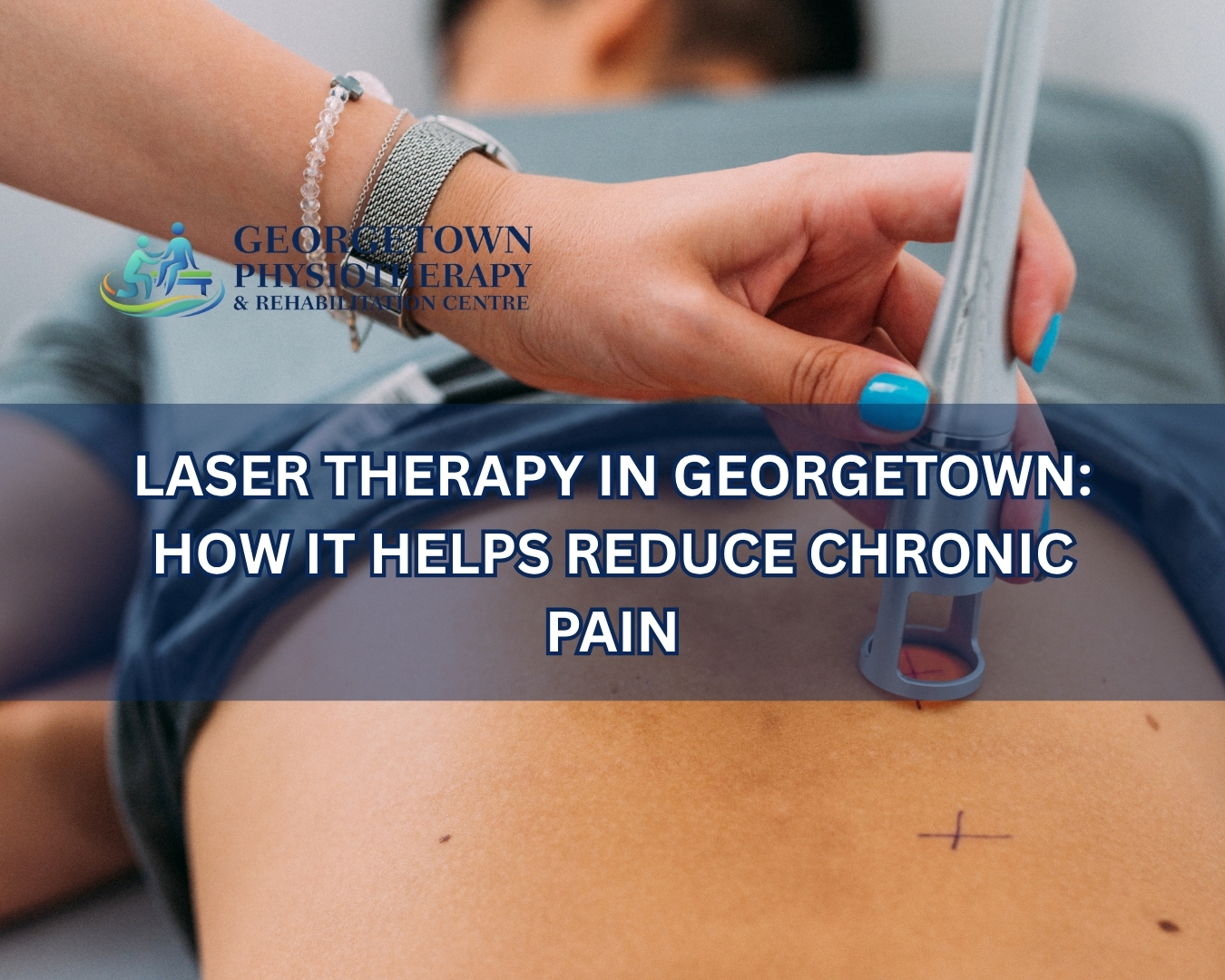
One treatment gaining popularity in modern rehabilitation is laser therapy. This advanced, non-surgical treatment is commonly used to help reduce pain, decrease inflammation, and promote tissue healing.
At Georgetown Physiotherapy & Rehabilitation Centre, laser therapy is often incorporated into personalized rehabilitation programs alongside physiotherapy, chiropractic care, and massage therapy to support recovery and long-term pain management.
What Is Laser Therapy?
Laser therapy, often referred to as Low-Level Laser Therapy (LLLT) or Cold Laser Therapy, uses specific wavelengths of light to stimulate healing within injured or painful tissues.
Unlike surgical lasers, rehabilitation laser therapy does not cut or damage tissue. Instead, it delivers light energy into muscles, tendons, ligaments, joints, and other soft tissues.
This light energy is absorbed by cells and may help stimulate natural healing processes within the body.
Laser therapy is commonly used for:
- Chronic pain
- Arthritis
- Sports injuries
- Tendon injuries
- Joint inflammation
- Muscle strains
- Neck pain
- Back pain
How Laser Therapy Works
Laser therapy works by delivering concentrated light energy into affected tissues.
The treatment may help:
- Increase cellular activity
- Improve circulation
- Reduce inflammation
- Support tissue repair
- Decrease pain sensitivity
As cells absorb the light energy, they may become more efficient at repairing damaged tissues and reducing inflammation.
This process is often referred to as photobiomodulation, a natural biological response to therapeutic light.
Understanding Chronic Pain
Chronic pain is generally defined as pain that persists for three months or longer.
Unlike acute pain, which usually occurs after an injury and improves as tissues heal, chronic pain may continue even after the original injury has recovered.
Common chronic pain conditions include:
- Lower back pain
- Neck pain
- Arthritis
- Sciatica
- Tendon injuries
- Joint pain
- Shoulder pain
- Sports injuries
Chronic pain often involves inflammation, tissue irritation, nerve sensitivity, and restricted movement.
How Laser Therapy Helps Reduce Chronic Pain
Reducing Inflammation
Inflammation is a major contributor to chronic pain.
When tissues remain inflamed for long periods, pain and stiffness often persist.
Laser therapy may help reduce inflammatory responses within affected tissues, potentially improving comfort and mobility.
This is one reason laser therapy is commonly used for arthritis and chronic joint conditions.
Improving Circulation
Healthy blood flow is essential for healing.
Laser therapy may help increase circulation to affected areas, allowing oxygen and nutrients to reach damaged tissues more efficiently.
Improved circulation may support recovery and help reduce discomfort.
Supporting Tissue Healing
Many chronic pain conditions involve damaged or irritated soft tissues.
Laser therapy may help support healing in:
- Muscles
- Tendons
- Ligaments
- Connective tissues
Stimulating cellular activity can encourage tissue repair and recovery.
Reducing Pain Signals
Laser therapy may influence how pain signals are processed within the nervous system.
By reducing nerve sensitivity and inflammation, patients often experience decreased discomfort following treatment.
Many individuals report improved comfort and function after a series of laser therapy sessions.
Conditions Commonly Treated with Laser Therapy
Lower Back Pain
Back pain is one of the most common reasons patients seek laser therapy.
Treatment may help reduce:
- Muscle tension
- Joint inflammation
- Chronic discomfort
- Mobility restrictions
Laser therapy is often combined with physiotherapy exercises for optimal results.
Neck Pain
Many office workers and remote employees experience chronic neck pain due to prolonged sitting and poor posture.
Laser therapy may help:
- Reduce stiffness
- Improve mobility
- Decrease inflammation
- Support recovery
Arthritis
Arthritis causes inflammation and stiffness within joints.
Laser therapy may help improve comfort and mobility for individuals experiencing:
- Knee arthritis
- Hip arthritis
- Shoulder arthritis
- Spinal arthritis
Many patients use laser therapy as part of a comprehensive arthritis management plan.
Sports Injuries
Athletes frequently experience:
- Muscle strains
- Ligament injuries
- Tendon irritation
- Joint pain
Laser therapy may support tissue healing and help athletes recover more efficiently.
Tendon Injuries
Conditions such as:
- Tennis elbow
- Golfer’s elbow
- Achilles tendon irritation
- Rotator cuff problems
may respond well when laser therapy is incorporated into rehabilitation programs.
Benefits of Laser Therapy
Non-Invasive Treatment
Laser therapy does not involve surgery, injections, or lengthy recovery periods.
Patients can usually resume normal activities immediately after treatment.
Drug-Free Pain Management
Many individuals seek laser therapy as part of a strategy to reduce reliance on pain medication.
Comfortable Treatment Experience
Most patients feel little to no discomfort during treatment.
Sessions are typically quick and well tolerated.
Supports Rehabilitation
Laser therapy works particularly well when combined with other rehabilitation approaches.
It helps create an environment that may support healing while patients work on improving strength and mobility.
Laser Therapy and Physiotherapy
Physiotherapy focuses on:
- Strengthening muscles
- Improving movement
- Correcting posture
- Restoring function
Laser therapy helps support tissue healing and pain management.
Together, they provide a comprehensive rehabilitation approach that addresses both symptoms and underlying movement dysfunction.
Laser Therapy and Chiropractic Care
Chiropractic care focuses on:
- Joint mobility
- Spinal function
- Posture improvement
Laser therapy may complement chiropractic treatment by reducing inflammation and improving tissue recovery.
Many patients benefit from combining both therapies.
Laser Therapy and Massage Therapy
Massage therapy helps relax muscles and improve circulation.
Combining massage therapy with laser therapy may help:
- Reduce tension
- Improve flexibility
- Support healing
- Improve recovery outcomes
This integrated approach is commonly used in rehabilitation settings.
What to Expect During a Laser Therapy Session
Treatment sessions are generally quick and comfortable.
During a session:
- The therapist identifies the treatment area.
- A laser device is applied over the affected tissues.
- Light energy penetrates the tissue.
- The session typically lasts several minutes.
Most patients experience little or no discomfort.
Treatment frequency varies depending on the condition being addressed.
Who Can Benefit from Laser Therapy?
Laser therapy may be beneficial for individuals experiencing:
- Chronic pain
- Arthritis
- Sports injuries
- Neck pain
- Back pain
- Joint inflammation
- Tendon injuries
- Mobility limitations
A professional assessment helps determine whether laser therapy is appropriate for your specific condition.
Why Georgetown Residents Choose Georgetown Physiotherapy & Rehabilitation Centre
Residents throughout Georgetown trust Georgetown Physiotherapy & Rehabilitation Centre because of its comprehensive rehabilitation services and patient-focused approach.
Services include:
Each treatment plan is customized to help patients reduce pain, improve mobility, and achieve long-term recovery goals.
Final Thoughts
Chronic pain can affect every aspect of life, but it does not have to become a permanent limitation. Laser therapy offers a non-invasive and drug-free option for individuals seeking relief from ongoing discomfort and inflammation.
When combined with physiotherapy, chiropractic care, and massage therapy, laser therapy may help patients move more comfortably, recover more effectively, and enjoy a better quality of life.
Contact Information
Georgetown Physiotherapy & Rehabilitation Centre
333 Mountainview Rd S, Unit #2
Georgetown, ON L7G 5S5, Canada
Phone: +1 905 702 6633