




 Call For Appointment
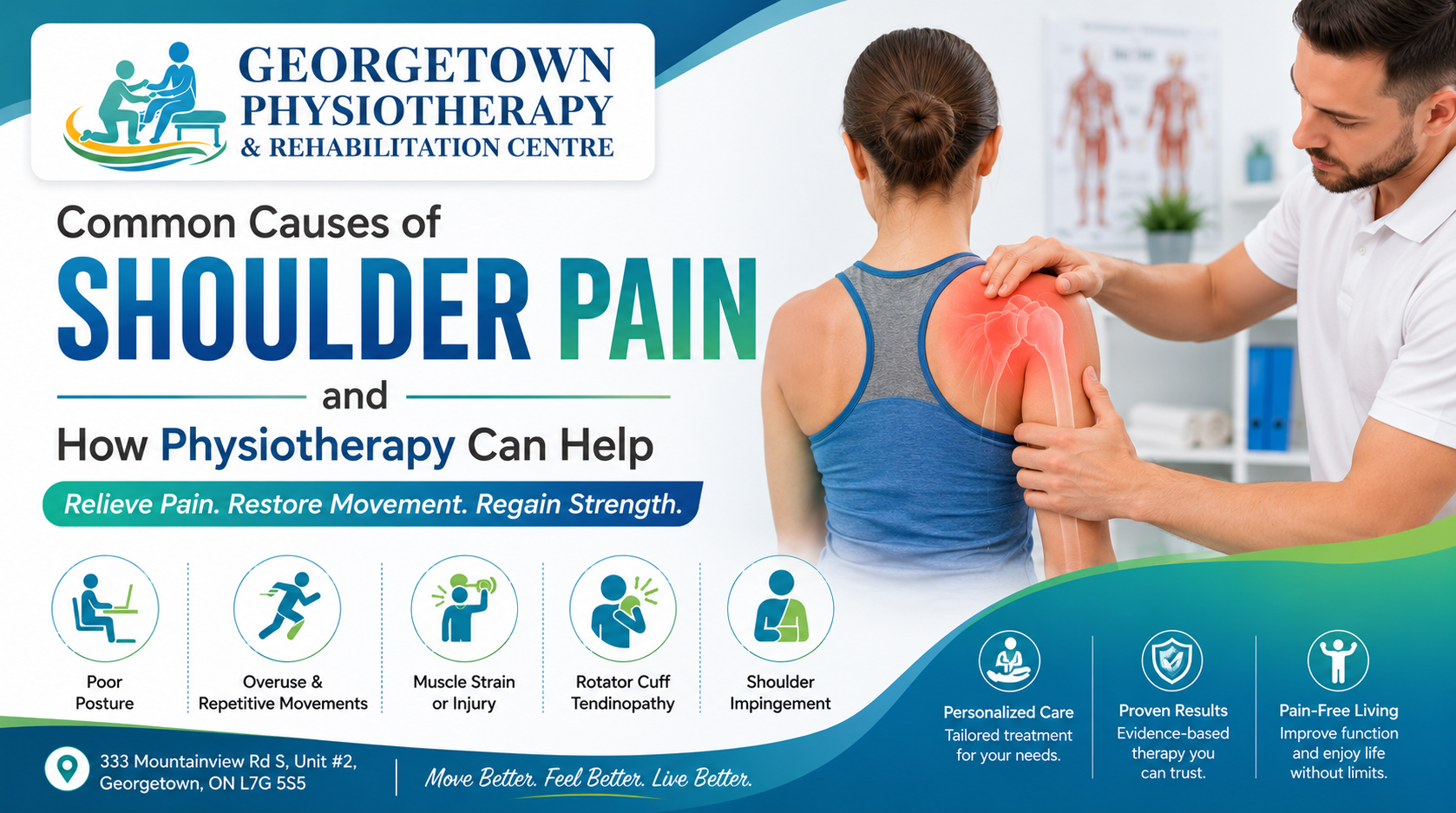
Common Causes of Shoulder Pain and How Physiotherapy Can Help
Shoulder pain is one of the most common musculoskeletal complaints affecting adults of all ages. Whether it develops after a sports injury, repetitive work, lifting heavy objects, poor movement habits, or gradual wear and tear, shoulder pain can make everyday tasks surprisingly difficult. Simple activities such as reaching overhead, lifting groceries, getting dressed, sleeping on one side, or carrying children may become uncomfortable.
Physiotherapy may help many people with shoulder pain by identifying the underlying cause of symptoms and developing a personalized rehabilitation plan that focuses on reducing pain, improving mobility, restoring strength, and helping patients return to their normal activities. Treatment is based on a comprehensive assessment rather than a one-size-fits-all approach.
At Georgetown Physiotherapy & Rehabilitation Centre, we provide evidence-informed physiotherapy for shoulder pain, sports injuries, workplace injuries, and movement-related conditions. Our goal is to help patients regain confidence in their shoulder function while supporting long-term recovery.
Understanding the Shoulder Joint
The shoulder is one of the most mobile joints in the human body. This wide range of motion allows you to lift, throw, push, pull, reach, and rotate your arm in many directions.
The shoulder is made up of several bones, muscles, tendons, ligaments, cartilage, and joints that work together to create smooth movement. Because so many structures contribute to shoulder function, pain can develop from a variety of causes.
Sometimes symptoms appear suddenly after an injury, while other cases develop gradually through repetitive movements or age-related changes.
Understanding the source of shoulder pain is an important first step toward choosing the most appropriate treatment.
Common Causes of Shoulder Pain
1. Rotator Cuff Injuries
The rotator cuff is a group of muscles and tendons that help stabilize and move the shoulder.
Rotator cuff problems may develop due to:
- Repetitive overhead movements
- Sports activities
- Heavy lifting
- Gradual tendon changes over time
- Sudden injuries
Symptoms may include:
- Pain when lifting the arm
- Weakness
- Difficulty reaching overhead
- Night pain
- Reduced shoulder movement
Treatment depends on the nature and severity of the condition.
2. Frozen Shoulder
Frozen shoulder, also known as adhesive capsulitis, typically develops gradually and may cause increasing stiffness and reduced shoulder movement.
People often notice:
- Progressive stiffness
- Difficulty reaching overhead
- Pain during movement
- Limited range of motion
- Difficulty dressing or grooming
Recovery may take time, and physiotherapy often focuses on improving movement, managing discomfort, and gradually restoring function.
3. Shoulder Impingement
Shoulder impingement refers to irritation of tissues within the shoulder during certain movements.
Symptoms may include:
- Pain when reaching overhead
- Pain while lifting objects
- Discomfort during sports
- Difficulty sleeping on the affected side
The contributing factors vary from person to person, making assessment important before beginning treatment.
4. Tendinitis
Shoulder tendinitis occurs when tendons become irritated, often because of repetitive use or increased physical activity.
It may affect people who:
- Play sports
- Perform repetitive work
- Lift frequently
- Begin new exercise programs
Appropriate rehabilitation may include activity modification, strengthening exercises, and gradual progression back to normal activities.
5. Arthritis
Age-related joint changes may contribute to shoulder pain, stiffness, and reduced movement.
While arthritis cannot be reversed, physiotherapy may help improve mobility, strength, and function while supporting participation in daily activities.
6. Sports Injuries
Athletes involved in baseball, tennis, swimming, volleyball, weightlifting, and racquet sports place considerable demands on the shoulder.
Sports injuries may involve muscles, tendons, ligaments, or joints.
Rehabilitation should consider the specific movements required for the individual’s sport rather than focusing only on pain relief.
7. Workplace and Repetitive Strain Injuries
Many occupations involve:
- Repetitive reaching
- Lifting
- Carrying
- Overhead work
- Assembly-line tasks
- Prolonged computer work
Over time, these physical demands may contribute to shoulder discomfort or reduced function.
A personalized rehabilitation plan can address work-specific movement requirements and help prepare the individual for returning to regular duties.
Common Symptoms of Shoulder Pain
Shoulder pain affects people differently depending on the underlying condition.
Common symptoms include:
- Pain during movement
- Shoulder stiffness
- Weakness
- Difficulty lifting the arm
- Pain reaching overhead
- Reduced range of motion
- Difficulty sleeping on one side
- Clicking or catching sensations
- Pain during sports or exercise
- Difficulty performing daily activities
Persistent or worsening symptoms should be assessed by a qualified healthcare professional.
How Physiotherapy Can Help Shoulder Pain
Comprehensive Assessment
Every rehabilitation program begins with a detailed assessment.
Your physiotherapist may evaluate:
- Pain location
- Shoulder movement
- Strength
- Functional limitations
- Previous injuries
- Daily activities
- Work demands
- Sports participation
- Recovery goals
This information helps determine the most appropriate treatment plan.
Pain Management
Depending on the assessment findings, physiotherapy may include several evidence-informed approaches to help manage pain.
These may include:
- Manual therapy
- Therapeutic exercise
- Movement education
- Soft tissue techniques
- Laser therapy (where appropriate)
- Other clinically appropriate modalities
Pain management is only one part of rehabilitation. The long-term goal is improving function.
Restoring Mobility
Many shoulder conditions reduce range of motion.
Physiotherapy may include mobility exercises designed to gradually improve comfortable movement while respecting the stage of healing.
The exercises prescribed depend on your individual assessment rather than following a generic stretching routine.
Strengthening the Shoulder
Strong muscles help support shoulder function.
A rehabilitation program may progressively strengthen:
- Rotator cuff muscles
- Shoulder stabilizers
- Upper back muscles
- Core muscles when appropriate
Exercise progression is based on your current abilities and recovery goals.
Improving Functional Movement
Ultimately, physiotherapy aims to help you return to the activities that matter most.
These may include:
- Working comfortably
- Exercising
- Playing sports
- Lifting children
- Household tasks
- Gardening
- Driving
- Sleeping more comfortably
Treatment plans are individualized according to these functional goals.
Shoulder Pain and Desk Work
Office workers commonly experience shoulder discomfort because of:
- Prolonged sitting
- Computer work
- Mouse use
- Limited movement
- Poor workstation setup
- Muscle fatigue
Physiotherapy may include:
- Workplace movement strategies
- Strengthening exercises
- Postural education
- Mobility exercises
- Ergonomic recommendations
- Activity modification where appropriate
The goal is not to create a “perfect posture” but to improve movement variety and physical capacity.
Shoulder Pain and Sports
Athletes place different demands on their shoulders than office workers.
A swimmer, tennis player, volleyball athlete, and weightlifter all require different movement patterns.
Sports rehabilitation should reflect:
- Sport-specific demands
- Training schedule
- Competition goals
- Current strength
- Mobility
- Functional testing
Returning to sport should be gradual and based on functional progress rather than pain alone.
Can Physiotherapy Help Prevent Future Shoulder Problems?
No treatment can guarantee that future injuries will never occur.
However, physiotherapy may help identify modifiable factors that contribute to shoulder problems.
An individualized program may include:
- Strengthening
- Mobility training
- Activity progression
- Exercise education
- Movement strategies
- Work or sport-specific conditioning
These approaches may help improve physical capacity and reduce some avoidable injury risks.
Common Mistakes People Make With Shoulder Pain
Ignoring Symptoms
Persistent pain should not simply be accepted as part of daily life.
Early assessment may help identify contributing factors before the problem becomes more limiting.
Resting Too Long
Complete inactivity is not appropriate for every shoulder condition.
Depending on the diagnosis, gradual movement and rehabilitation may be an important part of recovery.
Returning to Heavy Activity Too Soon
Resuming heavy lifting or sports before strength and mobility have recovered may increase the risk of symptom recurrence.
Following Generic Online Exercises
Not every shoulder condition requires the same exercises.
Exercises should be selected according to your assessment and goals.
Focusing Only on Pain Relief
Reduced pain is important, but rehabilitation should also restore movement, strength, endurance, and confidence.
Frequently Asked Questions
Can physiotherapy help shoulder pain?
Yes. Physiotherapy may help many musculoskeletal shoulder conditions by improving movement, strength, function, and pain management following an appropriate assessment.
Do I need imaging before seeing a physiotherapist?
Not always. Many shoulder conditions can initially be assessed clinically. If imaging or referral is appropriate, your healthcare provider can advise based on your symptoms and examination.
How many physiotherapy sessions will I need?
There is no fixed number of sessions. Treatment depends on your condition, goals, response to rehabilitation, and functional progress.
Can physiotherapy help frozen shoulder?
Physiotherapy is commonly used as part of the management of frozen shoulder and may help improve mobility, function, and comfort over time.
Should I stop exercising if my shoulder hurts?
Not necessarily. The appropriate level of activity depends on your condition. A physiotherapist can help determine which activities are appropriate and how to modify exercise safely.
Is surgery always necessary for shoulder pain?
No. Many shoulder conditions can be managed with conservative care. However, some injuries may require specialist assessment or surgical consultation. Your healthcare provider will recommend the most appropriate pathway based on your individual condition.
Shoulder Pain Physiotherapy in Georgetown
At Georgetown Physiotherapy & Rehabilitation Centre, every patient receives an individualized assessment to identify the factors contributing to shoulder pain.
Treatment plans may combine physiotherapy, therapeutic exercise, manual therapy, laser therapy, shockwave therapy, education, and home exercise programs when clinically appropriate.
Our goal is to help you move better, improve function, and return to the activities you enjoy with greater confidence.
Georgetown Physiotherapy & Rehabilitation Centre
Address: 333 Mountainview Rd S, Unit #2, Georgetown, ON L7G 5S5, Canada
Phone: +1 905-702-6633
Email: info@georgetownphysiotherapy.ca
Website: https://georgetownphysiotherapy.ca/
Start Your Recovery With Personalized Physiotherapy
Shoulder pain does not have to control your work, hobbies, or everyday life.
Whether your symptoms developed after a sports injury, workplace activity, repetitive movements, or gradual wear and tear, an individualized physiotherapy assessment can help identify the underlying issues and guide an appropriate treatment plan.
If you are looking for shoulder pain physiotherapy in Georgetown, contact Georgetown Physiotherapy & Rehabilitation Centre to learn more about available treatment options and book your assessment. Our experienced team is committed to helping you reduce pain, restore mobility, rebuild strength, and return to the activities that matter most.