



 Call For Appointment
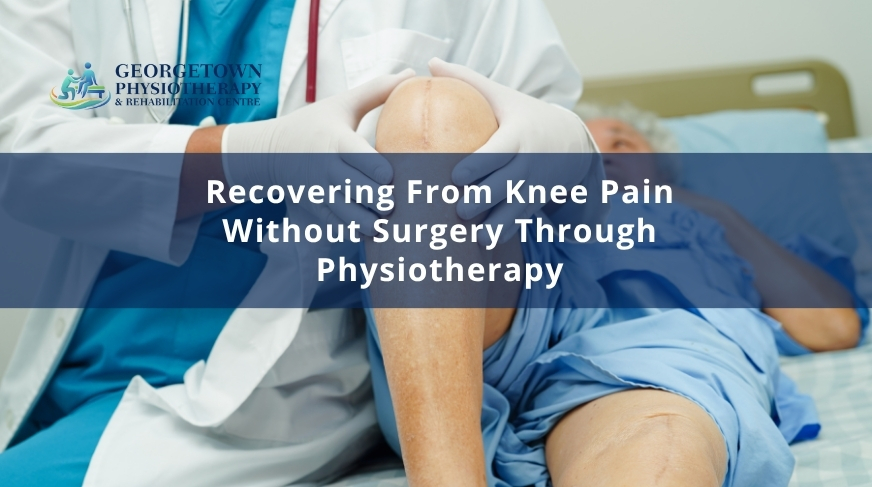
Recovering From Knee Pain Without Surgery Through Physiotherapy
Knee pain can make even the simplest daily activities feel challenging. Walking upstairs, getting out of a chair, exercising, gardening, or enjoying a weekend hike may become uncomfortable when your knees are not functioning properly. For many people, persistent knee pain also raises an important question: “Will I need surgery?”
The answer is not always.
While surgery is sometimes the most appropriate treatment for severe structural injuries, many common knee conditions can often be successfully managed through conservative care. Physiotherapy is widely recommended as a first-line treatment for many musculoskeletal knee problems because it focuses on restoring movement, improving strength, reducing pain, and helping people return to the activities they enjoy.
we provide programs designed to help patients recover from through evidence-informed rehabilitation before considering more invasive treatment options whenever clinically appropriate.
Understanding Knee Pain
The knee is one of the body’s largest and hardest-working joints. Every step, squat, jump, and change of direction places considerable force through the knee.
The joint consists of:
Because so many tissues work together, knee pain may develop from a variety of causes rather than a single injury.
A thorough physiotherapy assessment helps determine which structures may be contributing to your symptoms.
Common Causes of Knee Pain
Knee Osteoarthritis
Osteoarthritis gradually affects the cartilage within the knee joint.
Symptoms commonly include:
- Morning stiffness
- Pain after walking
- Swelling
- Difficulty climbing stairs
- Reduced mobility
Although physiotherapy cannot reverse arthritis, research consistently shows that strengthening exercises and movement-based rehabilitation can significantly improve pain, function, and quality of life for many individuals.
Patellofemoral Pain Syndrome
Often called “runner’s knee,” this condition causes pain around or behind the kneecap.
It frequently affects:
- Runners
- Cyclists
- Young athletes
- Individuals who frequently squat
- People who climb stairs regularly
Treatment focuses on improving movement patterns, strengthening key muscle groups, and gradually returning to activity.
Meniscus Injuries
The meniscus acts as a shock absorber inside the knee.
Injuries may occur through:
- Twisting movements
- Sports injuries
- Sudden direction changes
- Age-related degeneration
Many meniscus injuries respond well to structured rehabilitation, although some cases require orthopedic assessment.
Ligament Injuries
Ligaments provide stability to the knee.
Common ligament injuries include:
- ACL injuries
- MCL injuries
- LCL injuries
- PCL injuries
Depending on the severity, physiotherapy may be appropriate as conservative treatment, pre-surgical rehabilitation (prehabilitation), or post-operative rehabilitation.
Tendon Disorders
Overuse may irritate the tendons surrounding the knee.
This commonly affects:
- Runners
- Volleyball players
- Basketball players
- Construction workers
- Warehouse employees
Treatment usually emphasizes progressive loading rather than prolonged rest.
Does Every Knee Injury Require Surgery?
No.
Many people assume MRI findings automatically lead to surgery, but this is often not the case.
Clinical guidelines increasingly recommend conservative management before surgery for many knee conditions, particularly:
- Early arthritis
- Patellofemoral pain
- Tendinopathy
- Some degenerative meniscal tears
- Mild to moderate soft tissue injuries
However, certain injuries—including fractures, complete ligament ruptures, severe instability, or complex structural damage—may require orthopedic consultation.
A proper assessment helps determine the most appropriate pathway.
How Physiotherapy Helps Knee Pain
Comprehensive Assessment
Every rehabilitation program begins with understanding why the knee hurts.
Your physiotherapist evaluates:
- Pain location
- Swelling
- Range of motion
- Joint stability
- Muscle strength
- Walking pattern
- Balance
- Functional limitations
- Work demands
- Sports participation
- Personal goals
Treatment is then customized to your specific needs.
Pain Management
Depending on your condition, treatment may include:
- Manual therapy
- Therapeutic exercise
- Activity modification
- Movement education
- Soft tissue techniques
- Laser therapy when appropriate
- Shockwave therapy for selected conditions
Pain management is only one component of rehabilitation.
The ultimate objective is restoring function.
Progressive Strengthening
Research consistently supports strengthening as one of the most effective treatments for many knee conditions.
Your physiotherapist may develop exercises targeting:
- Quadriceps
- Hamstrings
- Gluteal muscles
- Calves
- Core stability
Exercises are gradually progressed as your strength improves.
Restoring Mobility
Restricted movement often contributes to ongoing discomfort.
Treatment may include:
- Mobility exercises
- Joint mobilization
- Stretching
- Functional movement training
The focus is on improving comfortable movement without aggravating symptoms.
Improving Balance and Stability
Many knee injuries reduce confidence during walking or sports.
Balance exercises help retrain:
- Joint awareness
- Stability
- Coordination
- Functional control
These exercises become increasingly important before returning to demanding activities.
Physiotherapy for Knee Arthritis
People living with knee osteoarthritis often worry that surgery is inevitable.
In reality, many patients successfully manage symptoms for years through conservative treatment.
Physiotherapy may help:
- Improve strength
- Reduce stiffness
- Increase walking tolerance
- Improve stair climbing
- Enhance balance
- Support long-term independence
Exercise remains one of the most strongly recommended treatments for knee osteoarthritis.
Sports Injury Rehabilitation
Athletes often want to return quickly after injury.
However, returning before strength, balance, and movement quality have recovered may increase the risk of reinjury.
Sports rehabilitation may include:
- Running progression
- Plyometric training
- Jump mechanics
- Agility drills
- Direction changes
- Sport-specific exercises
- Functional testing
Progression is based on objective recovery rather than time alone.
Workplace Knee Injuries
Workers in physically demanding jobs often experience knee pain from:
- Frequent kneeling
- Squatting
- Climbing
- Heavy lifting
- Repetitive movement
Physiotherapy can prepare workers for the physical requirements of their occupation through job-specific rehabilitation.
Everyday Habits That Support Recovery
Successful rehabilitation extends beyond clinic visits.
Helpful habits include:
- Completing your home exercise program
- Staying physically active within recommended limits
- Maintaining a healthy body weight
- Wearing appropriate footwear
- Avoiding sudden increases in activity
- Gradually returning to sports
- Taking movement breaks throughout the day
Consistency usually produces better long-term results than occasional intensive effort.
Common Mistakes During Recovery
Ignoring persistent pain
Early assessment often leads to better management.
Stopping exercise completely
Appropriate movement is often beneficial for many knee conditions.
Returning to sport too quickly
Pain reduction does not always mean full recovery.
Following random online exercise videos
Exercises should match your diagnosis and rehabilitation stage.
Expecting immediate results
Recovery usually occurs gradually through consistent rehabilitation.
Frequently Asked Questions
Can physiotherapy help knee pain without surgery?
Yes. Many musculoskeletal knee conditions respond well to conservative physiotherapy, although treatment depends on the diagnosis and individual assessment.
Is surgery always necessary?
No. Many patients improve with evidence-informed rehabilitation, while others may require orthopedic consultation depending on the severity of their condition.
Can physiotherapy help arthritis?
Yes. Physiotherapy may improve mobility, strength, function, and symptom management for many people with knee osteoarthritis.
How long will recovery take?
Recovery varies depending on the diagnosis, severity, activity goals, overall health, and response to treatment.
Should I exercise if my knee hurts?
In many cases, appropriately prescribed exercises are an important part of rehabilitation. Your physiotherapist will recommend exercises based on your assessment.
Why Choose Georgetown Physiotherapy & Rehabilitation Centre?
Every patient’s recovery journey is unique.
Our experienced physiotherapists develop individualized rehabilitation plans based on your assessment, goals, and lifestyle.
Treatment may include:
- Physiotherapy
- Manual therapy
- Therapeutic exercise
- Laser therapy
- Shockwave therapy
- Balance training
- Functional rehabilitation
- Home exercise programs
- Injury prevention education
Whether your knee pain resulted from sports, arthritis, workplace activities, or everyday wear and tear, we focus on helping you regain confidence in your movement and return to the activities you value most.
Georgetown Physiotherapy & Rehabilitation Centre
Address: 333 Mountainview Rd S, Unit #2, Georgetown, ON L7G 5S5, Canada
Phone: +1 905-702-6633
Email: info@georgetownphysiotherapy.ca
Website: https://georgetownphysiotherapy.ca/
Start Your Recovery Today
Living with knee pain doesn’t automatically mean surgery is your only option.
For many musculoskeletal conditions, physiotherapy offers a safe, evidence-informed, and personalized approach to improving movement, reducing pain, rebuilding strength, and restoring confidence.
If you’re searching for book an assessment with & Rehabilitation Centre. Our team will evaluate your condition, explain your treatment options, and create a customized rehabilitation plan designed to help you move better—without unnecessary surgery whenever conservative care is appropriate.