



 Call For Appointment

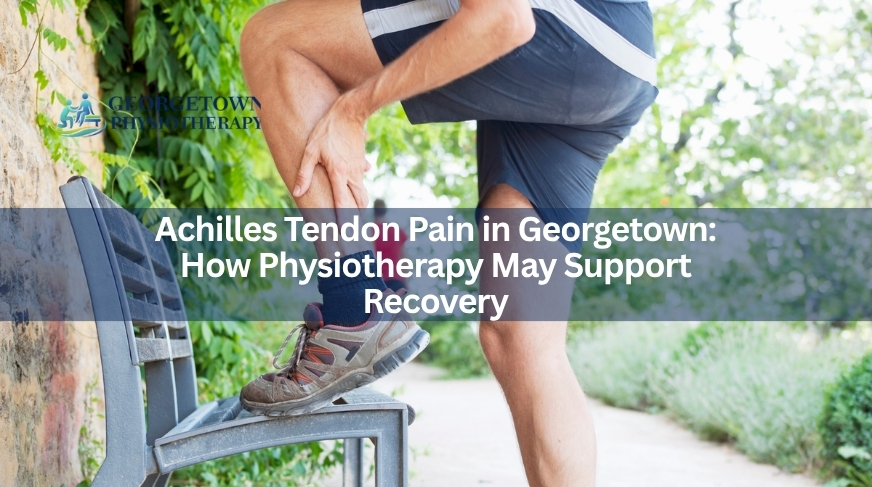
Achilles Tendon Pain in Georgetown: How Physiotherapy May Support Recovery
Pain at the back of your heel can make everyday movement difficult. Walking upstairs, getting out of bed, standing for long periods or going for a run may become uncomfortable when the Achilles tendon is irritated.
The Achilles tendon connects the calf muscles to the heel bone and plays an essential role in walking, running, jumping and pushing off the ground. When the tendon becomes painful, activities that once felt effortless can require more effort or modification.
For people looking for Achilles tendon physiotherapy in Georgetown, understanding the cause of the pain is an important first step. Physiotherapy may help improve tendon-loading capacity, calf strength, movement and tolerance for everyday activities through an individualized rehabilitation plan.
At Georgetown Physiotherapy & Rehabilitation Centre, an assessment can help identify your movement limitations and determine whether physiotherapy is appropriate for your symptoms and goals.
Can Physiotherapy Help Achilles Tendon Pain?
Yes. Physiotherapy may help people with Achilles tendinopathy by improving calf strength, gradually rebuilding tendon-loading capacity and supporting a return to normal activities.
The 2024 clinical practice guideline for midportion Achilles tendinopathy recommends progressive tendon-loading exercise as a first-line treatment for appropriate patients. Education and guidance on activity management are also important components of care. Results vary, and treatment should be adjusted to the individual’s condition and tolerance. (Clinical practice guideline, 2024)
Not all pain around the heel is caused by Achilles tendinopathy, however. An assessment is important, particularly if the pain began suddenly or is associated with significant weakness or difficulty walking.
What Is the Achilles Tendon?
The Achilles tendon is a strong band of connective tissue at the back of the lower leg. It connects the calf muscles to the heel bone and transfers force when you push off the ground.
You rely on it when you:
- Walk and climb stairs
- Run or jog
- Jump and land
- Stand on your toes
- Accelerate or change direction during sport
- Walk uphill
Because the tendon experiences substantial loads during these activities, changes in training, activity levels or physical demands may contribute to symptoms.
When pain develops in the tendon in response to loading, the condition may be described as Achilles tendinopathy. The precise diagnosis depends on the location of symptoms and clinical findings.
What Are the Common Symptoms of Achilles Tendinopathy?
Achilles tendinopathy often causes pain, stiffness or tenderness around the tendon.
Symptoms may include:
- Pain at the back of the heel or lower leg
- Morning stiffness
- Discomfort during the first few steps after resting
- Pain when climbing stairs
- Discomfort during running or jumping
- Tenderness when touching the tendon
- Reduced tolerance for prolonged walking
- Difficulty performing calf raises
Some people notice that symptoms ease as they warm up, only to return later during activity or after resting.
However, symptom patterns differ. Pain that improves temporarily with movement does not automatically confirm Achilles tendinopathy.
Where Is the Pain Located?
The location of your symptoms can help guide an assessment.
Midportion Achilles Tendinopathy
Pain is generally located within the tendon several centimetres above its attachment to the heel bone.
This area may feel tender or stiff, particularly during activities that load the calf and tendon.
Insertional Achilles Tendinopathy
Pain is located near the point where the Achilles tendon attaches to the heel bone.
This distinction matters because some exercises that involve lowering the heel deeply below a step may aggravate insertional symptoms.
The 2024 clinical practice guideline focuses specifically on midportion Achilles tendinopathy, so its recommendations should not automatically be applied to every form of Achilles pain. (JOSPT clinical practice guideline)
What Causes Achilles Tendon Pain?
Achilles tendon pain can develop for several reasons. Often, the symptoms are associated with the amount of load placed on the tendon relative to its current capacity.
Possible contributing factors include:
1. Sudden Increases in Running or Exercise
Increasing running distance, speed, hill work or jumping exercises too quickly can raise the demands placed on the tendon.
A person returning to exercise after a break may need time to rebuild their tolerance.
2. Repetitive Physical Loading
Jobs or activities involving frequent walking, climbing, lifting or prolonged periods on the feet can increase physical demands.
The relevant factors differ between individuals, and activity alone does not establish the diagnosis.
3. Changes in Training
Changing sports, increasing workout frequency or introducing unfamiliar exercises may affect the load placed on the calf and Achilles tendon.
A gradual progression can help match training demands to current physical capacity.
4. Reduced Calf Strength or Capacity
The calf muscles contribute to force production during walking, running and jumping.
If their strength and endurance are insufficient for the demands of an activity, the overall loading pattern may need attention.
5. Previous Achilles Problems
A previous episode of Achilles pain may be relevant when assessing new or recurring symptoms.
A physiotherapist may review your training history, previous injuries and current functional limitations to help guide treatment.
How Can Physiotherapy Help Achilles Tendon Pain?
Physiotherapy aims to improve the tendon and calf’s ability to tolerate the demands of everyday life and physical activity.
The treatment plan depends on your assessment and may involve several components.
1. Progressive Tendon-Loading Exercises
Exercise-based loading is a central component of rehabilitation for appropriate cases of midportion Achilles tendinopathy.
The 2024 clinical practice guideline recommends tendon-loading exercise as a first-line treatment for suitable patients who do not have suspected structural frailty of the tendon. (Clinical practice guideline, 2024)
Exercises may include controlled calf raises and other strengthening activities.
The starting difficulty, resistance, repetitions and frequency should be appropriate for the individual. The aim is to progressively improve function rather than repeatedly provoke a major increase in symptoms.
2. Calf Strengthening
The calf muscles play an important role in walking, stair climbing, running and jumping.
Depending on your assessment, rehabilitation may begin with a manageable exercise and progress as strength improves.
Possible stages include:
- Supported calf exercises
- Double-leg calf raises
- Single-leg strengthening when appropriate
- Resistance-based calf exercises
- More demanding functional exercises
These are examples, not a universal sequence. The right starting point depends on your symptoms, strength and tendon condition.
3. Improving Ankle Mobility
Ankle movement can influence how you perform activities such as walking, squatting and climbing stairs.
If limited ankle mobility is relevant to your symptoms, your physiotherapist may recommend appropriate mobility exercises or stretching.
Stretching is not necessarily appropriate in every case, particularly if certain positions aggravate pain near the tendon attachment.
4. Managing Activity Levels
Complete rest is not routinely recommended for typical midportion Achilles tendinopathy. The 2024 guideline supports continuing activity within pain tolerance while managing tendon loading appropriately. (Clinical practice guideline, 2024)
This does not mean pushing through severe pain.
Your physiotherapist may help you temporarily modify activities that place excessive demands on the tendon, then gradually rebuild your tolerance.
For a runner, this could involve adjusting distance, speed or hills. For someone who stands at work, it might involve reviewing prolonged standing and recovery periods.
5. Balance and Functional Training
As symptoms improve, rehabilitation may progress beyond isolated strengthening.
Depending on your goals, this could involve balance, controlled stepping, stair climbing, faster walking or exercises relevant to sport.
The objective is to prepare the tendon and surrounding muscles for the tasks you want to resume.
6. Education and Self-Management
Understanding the relationship between activity, symptoms and recovery can help you manage your condition between appointments.
Your physiotherapist may explain how to monitor your response to exercise, adjust training and recognise when a program needs to be modified.
This can help you make informed decisions about returning to normal activity.
What Exercises May Be Used for Achilles Tendinopathy?
Exercise selection should be individualised rather than copied from a generic online routine.
Depending on the assessment, a rehabilitation program may include:
Calf raises: Strengthening exercises that involve lifting the heels while controlling the movement.
Seated calf strengthening: Exercises that challenge the calf muscles with a different knee position.
Resistance exercises: Activities using body weight, resistance bands or external weights when appropriate.
Balance exercises: Tasks that develop lower-limb control.
Functional exercises: Progressions designed around walking, stairs, running or sport.
The appropriate exercise, range of movement and load depend on the location and severity of symptoms.
For example, people with insertional Achilles pain may need to avoid excessive ankle movement into deep dorsiflexion during some exercises, particularly early in rehabilitation. A clinician can help choose an appropriate starting point.
Should You Keep Walking or Running?
That depends on the severity of your symptoms and your ability to tolerate activity.
For many people with established tendinopathy, complete inactivity is not necessary. However, continuing the same training volume despite worsening symptoms may not be appropriate.
A practical approach is to assess how your tendon responds during activity and afterward.
Your physiotherapist may help you modify:
- Running distance
- Speed and intensity
- Hill training
- Jumping exercises
- Workout frequency
- Recovery time
- Prolonged walking or standing
A gradual return to activity allows the demands on the tendon to increase in a more controlled way.
If you experience sudden severe pain or suspect a tendon rupture, do not continue exercising; seek urgent medical assessment.
How Long Does Achilles Tendon Recovery Take?
There is no single recovery timeline.
The duration can depend on:
- How long symptoms have been present
- The location of tendon pain
- Symptom severity
- Current calf strength
- Work and sporting demands
- Previous injuries
- Response to rehabilitation
- Consistency with the recommended program
Achilles tendinopathy may require a sustained rehabilitation period. It is not appropriate to promise complete recovery within a fixed number of sessions.
Progress is better assessed through changes in pain, walking tolerance, calf strength and the ability to perform your usual activities.
Can Shockwave Therapy Help Achilles Tendon Pain?
Shockwave therapy may be considered for selected persistent tendon problems, but it should not automatically replace exercise-based rehabilitation.
Evidence and recommendations vary according to the location and type of Achilles tendinopathy. The 2024 clinical practice guideline focuses on exercise, education and other physiotherapy interventions and does not establish shockwave therapy as a universal first-line treatment. (JOSPT clinical practice guideline)
If symptoms persist despite an appropriate rehabilitation program, your healthcare provider may review the diagnosis and discuss other options where suitable.
When Should Achilles Tendon Pain Be Medically Assessed?
Not all Achilles pain is tendinopathy.
A sudden tendon rupture is an important condition that requires prompt assessment.
Seek urgent medical attention if you experience:
- A sudden pop or snapping sensation in the back of the ankle
- Sudden, severe pain
- Rapid swelling or bruising
- Marked weakness when pushing off the foot
- Difficulty walking following an acute injury
- A sudden inability to rise onto your toes
Other symptoms, such as severe or rapidly worsening pain, also warrant medical evaluation.
Do not assume that a sudden injury is simply an aggravation of an existing tendon problem.
Frequently Asked Questions
Can physiotherapy help Achilles tendon pain?
Physiotherapy may help by improving calf strength, tendon-loading capacity and functional movement. The treatment approach depends on the diagnosis and individual presentation.
What is the best exercise for Achilles tendinopathy?
There is no single best exercise for everyone. Progressive tendon-loading exercises are a first-line approach for appropriate cases of midportion Achilles tendinopathy, with the exercise program tailored to individual tolerance and goals.
Should I completely rest an Achilles tendon injury?
Complete rest is not routinely recommended for typical midportion Achilles tendinopathy. Activity should be managed within tolerance. A suspected rupture or significant acute injury requires prompt medical assessment.
Can Achilles tendon pain get worse in the morning?
Some people experience morning stiffness or discomfort during their first steps. This symptom can occur with tendinopathy but does not confirm the diagnosis.
Can I run with Achilles tendinopathy?
Some people may continue modified activity, while others need to reduce or temporarily stop running. The decision depends on symptoms, severity and functional capacity.
How long does Achilles tendinopathy take to improve?
Recovery varies and may require a sustained rehabilitation program. Progress depends on the condition, activity demands and response to treatment.
Is shockwave therapy necessary for Achilles tendon pain?
No. It is not automatically required. Exercise-based rehabilitation is a key first-line approach for appropriate midportion Achilles tendinopathy. Other options may be discussed if symptoms persist.
Where can I get Achilles tendon physiotherapy in Georgetown?
Georgetown Physiotherapy & Rehabilitation Centre offers physiotherapy and rehabilitation services in Georgetown, Ontario. An assessment can help determine whether physiotherapy is appropriate for your Achilles tendon symptoms.
Achilles Tendon Physiotherapy in Georgetown: Take the Next Step
Persistent Achilles tendon pain can affect your walking, work, exercise and ability to participate in sports.
The aim of rehabilitation is not simply to make the tendon feel better temporarily. It is to help restore the strength and capacity needed for your everyday activities and longer-term goals.
An individualized assessment can help clarify your symptoms, identify relevant movement or strength limitations, and guide an appropriate rehabilitation plan.
Georgetown Physiotherapy & Rehabilitation Centre
333 Mountainview Rd S, Unit #2Georgetown, ON L7G 5S5
Phone: +1 905 702 6633
Email: info@georgetownphysiotherapy.ca
Website: https://georgetownphysiotherapy.ca/
If Achilles tendon pain is limiting your activities, contact the clinic to discuss an assessment and appropriate next steps.