



 Call For Appointment
Manual Therapy vs Massage Therapy: Which Is Right for Your Condition?
If you’re dealing with muscle tension, joint stiffness, back pain, neck pain, or recovering from an injury, you’ve probably come across two common treatment options: manual therapy and massage therapy. While both involve hands-on techniques and can play an important role in rehabilitation, they are not the same treatment—and understanding the difference can help you make an informed decision.
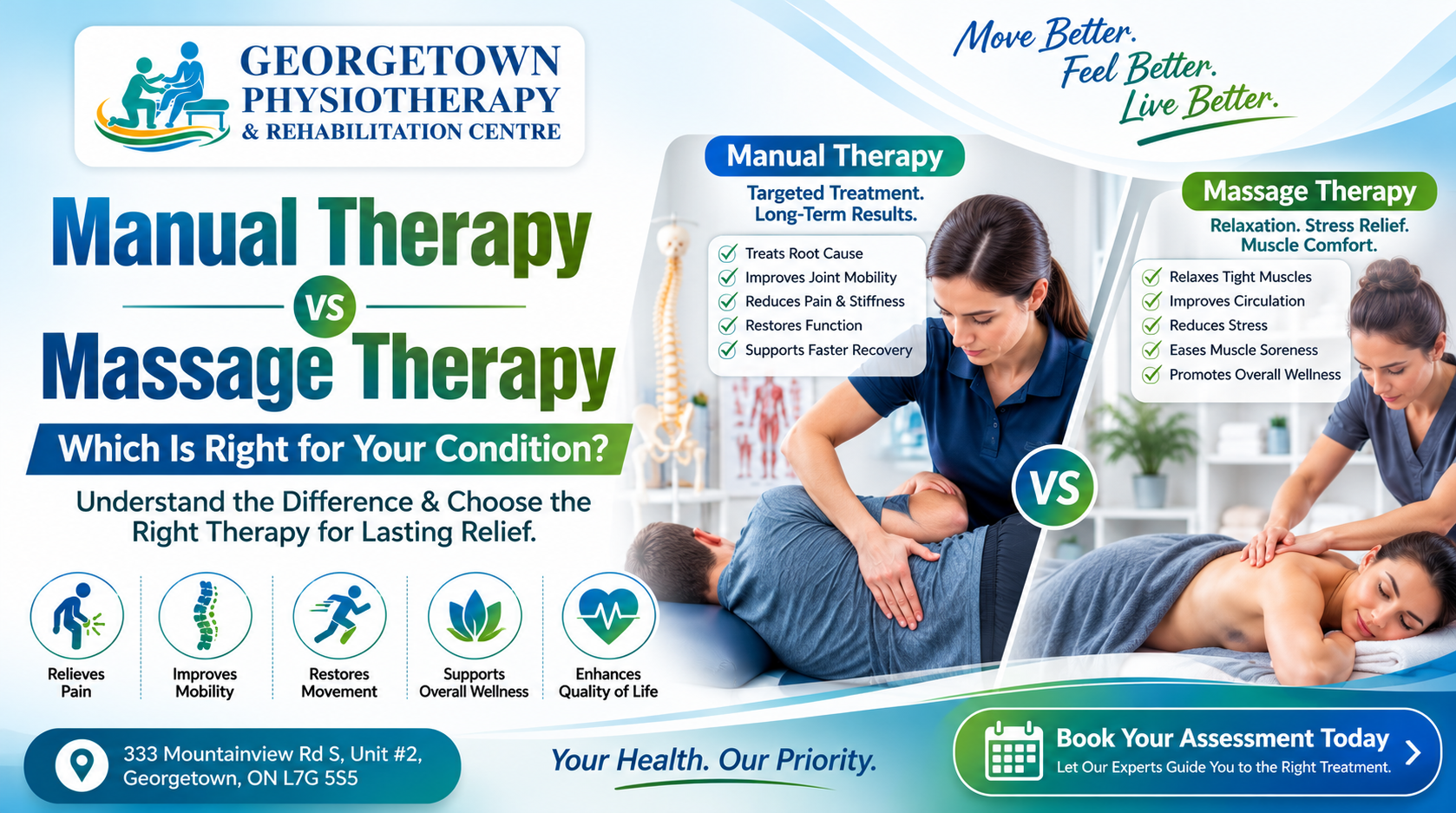
Manual therapy and massage therapy both aim to improve comfort and function, but they use different techniques and often have different goals. Manual therapy is typically provided by physiotherapists or other qualified healthcare professionals as part of a rehabilitation program to improve joint mobility, reduce pain, and restore movement. Massage therapy primarily focuses on soft tissues such as muscles, tendons, and fascia to help reduce muscle tension, promote relaxation, and improve circulation.
At Georgetown Physiotherapy & Rehabilitation Centre, both approaches may be recommended depending on your condition, assessment findings, and recovery goals. In many cases, they complement each other rather than compete.
What Is Manual Therapy?
Manual therapy is a hands-on treatment approach used by physiotherapists to assess and manage musculoskeletal conditions. It involves skilled techniques applied to joints, muscles, and surrounding soft tissues with the goal of improving movement and function.
Depending on your condition, manual therapy may include:
- Joint mobilization
- Joint manipulation (when clinically appropriate)
- Soft tissue mobilization
- Muscle stretching
- Trigger point techniques
- Passive range-of-motion techniques
- Neural mobilization for selected conditions
Manual therapy is rarely used on its own. It is commonly combined with therapeutic exercise, movement education, strength training, and home exercise programs to support long-term recovery.
What Is Massage Therapy?
Massage therapy is a regulated healthcare profession in Ontario when provided by a Registered Massage Therapist (RMT).
Massage therapy primarily focuses on the body’s soft tissues, including:
- Muscles
- Tendons
- Fascia
- Connective tissue
Treatment techniques may include:
- Swedish massage
- Deep tissue massage
- Myofascial techniques
- Trigger point therapy
- Relaxation massage
- Sports massage
Massage therapy aims to reduce muscle tension, improve circulation, decrease soft tissue discomfort, and promote relaxation. Depending on the individual’s goals, treatment may also support recovery from physical activity or complement a broader rehabilitation plan.
Manual Therapy vs Massage Therapy: What’s the Difference?
Although both treatments involve hands-on care, they differ in their primary focus.
| Feature | Manual Therapy | Massage Therapy |
|---|---|---|
| Primary provider | Physiotherapist (or other qualified clinician) | Registered Massage Therapist |
| Main focus | Joint mobility, movement, rehabilitation | Soft tissue health and muscle tension |
| Treatment targets | Joints, muscles, nerves, soft tissues | Primarily muscles and fascia |
| Often includes | Joint mobilization, movement assessment, exercise prescription | Massage techniques and soft tissue treatment |
| Rehabilitation role | Usually part of a comprehensive physiotherapy plan | Often complements rehabilitation and wellness care |
The best option depends on your diagnosis, symptoms, functional limitations, and goals.
When Manual Therapy May Be Appropriate
Manual therapy may be considered for people experiencing:
- Neck pain
- Back pain
- Joint stiffness
- Sports injuries
- Reduced mobility
- Shoulder pain
- Hip pain
- Knee pain
- Post-operative rehabilitation
- Movement restrictions
A physiotherapist will determine whether manual therapy is appropriate after assessing your condition.
When Massage Therapy May Be Appropriate
Massage therapy may be helpful for people experiencing:
- Muscle tension
- General muscular discomfort
- Stress-related muscle tightness
- Recovery after physical activity
- Soft tissue tightness
- Chronic muscle stiffness
Massage therapy may also complement physiotherapy by preparing tissues for exercise or helping manage muscle soreness during rehabilitation.
Can Manual Therapy Help Back Pain?
Back pain is one of the most common reasons people seek physiotherapy.
Depending on the assessment, manual therapy may be used to:
- Improve spinal mobility
- Reduce joint stiffness
- Increase comfortable movement
- Support rehabilitation exercises
Current clinical guidelines generally recommend combining manual therapy with active rehabilitation, such as exercise and education, rather than relying on passive treatment alone.
Can Massage Therapy Help Back Pain?
Massage therapy may help some people with muscular back pain by reducing muscle tension and promoting relaxation.
However, if back pain is related to movement limitations, joint dysfunction, or rehabilitation needs, massage therapy alone may not address every contributing factor.
For many patients, combining massage therapy with physiotherapy exercises produces a more comprehensive treatment approach.
Manual Therapy for Neck Pain
Neck pain often involves a combination of muscle tightness, reduced mobility, movement sensitivity, and lifestyle factors such as prolonged computer use.
Depending on your assessment, manual therapy may include:
- Cervical joint mobilization
- Soft tissue mobilization
- Stretching
- Mobility exercises
- Postural education
- Strengthening exercises
The objective is to improve function while helping you return to everyday activities more comfortably.
Massage Therapy for Neck Pain
Massage therapy can help reduce muscle tension around the neck and shoulders.
Many office workers, drivers, and individuals with physically demanding jobs find massage therapy helpful for managing muscular tightness that develops from repetitive activities or prolonged positions.
Massage therapy may also help reduce stress-related muscle tension, which can contribute to neck discomfort.
Which Treatment Is Better for Sports Injuries?
There is no universal answer.
Sports injuries vary considerably depending on:
- The injured tissue
- Severity
- Sport
- Stage of recovery
- Functional goals
A physiotherapist may use manual therapy to restore joint mobility and guide progressive rehabilitation, while massage therapy may help manage muscle tightness and soft tissue discomfort.
Many athletes benefit from both approaches as part of an individualized treatment plan.
Can You Have Both Manual Therapy and Massage Therapy?
Yes.
In many cases, the two treatments complement each other.
For example, someone recovering from a shoulder injury may receive:
- Manual therapy to improve joint mobility
- Massage therapy to reduce muscle tension
- Therapeutic exercises to rebuild strength
- Home exercises to maintain progress
This integrated approach addresses multiple aspects of recovery rather than focusing on one treatment alone.
Benefits of Manual Therapy
When appropriate, manual therapy may help:
- Improve joint mobility
- Reduce movement-related pain
- Restore functional movement
- Improve flexibility
- Support rehabilitation exercises
- Enhance participation in daily activities
Benefits of Massage Therapy
Massage therapy may help:
- Reduce muscle tension
- Improve relaxation
- Increase local circulation
- Reduce soft tissue discomfort
- Improve recovery after physical activity
- Support overall well-being
Results vary between individuals and conditions.
Common Misconceptions
“Massage Therapy and Manual Therapy Are the Same”
Although both involve hands-on treatment, they have different objectives, techniques, and professional scopes.
“Hands-On Treatment Alone Will Solve the Problem”
Passive treatments may help manage symptoms, but long-term recovery often requires active rehabilitation through exercise, education, and progressive movement.
“More Pain During Treatment Means Better Results”
Treatment should be individualized and appropriate for your condition. More discomfort during treatment does not necessarily mean better outcomes.
Frequently Asked Questions
Is manual therapy better than massage therapy?
Neither treatment is universally better. The appropriate option depends on your condition, symptoms, rehabilitation goals, and professional assessment.
Can I receive both treatments?
Yes. Many rehabilitation plans combine manual therapy with massage therapy when appropriate.
Does manual therapy hurt?
Some techniques may produce temporary discomfort depending on the condition, but treatment should remain within a tolerable level and be adjusted according to your response.
Is massage therapy only for relaxation?
No. While massage therapy is commonly associated with relaxation, Registered Massage Therapists also treat a variety of musculoskeletal conditions and soft tissue concerns.
Will I also need exercises?
For many musculoskeletal conditions, therapeutic exercise is an important part of long-term recovery. Hands-on treatment is often most effective when combined with an individualized exercise program.
Choosing the Right Treatment in Georgetown
The most appropriate treatment starts with an accurate assessment—not with choosing a technique.
At Georgetown Physiotherapy & Rehabilitation Centre, our team evaluates your symptoms, movement, medical history, activity level, work demands, and recovery goals before recommending a personalized treatment plan.
Depending on your condition, that plan may include manual therapy, massage therapy, therapeutic exercise, laser therapy, shockwave therapy, chiropractic care, or a combination of evidence-informed treatments designed to improve movement and function.
Georgetown Physiotherapy & Rehabilitation Centre
Address: 333 Mountainview Rd S, Unit #2, Georgetown, ON L7G 5S5, Canada
Phone: +1 905-702-6633
Email: info@georgetownphysiotherapy.ca
Website: https://georgetownphysiotherapy.ca/
Find the Treatment That Fits Your Needs
Choosing between manual therapy and massage therapy doesn’t have to be confusing.
Both treatments have valuable roles in musculoskeletal care, and the best approach depends on your individual condition, goals, and assessment findings—not on a one-size-fits-all recommendation.
If you’re experiencing neck pain, back pain, sports injuries, muscle tension, or movement limitations, contact Georgetown Physiotherapy & Rehabilitation Centre to schedule an assessment. Our experienced team will help determine the most appropriate combination of treatments to support your recovery, improve your mobility, and help you return to the activities that matter most.