




 Call For Appointment
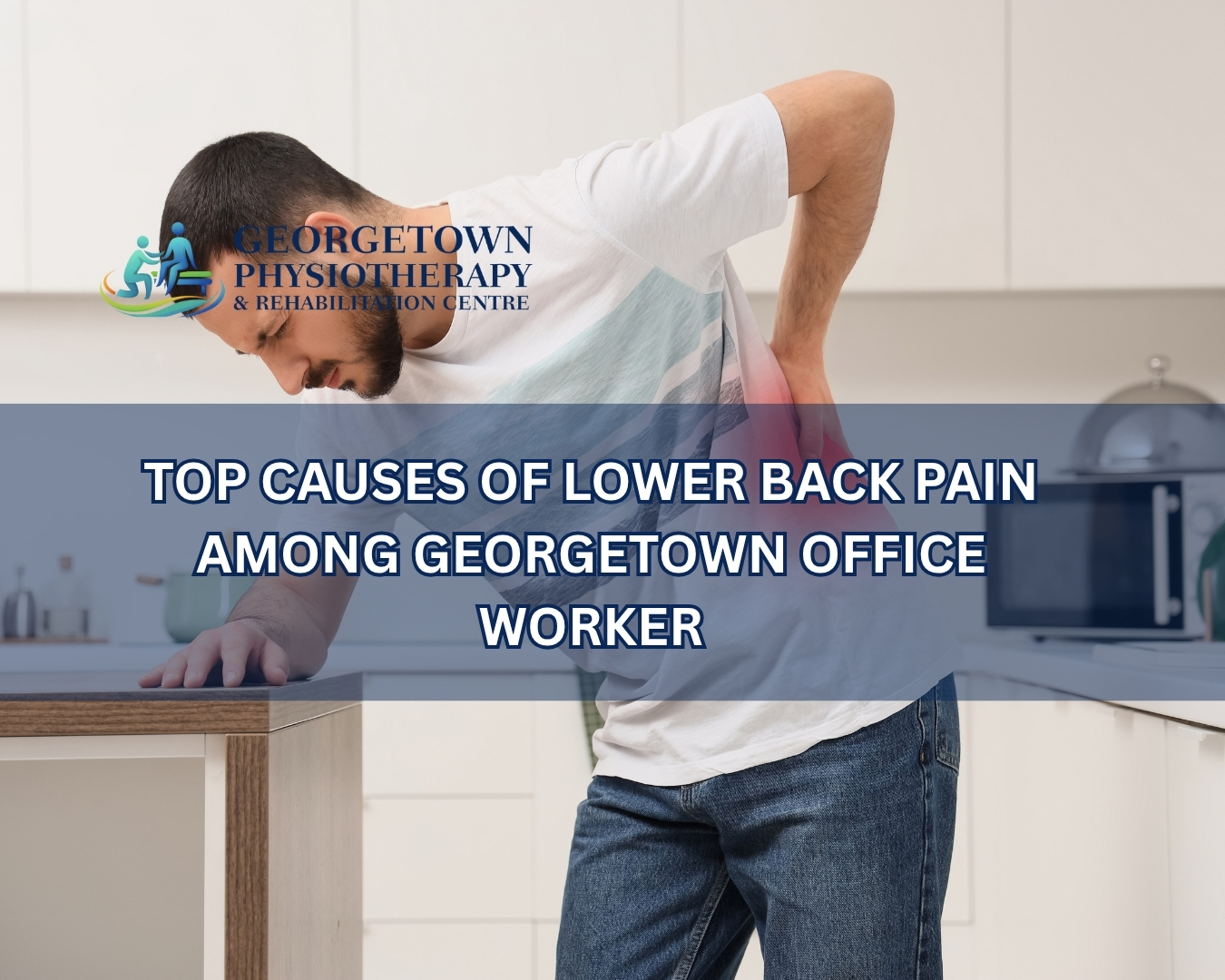
Top Causes of Lower Back Pain Among Georgetown Office Worker
Lower back pain has become one of the most common health concerns among office workers. Whether working from a corporate office in Georgetown, a home office, or a hybrid work environment, many professionals spend long hours sitting in front of computers every day. While office work may not appear physically demanding, prolonged sitting, poor posture, and repetitive habits can place significant strain on the lower back.
For many Georgetown residents, lower back pain develops gradually. What begins as occasional stiffness after a workday can eventually become persistent discomfort that affects productivity, sleep, exercise, and overall quality of life.
At Georgetown Physiotherapy & Rehabilitation Centre, we regularly help office workers overcome lower back pain through physiotherapy, posture correction, chiropractic care, massage therapy, and personalized rehabilitation programs. Understanding the causes of lower back pain is the first step toward preventing and treating it effectively.
Why Lower Back Pain Is So Common Among Office Workers
The human body is designed for movement. Unfortunately, modern office work often involves sitting for extended periods with very little physical activity throughout the day.
A typical office worker may spend:
- 7 to 10 hours sitting
- Several additional hours commuting
- Additional time using phones, tablets, or watching television
Over time, this sedentary lifestyle can create muscle imbalances, joint stiffness, and increased stress on the lower back.
Many office workers are surprised to learn that sitting for long periods can place more pressure on the spine than standing or walking.
Cause #1: Prolonged Sitting
One of the leading contributors to lower back pain is prolonged sitting.
When sitting for extended periods:
- Hip flexor muscles tighten
- Core muscles become less active
- Spinal discs experience increased pressure
- Blood circulation decreases
- Postural muscles fatigue
These changes can contribute to stiffness, discomfort, and chronic lower back pain.
Warning Signs
You may be affected by prolonged sitting if you notice:
Taking regular movement breaks throughout the day can help reduce these effects.
Cause #2: Poor Posture
Poor posture is another major cause of lower back pain among office workers.
Common postural mistakes include:
- Slouching
- Leaning forward toward the screen
- Rounded shoulders
- Forward head posture
- Sitting without lumbar support
These positions place additional strain on the muscles, ligaments, and joints that support the spine.
How Poor Posture Affects the Lower Back
When posture is compromised:
- The natural spinal curves become altered
- Muscles work harder to support the body
- Spinal stress increases
- Joint mobility may decrease
Over time, poor posture can contribute to chronic pain and movement limitations.
Cause #3: Inadequate Workstation Ergonomics
Many office workers spend years working at poorly designed workstations.
Common ergonomic issues include:
- Monitor positioned too low
- Non-supportive chairs
- Incorrect desk height
- Poor keyboard placement
- Lack of foot support
An improperly designed workstation forces the body into awkward positions that increase stress on the lower back.
Signs Your Workstation May Be Contributing to Pain
- Pain worsens during work hours
- Symptoms improve on weekends
- Frequent neck and shoulder tension
- Discomfort while typing
Simple ergonomic adjustments can often provide significant relief.
Cause #4: Weak Core Muscles
The core muscles play a critical role in supporting the spine.
These muscles include:
- Abdominals
- Obliques
- Deep spinal stabilizers
- Pelvic muscles
When core muscles are weak, the lower back may compensate by working harder to stabilize the body.
Consequences of Weak Core Strength
- Increased spinal stress
- Poor posture
- Reduced balance
- Greater injury risk
- Ongoing lower back discomfort
Targeted strengthening exercises can improve spinal support and reduce pain.
Cause #5: Lack of Physical Activity
Many office workers struggle to maintain regular physical activity.
A sedentary lifestyle can lead to:
- Muscle weakness
- Reduced flexibility
- Joint stiffness
- Poor circulation
- Weight gain
Physical inactivity often contributes to chronic lower back pain because the muscles that support the spine become less capable of handling daily demands.
Benefits of Regular Movement
Regular exercise helps:
- Improve strength
- Enhance flexibility
- Maintain healthy posture
- Reduce spinal stress
- Support overall health
Even moderate daily activity can make a meaningful difference.
Cause #6: Remote Work and Home Office Setups
Since remote work became more common, physiotherapists have seen an increase in posture-related injuries.
Many home offices were never designed for full-time work.
Common problems include:
- Working from couches
- Using kitchen tables as desks
- Sitting on non-ergonomic chairs
- Working from bed
These setups often place excessive strain on the lower back.
Common Symptoms
Remote workers frequently report:
- Morning stiffness
- Lower back tightness
- Hip discomfort
- Increased pain at the end of the day
Improving home office ergonomics is often an important part of treatment.
Cause #7: Stress and Muscle Tension
Many people do not realize that stress can contribute to physical pain.
When stress levels increase, muscles often become tense, particularly in the:
- Neck
- Shoulders
- Upper back
- Lower back
Chronic tension can contribute to discomfort and limit mobility.
Stress-Related Back Pain Signs
- Pain during stressful periods
- Muscle tightness
- Fatigue
- Sleep disturbances
Managing stress can play an important role in pain reduction.
Cause #8: Improper Lifting Techniques
Office workers occasionally lift heavy boxes, office equipment, supplies, or files.
Using poor lifting mechanics can strain the lower back.
Common mistakes include:
- Bending at the waist
- Twisting while lifting
- Lifting without engaging the legs
- Carrying uneven loads
Learning proper body mechanics can help prevent injuries.
Cause #9: Repetitive Movements
Although office work may appear repetitive and low-risk, certain movements can contribute to strain over time.
Examples include:
- Reaching for office equipment
- Repetitive twisting
- Frequent bending
- Continuous mouse use
Repeated stress can gradually lead to discomfort and overuse injuries.
Cause #10: Ignoring Early Symptoms
One of the biggest reasons lower back pain becomes chronic is that many people ignore early warning signs.
Common symptoms often overlooked include:
- Mild stiffness
- Occasional aches
- Morning discomfort
- Tight muscles
Addressing problems early often prevents more serious issues from developing.
How Physiotherapy Helps Office Workers With Lower Back Pain
Physiotherapy is one of the most effective non-surgical treatments for lower back pain.
At Georgetown Physiotherapy & Rehabilitation Centre, treatment begins with a comprehensive assessment.
Your physiotherapist evaluates:
- Posture
- Mobility
- Strength
- Flexibility
- Work habits
- Ergonomic setup
Based on the findings, a customized treatment plan is created.
Physiotherapy May Include:
- Manual therapy
- Therapeutic exercises
- Core strengthening
- Mobility training
- Postural correction
- Ergonomic education
The goal is to address both symptoms and underlying causes.
Additional Treatment Options
Massage Therapy
Massage therapy can help reduce muscle tension and improve circulation.
It is particularly beneficial for office workers experiencing chronic tightness and stress-related discomfort.
Chiropractic Care
Chiropractic treatment may help improve spinal mobility and joint function, supporting overall movement and comfort.
Laser Therapy
Laser therapy is a non-invasive treatment that may help reduce inflammation and promote healing in irritated tissues.
Tips for Preventing Lower Back Pain at Work
Move Every 30 Minutes
Stand, stretch, or walk briefly throughout the day.
Improve Your Workspace
Use an ergonomic chair and position your monitor at eye level.
Strengthen Your Core
Regular core exercises help support spinal health.
Maintain Good Posture
Keep your shoulders relaxed and your spine aligned.
Stay Physically Active
Regular exercise helps reduce stiffness and improve resilience.
Seek Treatment Early
Addressing symptoms before they become chronic often leads to better outcomes.
Why Georgetown Office Workers Choose Georgetown Physiotherapy & Rehabilitation Centre
Our clinic provides personalized rehabilitation programs designed specifically for office workers dealing with lower back pain.
We offer:
- Physiotherapy
- Chiropractic Care
- Massage Therapy
- Laser Therapy
- Posture Correction Programs
- Ergonomic Guidance
Our goal is to help patients reduce pain, improve mobility, and return to comfortable, productive daily living.
Take Control of Your Back Health
Lower back pain does not have to be an unavoidable part of office work. Understanding the most common causes allows you to make informed decisions about prevention and treatment.
Whether your pain is related to poor posture, prolonged sitting, stress, or workplace ergonomics, professional care can help address the root causes and support long-term recovery.
Contact our team today to learn more about our lower back pain treatment services and start your journey toward better spinal health and improved workplace comfort.
Georgetown Physiotherapy & Rehabilitation Centre
333 Mountainview Rd S, Unit #2
Georgetown, ON L7G 5S5, Canada
Phone: +1 905-702-6633
Website: https://georgetownphysiotherapy.ca/
Email: info@georgetownphysiotherapy.ca