


 Call For Appointment
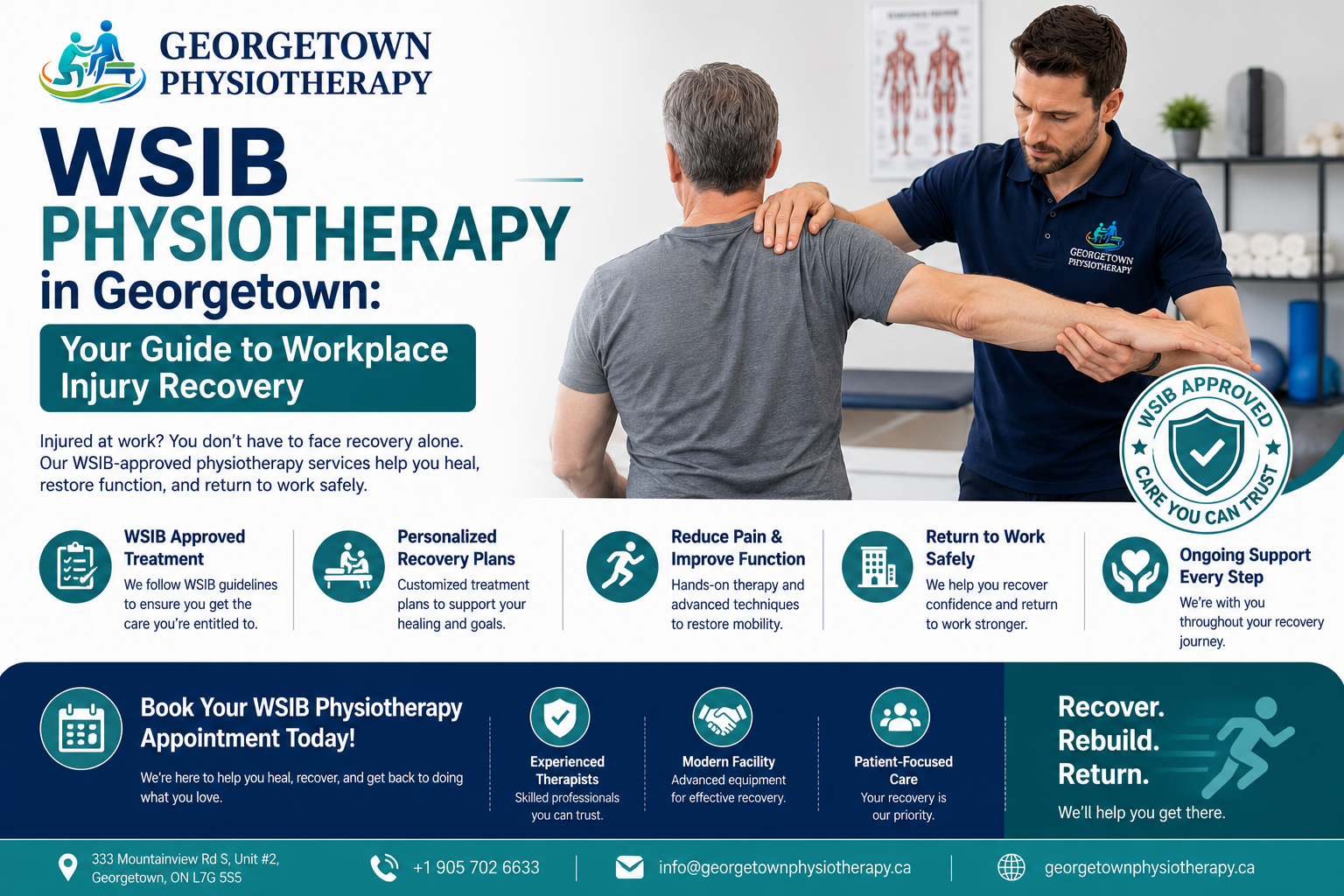
WSIB Physiotherapy in Georgetown: Your Guide to Workplace Injury Recovery
A workplace injury can affect far more than your ability to complete a shift. Pain, stiffness, weakness, reduced mobility, and difficulty performing everyday tasks can disrupt your work, home life, and overall independence. When an injury is work-related, understanding your recovery options and the WSIB process can help you take informed next steps.
WSIB physiotherapy in Georgetown may support eligible workers recovering from work-related injuries by addressing pain, movement limitations, strength, mobility, and functional abilities. Depending on the nature of the injury and your individual needs, physiotherapy may include an assessment, education, therapeutic exercises, hands-on treatment, and a progressive rehabilitation plan designed around recovery and functional goals.
At Georgetown Physiotherapy & Rehabilitation Centre, we provide physiotherapy and rehabilitation services for people dealing with workplace injuries and other musculoskeletal concerns. Our clinic is conveniently located at 333 Mountainview Rd S, Unit #2, Georgetown, ON L7G 5S5, Canada.
What Is WSIB Physiotherapy?
WSIB stands for the Workplace Safety and Insurance Board, the organization responsible for administering Ontario’s workplace insurance system.
When a worker experiences an eligible work-related injury or illness, WSIB may provide access to benefits and services depending on the circumstances of the claim. These can include health-care support and assistance with returning to safe and suitable work.
WSIB physiotherapy refers to physiotherapy provided as part of the recovery process for an eligible work-related injury. The goal is not simply to temporarily manage symptoms. Rehabilitation may focus on improving movement, restoring function, rebuilding physical capacity, and helping the injured worker progress toward appropriate work and daily activities.
The exact rehabilitation process varies from person to person. A repetitive strain injury from office work, for example, may require a different approach from a lifting injury, fall, or physically demanding workplace accident.
What Should You Do After a Workplace Injury?
The actions you take after a workplace injury can be important for both your health and the workplace injury reporting process.
1. Report the Injury
Tell your employer or supervisor about the injury or work-related illness as soon as possible. Explain what happened, when it happened, and what symptoms you are experiencing.
Prompt reporting helps create a clear record of the incident and allows the appropriate workplace and WSIB processes to begin when required.
2. Seek Appropriate Health Care
Some injuries require immediate medical attention, particularly after serious trauma or when symptoms suggest an urgent medical problem. For musculoskeletal injuries, a health professional can assess your symptoms and determine appropriate next steps.
3. Keep Relevant Information Organized
Keep records related to the incident, medical appointments, claim information, work restrictions, and communication relevant to your recovery.
4. Follow the Appropriate WSIB Process
Not every workplace incident follows exactly the same pathway. Reporting requirements, claim decisions, treatment eligibility, and benefits depend on the circumstances.
For official information about claims, benefits, reporting requirements, and return-to-work responsibilities, workers should consult the Workplace Safety and Insurance Board directly.
Common Workplace Injuries That May Require Physiotherapy
Workplace injuries can happen in offices, warehouses, construction environments, healthcare settings, factories, retail businesses, transportation jobs, and many other workplaces.
Some common musculoskeletal concerns seen in rehabilitation settings include:
Back Injuries
Lifting, carrying, bending, twisting, prolonged sitting, and physically demanding tasks can contribute to back pain or injury.
Symptoms may include:
- Lower back pain
- Stiffness
- Reduced movement
- Difficulty bending or lifting
- Pain during prolonged sitting or standing
Neck and Shoulder Injuries
Repetitive tasks, awkward working positions, prolonged computer use, lifting, and sudden accidents may affect the neck and shoulders.
Workers may experience pain, stiffness, weakness, or difficulty reaching and performing job-related tasks.
Muscle Strains and Sprains
A sudden movement, overexertion, slip, trip, or lifting incident may result in a muscle strain or ligament sprain.
The severity can vary considerably, which is why an individualized assessment is important.
Repetitive Strain Injuries
Repeated movements and sustained positions can gradually place stress on muscles, tendons, and other tissues.
These problems may develop over time rather than after one obvious accident.
Joint Injuries
Workplace incidents may affect the knees, ankles, shoulders, wrists, elbows, and other joints. Rehabilitation may focus on mobility, strength, stability, and the physical demands of daily or work-related activities.
How Can Physiotherapy Support Workplace Injury Recovery?
Physiotherapy is not a one-size-fits-all treatment. The rehabilitation plan should reflect the type of injury, current symptoms, physical limitations, work demands, and recovery goals.
Assessment of Your Condition
The physiotherapy process typically begins with an assessment.
Depending on the injury, the physiotherapist may evaluate factors such as:
- Pain and symptom behaviour
- Range of motion
- Strength
- Flexibility
- Balance
- Functional movement
- Tolerance for specific activities
Understanding how the injury affects your daily and work-related activities helps guide the rehabilitation plan.
Pain and Symptom Management
Pain can make movement difficult and may affect sleep, work, and daily activities.
A physiotherapy plan may use appropriate treatment strategies to help manage symptoms while gradually improving movement and function.
Treatment approaches vary according to the individual and may include education, therapeutic exercise, hands-on techniques, and other clinically appropriate interventions.
Restoring Mobility
After an injury, stiffness and reduced movement can make everyday tasks more difficult.
A progressive rehabilitation program may include exercises designed to improve mobility and help you move more comfortably and efficiently.
Rebuilding Strength
Reduced activity after an injury can contribute to weakness and reduced physical capacity.
Strengthening exercises may be introduced and progressed according to your condition, tolerance, and functional goals.
Improving Functional Ability
A key part of workplace injury rehabilitation is helping the individual improve the physical abilities needed for daily life and, when appropriate, work-related activities.
The specific goals will depend on the person’s job. An office worker may have different physical demands from a construction worker, warehouse employee, healthcare professional, or delivery driver.
What Happens During WSIB Physiotherapy in Georgetown?
Every recovery journey is different, but rehabilitation commonly follows several stages.
Stage 1: Initial Assessment
The physiotherapist gathers information about the injury, symptoms, functional limitations, and relevant work demands.
The assessment helps identify current physical limitations and establishes a starting point for rehabilitation.
Stage 2: Individualized Treatment Planning
Based on the assessment findings, a treatment plan may be developed around specific goals.
These goals could include improving movement, increasing strength, building tolerance for activity, or preparing for a safe progression toward work tasks.
Stage 3: Progressive Rehabilitation
As your condition changes, exercises and activities may be progressed.
Recovery is not always perfectly linear. Some people improve steadily, while others may experience periods when symptoms fluctuate.
The rehabilitation plan may need to be adjusted according to your response and progress.
Stage 4: Functional Recovery
Later stages of rehabilitation may place greater emphasis on functional abilities relevant to everyday life and work.
The goal is to build the capacity required for appropriate activities rather than focusing only on symptoms.
The Role of Physiotherapy in Returning to Work
For many injured workers, one of the major goals of recovery is returning to safe and suitable work.
A return to work does not always mean immediately resuming every pre-injury task at full intensity. Depending on the worker’s abilities, job requirements, and applicable return-to-work plan, a gradual or modified approach may sometimes be considered.
Physiotherapy can support this process by focusing on physical function.
For example, rehabilitation may work toward improving:
- Lifting capacity
- Walking or standing tolerance
- Sitting tolerance
- Reaching ability
- Strength and endurance
- Balance and coordination
- Confidence with appropriate movement
Return-to-work decisions involve more than a single symptom or exercise. The worker’s functional abilities, job demands, healthcare guidance, employer arrangements, and applicable WSIB process may all be relevant.
Why Is an Individualized Recovery Plan Important?
Two people can have similar diagnoses but very different rehabilitation needs.
Consider two workers with back pain. One may spend most of the day at a desk, while another may regularly lift, carry, bend, and work in physically demanding positions.
Their job demands are different. Their symptoms may also be different. Therefore, their rehabilitation plans should not automatically be identical.
An individualized physiotherapy plan considers factors such as:
- The nature of the injury
- Current symptoms
- Physical limitations
- Job demands
- Daily activities
- Recovery goals
- Response to treatment
This patient-specific approach can make rehabilitation more relevant to the activities the individual needs to perform.
Common Mistakes to Avoid During Workplace Injury Recovery
Ignoring Symptoms for Too Long
Some workers continue pushing through pain because they hope the problem will disappear on its own. While some minor symptoms may settle, persistent or worsening symptoms deserve appropriate attention.
Returning to Demanding Activities Too Quickly
Trying to resume physically demanding tasks before you are ready may aggravate symptoms or interfere with recovery.
Progression should be based on individual circumstances and appropriate professional guidance.
Avoiding All Movement
At the opposite extreme, some people become afraid to move after an injury.
The appropriate level of activity depends on the condition, but rehabilitation often involves gradually restoring movement and function rather than remaining inactive indefinitely.
Comparing Your Recovery With Someone Else’s
Recovery timelines vary.
The type and severity of the injury, overall health, job demands, treatment needs, and other factors can all influence progress.
Focusing Only on Short-Term Symptom Relief
Feeling better is important, but functional recovery may also require rebuilding strength, mobility, endurance, and confidence.
A comprehensive rehabilitation plan considers what you need to do in daily life and at work.
How Long Does Workplace Injury Physiotherapy Take?
There is no universal recovery timeline.
The length of rehabilitation may depend on:
- The type of injury
- The severity of the injury
- How long symptoms have been present
- Your current functional limitations
- The physical demands of your job
- Your response to rehabilitation
- Other individual health factors
A relatively minor injury may improve more quickly than a complex or persistent condition.
Rather than relying on a generic number of sessions, your progress should be assessed over time and the rehabilitation plan adjusted when appropriate.
Can I Choose a Physiotherapist for a Workplace Injury?
Ontario’s WSIB has policies and processes concerning the choice of health professionals and healthcare reporting. The exact requirements can depend on the circumstances of the claim and the applicable program of care.
If you are unsure about your claim, treatment eligibility, or whether a particular service is covered, confirm the current requirements directly with WSIB and the healthcare provider before beginning treatment.
What Should I Bring to My First Physiotherapy Appointment?
Depending on your situation, it may be helpful to bring:
- Relevant WSIB or claim information
- Details about how the injury happened
- Information about your symptoms
- Relevant medical documents, if available
- A list of medications, when relevant
- Information about your job duties
- Details about any work restrictions or modified duties
Wear comfortable clothing that allows the relevant area to be assessed when possible.
Frequently Asked Questions About WSIB Physiotherapy in Georgetown
What is WSIB physiotherapy?
WSIB physiotherapy is physiotherapy provided in connection with an eligible work-related injury or illness. Treatment may focus on restoring movement, strength, function, and the physical abilities needed for daily activities and an appropriate return to work.
Does WSIB automatically cover all physiotherapy?
No. Coverage and eligibility depend on the individual claim and applicable WSIB requirements. Patients should confirm their specific situation rather than assuming that every service or treatment is automatically covered.
Do I need to report a workplace injury?
Ontario has specific workplace injury reporting requirements. Workers should inform their employer about a work-related injury or illness as soon as possible and follow the appropriate reporting process. For official requirements, consult WSIB directly.
Can physiotherapy help with a repetitive strain injury from work?
Physiotherapy may be appropriate for some work-related repetitive strain injuries. Treatment depends on the affected area, symptoms, functional limitations, and assessment findings.
Can physiotherapy help me return to work?
Physiotherapy may support return-to-work goals by helping improve mobility, strength, endurance, and functional capacity. The broader return-to-work process may also involve the worker, employer, healthcare providers, and WSIB.
What if my job is physically demanding?
Your physiotherapist can consider relevant physical job demands when establishing rehabilitation goals. A physically demanding job may require attention to strength, endurance, mobility, lifting tolerance, or other job-related abilities.
Choose Local Workplace Injury Rehabilitation in Georgetown
Recovering from a workplace injury can involve more than waiting for symptoms to disappear. A structured rehabilitation plan may help you understand your condition, improve movement, rebuild physical capacity, and work toward meaningful functional goals.
If you are looking for WSIB physiotherapy in Georgetown or need support for a work-related musculoskeletal injury, Georgetown Physiotherapy & Rehabilitation Centre offers local physiotherapy and rehabilitation services.
Our clinic is located at:
Georgetown Physiotherapy & Rehabilitation Centre
333 Mountainview Rd S, Unit #2Georgetown, ON L7G 5S5, Canada
Phone: +1 905-702-6633
Email: info@georgetownphysiotherapy.ca
Contact the clinic to discuss appointment availability and your rehabilitation needs. For questions about WSIB claim eligibility, benefits, or official reporting requirements, confirm the latest information directly with WSIB.
Take the Next Step Toward Recovery
A workplace injury can affect your movement, independence, and ability to perform your job. The right next step depends on your injury and individual circumstances, but timely assessment and an appropriate rehabilitation plan can help establish a clearer path forward.
If you are searching for workplace injury physiotherapy in Georgetown, contact Georgetown Physiotherapy & Rehabilitation Centre to learn more about available physiotherapy and rehabilitation services and to request an appointment.