



 Call For Appointment
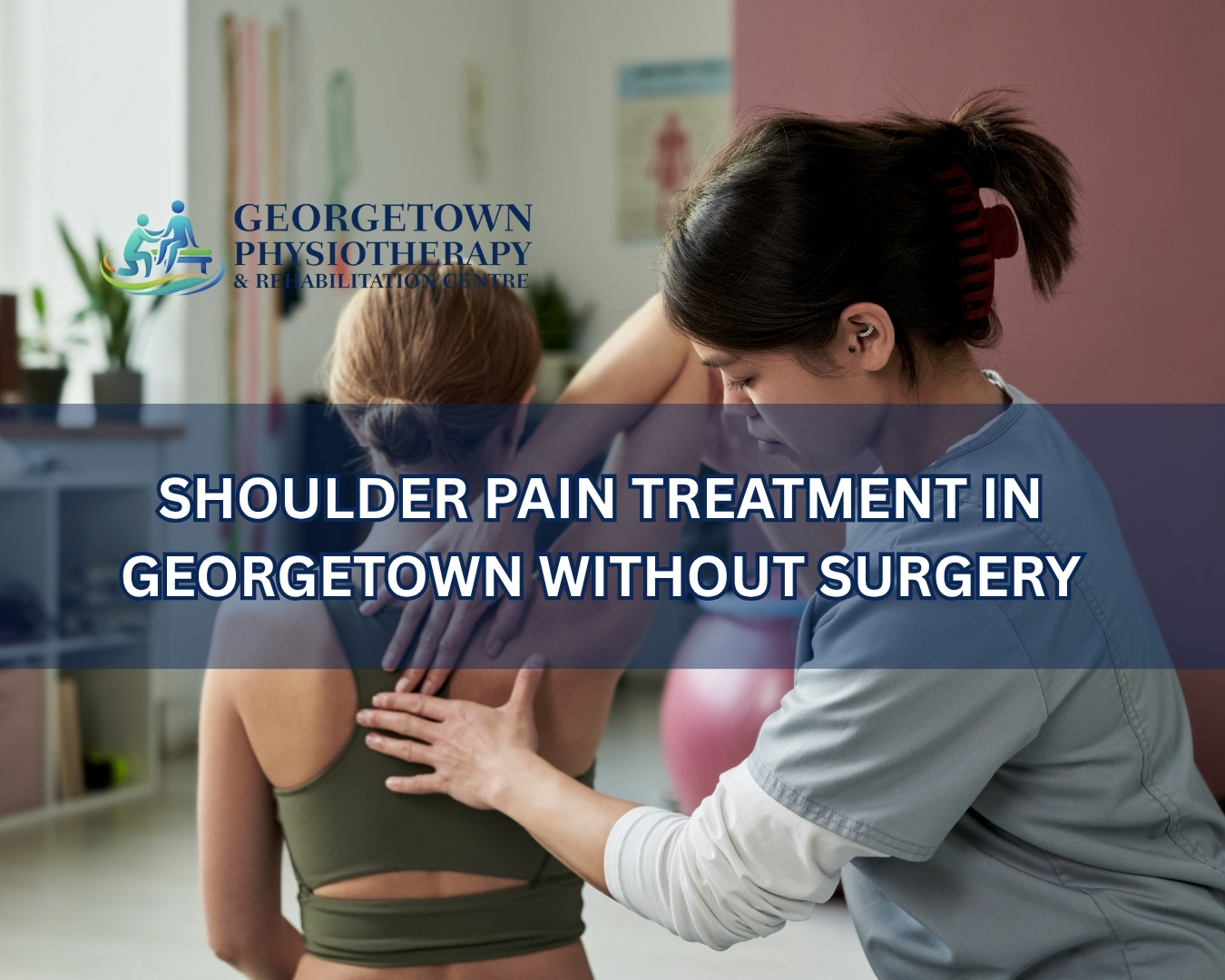
Shoulder Pain Treatment in Georgetown Without Surgery
Shoulder pain is one of the most common musculoskeletal problems affecting adults of all ages. Whether caused by sports injuries, repetitive movements, poor posture, workplace strain, aging, or overuse, shoulder discomfort can make even simple activities difficult. Tasks such as lifting objects, reaching overhead, driving, exercising, or sleeping comfortably may become painful and frustrating.
Many Georgetown residents worry that ongoing shoulder pain automatically means surgery is necessary. However, in many cases, conservative and non-surgical treatments can successfully reduce pain, improve mobility, and restore normal shoulder function.
Physiotherapy, rehabilitation exercises, chiropractic care, massage therapy, and posture correction are commonly recommended as first-line treatments for shoulder pain before considering surgical intervention. Research suggests that structured physiotherapy and exercise-based rehabilitation are often highly effective for many shoulder conditions.
At Georgetown Physiotherapy & Rehabilitation Centre, personalized rehabilitation programs help patients recover naturally while improving strength, mobility, and long-term shoulder health.
Common Causes of Shoulder Pain
The shoulder is one of the most mobile joints in the body, which also makes it vulnerable to injury and strain.
Common causes of shoulder pain include:
- Rotator cuff injuries
- Frozen shoulder
- Tendon inflammation
- Muscle strain
- Sports injuries
- Poor posture
- Repetitive overhead movement
- Arthritis
- Shoulder impingement
- Workplace-related strain
Shoulder pain may develop gradually or suddenly depending on the underlying condition.
Signs You Should Not Ignore
Some shoulder discomfort improves with rest, but persistent symptoms may require professional rehabilitation support.
Common warning signs include:
- Pain when lifting the arm
- Shoulder stiffness
- Weakness in the arm
- Pain while sleeping
- Reduced range of motion
- Clicking or grinding sensations
- Persistent inflammation
- Difficulty performing daily activities
Ignoring these symptoms may increase the risk of chronic pain and long-term mobility limitations.
Can Shoulder Pain Be Treated Without Surgery?
In many cases, yes. Conservative treatment is often recommended before surgery, especially for mild to moderate shoulder conditions.
Studies suggest that structured physiotherapy and rehabilitation exercises can significantly improve shoulder pain and mobility without surgery for many patients.
Non-surgical treatment focuses on:
- Reducing inflammation
- Improving mobility
- Strengthening shoulder muscles
- Correcting posture
- Improving movement mechanics
- Preventing reinjury
Surgery is usually considered only when conservative treatments fail or when severe structural damage is present.
How Physiotherapy Helps Shoulder Pain
Physiotherapy is one of the most effective non-invasive treatments for shoulder rehabilitation.
Physiotherapy programs may help:
- Reduce pain
- Improve flexibility
- Restore range of motion
- Strengthen supporting muscles
- Improve posture
- Improve shoulder stability
Treatment plans are customized depending on the patient’s symptoms, activity level, and recovery goals.
Common Physiotherapy Treatments for Shoulder Pain
At Georgetown Physiotherapy & Rehabilitation Centre, shoulder rehabilitation programs may include:
- Manual therapy
- Mobility exercises
- Stretching programs
- Strengthening exercises
- Soft tissue therapy
- Posture correction
- Functional movement training
- Rehabilitation exercises
Research shows that strengthening and stretching exercises are commonly recommended for improving shoulder mobility and reducing discomfort.
Best Exercises Often Recommended for Shoulder Pain
Pendulum Exercises
Pendulum movements help improve shoulder mobility gently and safely.
Doorway Stretch
This stretch helps open tight chest and shoulder muscles while improving flexibility.
Shoulder Blade Squeezes
These exercises strengthen upper back muscles and support posture correction.
Wall Slides
Wall slide exercises help improve shoulder movement and flexibility.
Rotator Cuff Strengthening
Resistance-based exercises may help improve shoulder stability and reduce reinjury risk.
Physiotherapists usually personalize exercise routines depending on the specific shoulder condition and pain level.
Frozen Shoulder Treatment Without Surgery
Frozen shoulder causes severe stiffness and limited movement in the shoulder joint.
Non-surgical treatment may include:
- Stretching exercises
- Physiotherapy
- Manual therapy
- Mobility training
- Pain management techniques
Consistent rehabilitation is extremely important for improving shoulder movement over time.
Rotator Cuff Rehabilitation
The rotator cuff consists of muscles and tendons that stabilize the shoulder.
Rotator cuff problems often cause:
- Pain lifting the arm
- Weakness
- Reduced mobility
- Night pain
Research suggests physiotherapy is often highly effective for many rotator cuff injuries.
Chiropractic Care for Shoulder Mobility
- Improve shoulder movement
- Reduce muscle tension
- Improve posture
- Reduce neck and upper back strain
- Improve joint mobility
Many patients combine chiropractic care with physiotherapy for more comprehensive rehabilitation.
Some Georgetown chiropractic and rehabilitation providers include:
- Chiropractic & Sports Injuries Centre of Georgetown
- Scheffler’s Chiropractic Clinic
- Life Chiropractic Centre
- Cranfield Chiropractic Centre
Massage Therapy for Shoulder Tension
- Reduced muscle tension
- Improved flexibility
- Better circulation
- Reduced stress-related tightness
- Improved comfort during movement
Massage therapy is commonly included in shoulder rehabilitation programs.
Laser Therapy for Shoulder Pain
- Reduce chronic pain
- Improve circulation
- Support tissue recovery
- Reduce inflammation
- Improve mobility
This treatment is often combined with physiotherapy and rehabilitation exercises.
Shoulder Pain and Poor Posture
Many office workers develop shoulder pain due to poor posture and prolonged computer use.
Forward head posture and rounded shoulders may place excessive stress on the shoulder joint and surrounding muscles.
Posture correction therapy often includes:
- Ergonomic guidance
- Stretching exercises
- Core strengthening
- Upper back strengthening
- Workplace movement strategies
Improving posture may significantly reduce recurring shoulder discomfort.
Sports Injuries and Shoulder Rehabilitation
Athletes frequently experience shoulder strain from repetitive overhead movements and physical impact.
Sports physiotherapy focuses on:
- Restoring mobility
- Improving stability
- Reducing reinjury risk
- Strengthening supporting muscles
- Improving movement mechanics
Early rehabilitation often improves recovery outcomes significantly.
When to Seek Professional Help
You should seek professional rehabilitation support if you experience:
- Persistent shoulder pain
- Difficulty lifting the arm
- Reduced range of motion
- Shoulder weakness
- Pain interfering with sleep
- Sports-related shoulder injuries
- Chronic stiffness
Early treatment often helps prevent worsening symptoms and long-term complications.
Why Georgetown Residents Choose Local Rehabilitation Clinics
Many Georgetown residents seek rehabilitation services close to home for ongoing recovery and pain management support.
Local physiotherapy and rehabilitation providers include:
- Georgetown Physiotherapy & Rehabilitation Centre
- Eramosa Physiotherapy Associates Georgetown
- CBI Health – Georgetown
- Forward Physiotherapy
- MedRehab Group – Georgetown Clinic
These clinics provide rehabilitation services focused on shoulder pain recovery, mobility improvement, and conservative treatment approaches.
Final Thoughts
Shoulder pain can affect comfort, mobility, work performance, and overall quality of life. Fortunately, many shoulder conditions can improve significantly with non-surgical treatment and structured rehabilitation.
If shoulder pain is limiting your daily activities, early rehabilitation support can help reduce pain, improve mobility, and prevent long-term complications.
Georgetown Physiotherapy & Rehabilitation Centre
Phone: +1 905 702 6633
Email: info@georgetownphysiotherapy.ca
Website: Georgetown Physiotherapy Official Website