


 Call For Appointment
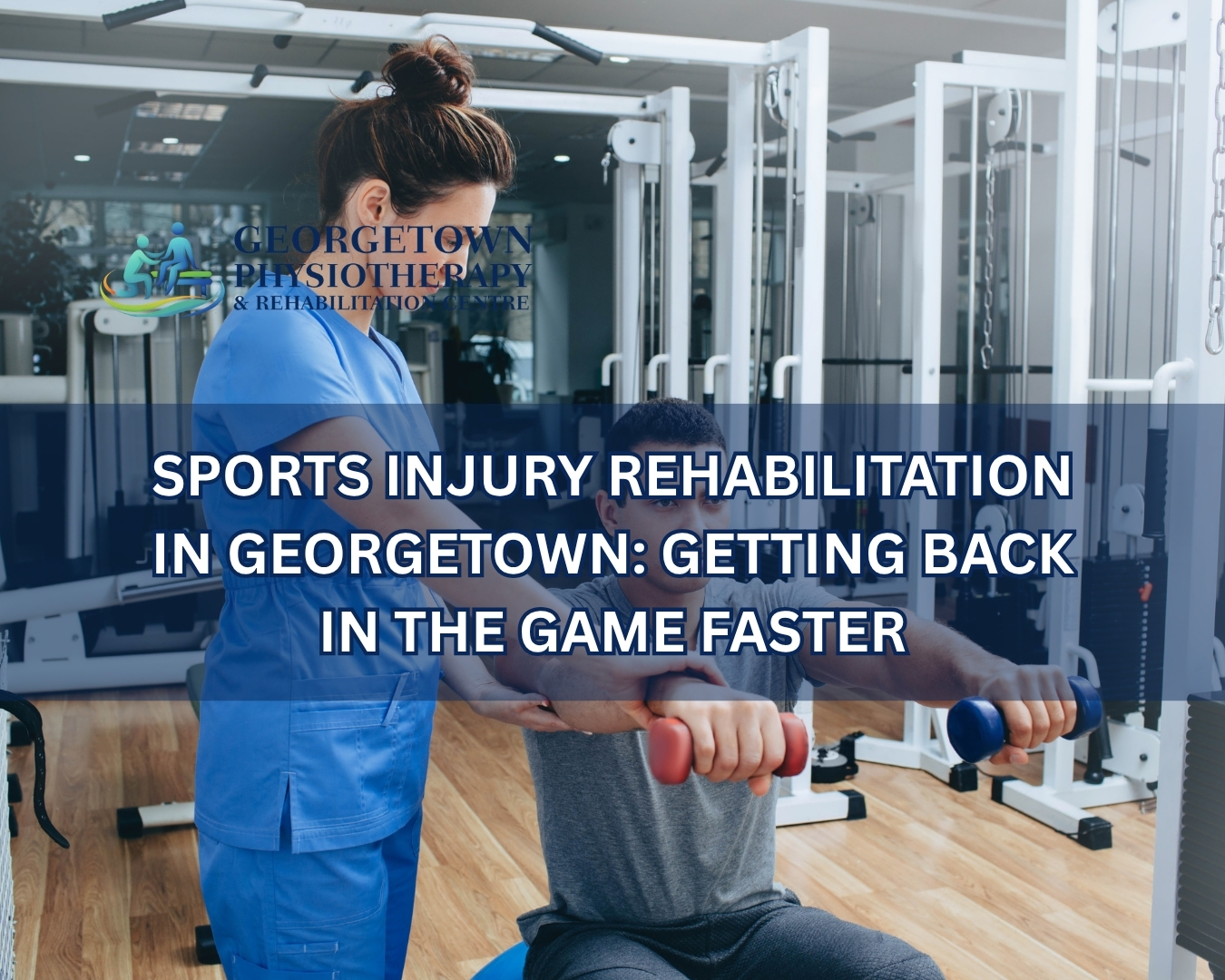
Sports Injury Rehabilitation in Georgetown: Getting Back in the Game Faster
Whether you’re a competitive athlete, weekend warrior, runner, cyclist, gym enthusiast, or recreational sports participant, injuries can happen when you least expect them. A twisted ankle during a soccer game, a shoulder injury from weightlifting, knee pain from running, or a muscle strain during training can quickly sideline your performance and affect your daily life.
For many athletes in Georgetown, the biggest concern after an injury isn’t just relieving pain—it’s returning to their sport safely, confidently, and as quickly as possible.
Unfortunately, many athletes make the mistake of returning to activity too soon, often leading to reinjury, chronic pain, or longer recovery times. Proper sports injury rehabilitation is essential for restoring strength, mobility, stability, and performance while reducing the risk of future injuries.
At Georgetown Physiotherapy & Rehabilitation Centre, athletes receive personalized rehabilitation programs designed to promote recovery, restore function, and help them get back to the activities they love.
Understanding Sports Injuries
Sports injuries can occur suddenly from trauma or develop gradually due to repetitive stress and overuse.
Common factors that contribute to sports injuries include:
- Poor warm-up routines
- Overtraining
- Muscle imbalances
- Improper technique
- Lack of flexibility
- Weak supporting muscles
- Inadequate recovery time
- Sudden impacts or collisions
While some injuries heal naturally with rest, many require professional rehabilitation to ensure complete recovery.
Common Sports Injuries Treated in Georgetown
Ankle Sprains
One of the most common sports injuries, ankle sprains occur when ligaments are stretched or torn.
Symptoms may include:
- Swelling
- Pain
- Bruising
- Difficulty walking
Without proper rehabilitation, ankle instability may increase the risk of future sprains.
Knee Injuries
Athletes frequently experience:
- Ligament injuries
- Runner’s knee
- Patellar tendon issues
- Meniscus injuries
Knee pain can significantly affect performance and mobility.
Shoulder Injuries
Shoulder problems are common in sports involving overhead movements, including:
- Baseball
- Tennis
- Swimming
- Volleyball
- Weightlifting
Common conditions include:
- Rotator cuff injuries
- Shoulder impingement
- Muscle strains
Muscle Strains
Muscle strains often affect:
- Hamstrings
- Calves
- Quadriceps
- Groin muscles
- Lower back muscles
These injuries frequently occur during sprinting, jumping, or sudden movements.
Tennis Elbow and Golfer’s Elbow
Repetitive arm movements may lead to tendon irritation around the elbow joint.
These conditions can affect athletes as well as workers performing repetitive tasks.
Shin Splints
Runners and high-impact athletes commonly experience pain along the shin bone due to repetitive stress.
Early treatment can help prevent more serious injuries.
Why Proper Rehabilitation Matters
Many athletes focus only on pain relief, but successful rehabilitation goes beyond eliminating symptoms.
Effective rehabilitation aims to:
- Restore mobility
- Improve strength
- Rebuild stability
- Correct movement patterns
- Prevent reinjury
- Improve performance
Returning to sport before full recovery often increases the risk of chronic problems and recurring injuries.
The Sports Injury Rehabilitation Process
At Georgetown Physiotherapy & Rehabilitation Centre, rehabilitation programs are tailored to the athlete’s specific injury, sport, and goals.
Step 1: Comprehensive Assessment
The rehabilitation process begins with a detailed evaluation.
A physiotherapist may assess:
- Pain levels
- Joint mobility
- Muscle strength
- Flexibility
- Balance
- Functional movement patterns
Understanding the underlying cause of the injury helps guide treatment decisions.
Step 2: Pain and Inflammation Management
Early treatment often focuses on reducing pain and inflammation.
This may involve:
- Manual therapy
- Gentle mobility exercises
- Soft tissue treatment
- Laser therapy
- Activity modification
Managing symptoms effectively creates a better foundation for rehabilitation.
Step 3: Restoring Mobility
Injuries often lead to stiffness and reduced range of motion.
Rehabilitation exercises help restore:
- Joint flexibility
- Muscle length
- Normal movement patterns
Improved mobility supports more efficient and pain-free movement.
Step 4: Strength Building
Weakness is common after injury.
Physiotherapy programs focus on strengthening:
- Injured tissues
- Supporting muscles
- Core muscles
- Stabilizing muscle groups
Strength training helps prepare athletes for a safe return to activity.
Step 5: Functional Training
As recovery progresses, rehabilitation becomes more sport-specific.
Exercises may focus on:
- Agility
- Balance
- Coordination
- Jumping mechanics
- Running technique
- Sport-specific movements
This stage helps bridge the gap between rehabilitation and athletic performance.
Step 6: Return-to-Sport Planning
Before returning to competition or training, athletes should demonstrate:
- Adequate strength
- Full mobility
- Good balance
- Functional movement control
- Minimal pain
A structured return-to-sport plan helps reduce the risk of reinjury.
Physiotherapy for Sports Injuries
Physiotherapy is often the foundation of sports rehabilitation.
Benefits include:
Faster Recovery
Targeted rehabilitation promotes healing and helps athletes return to activity safely.
Improved Mobility
Exercises help restore flexibility and movement quality.
Better Performance
Correcting movement deficiencies may improve athletic efficiency.
Injury Prevention
Physiotherapists identify risk factors that may contribute to future injuries.
Chiropractic Care for Athletes
Chiropractic care can be a valuable addition to sports rehabilitation.
Benefits may include:
- Improved joint mobility
- Better spinal alignment
- Reduced stiffness
- Enhanced movement efficiency
Athletes often combine chiropractic care with physiotherapy to support recovery and performance.
Massage Therapy for Recovery
Massage therapy plays an important role in sports rehabilitation and recovery.
Benefits include:
- Reduced muscle tension
- Improved circulation
- Enhanced flexibility
- Faster recovery between training sessions
- Stress reduction
Many athletes use massage therapy as part of their regular maintenance routine.
Laser Therapy for Sports Injuries
Laser therapy is a non-invasive treatment that may help support tissue healing and pain reduction.
Potential benefits include:
- Reduced inflammation
- Improved circulation
- Faster tissue recovery
- Pain management support
Laser therapy is commonly incorporated into sports rehabilitation programs.
How Athletes Can Prevent Future Injuries
While injuries cannot always be avoided, certain strategies can reduce risk.
Warm Up Properly
Prepare muscles and joints before physical activity.
Strengthen Supporting Muscles
Balanced strength helps protect joints and improve stability.
Improve Flexibility
Regular stretching helps maintain mobility.
Prioritize Recovery
Rest and recovery are essential components of performance.
Address Minor Problems Early
Treating small issues before they worsen can prevent more serious injuries.
Why Georgetown Athletes Choose Georgetown Physiotherapy & Rehabilitation Centre
Athletes throughout Georgetown trust Georgetown Physiotherapy & Rehabilitation Centre because of its comprehensive and personalized approach to rehabilitation.
Services include:
- Sports Injury Physiotherapy
- Chiropractic Care
- Massage Therapy
- Laser Therapy
- WSIB Physiotherapy
- MVA Injury Care
Each rehabilitation program is customized to the athlete’s injury, sport, and performance goals.
The clinic focuses on helping patients recover safely while improving strength, mobility, and confidence.
Final Thoughts
Sports injuries can be frustrating, but they do not have to keep you on the sidelines indefinitely. Proper rehabilitation is the key to a successful recovery and a safe return to sport.
If pain, stiffness, or a recent injury is preventing you from performing at your best, seeking professional sports injury rehabilitation may be the first step toward getting back in the game stronger than before.
Contact Information
Georgetown Physiotherapy & Rehabilitation Centre
333 Mountainview Rd S, Unit #2
Georgetown, ON L7G 5S5, Canada
Phone: +1 905 702 6633