


 Call For Appointment
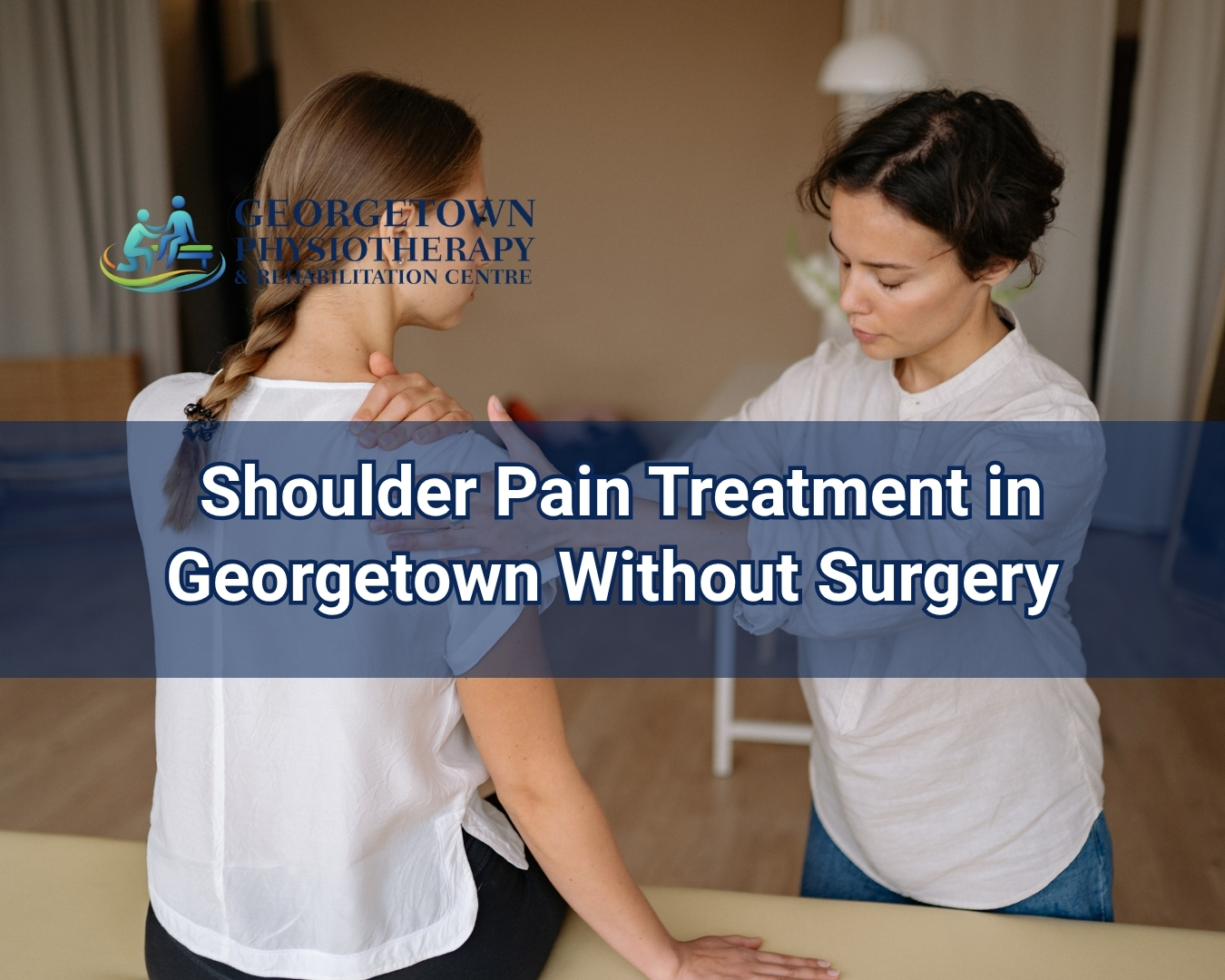
Shoulder Pain Treatment in Georgetown Without Surgery
Shoulder pain is one of the most common musculoskeletal complaints affecting adults of all ages. Whether caused by a sports injury, repetitive movements, poor posture, aging, or everyday wear and tear, shoulder pain can significantly impact your ability to work, exercise, sleep, and perform routine daily activities.
Simple tasks such as reaching overhead, lifting groceries, getting dressed, or carrying objects may become painful when shoulder problems develop. Many people worry that shoulder pain automatically means surgery is necessary. However, the reality is that many shoulder conditions respond well to conservative, non-surgical treatment when addressed early and appropriately.
At Georgetown Physiotherapy & Rehabilitation Centre, we help patients recover from shoulder pain through personalized rehabilitation programs designed to reduce pain, restore movement, improve strength, and help prevent future injuries.
Understanding Shoulder Pain
The shoulder is one of the most mobile joints in the body. This incredible range of motion allows us to perform a wide variety of movements, but it also makes the shoulder more vulnerable to injury and dysfunction.
The shoulder consists of:
- Bones
- Muscles
- Tendons
- Ligaments
- Cartilage
- Bursae
- Joints
When any of these structures become irritated, inflamed, weakened, or injured, pain and mobility limitations can occur.
Common Symptoms of Shoulder Problems
Shoulder conditions can present with a variety of symptoms, including:
- Pain when lifting the arm
- Difficulty reaching overhead
- Shoulder stiffness
- Weakness in the arm
- Pain while sleeping
- Clicking or grinding sensations
- Reduced range of motion
- Pain that radiates into the upper arm
Symptoms may develop gradually or occur suddenly following an injury.
Common Causes of Shoulder Pain
Rotator Cuff Injuries
The rotator cuff is a group of muscles and tendons that stabilize the shoulder.
Common rotator cuff problems include:
- Tendinitis
- Partial tears
- Full-thickness tears
- Overuse injuries
Many atraumatic rotator cuff conditions respond well to conservative treatment and rehabilitation programs.
Frozen Shoulder
Frozen shoulder, also known as adhesive capsulitis, causes:
- Pain
- Severe stiffness
- Progressive loss of motion
Research shows physiotherapy and targeted exercises are often used as first-line treatment to improve mobility and reduce pain.
Shoulder Impingement
Shoulder impingement occurs when soft tissues become compressed during movement.
Common symptoms include:
- Pain with overhead activities
- Weakness
- Reduced mobility
Exercise-based rehabilitation is commonly recommended as part of conservative management.
Arthritis
Arthritic changes in the shoulder joint may lead to:
- Pain
- Stiffness
- Reduced mobility
- Difficulty performing daily activities
Many patients manage symptoms successfully with non-surgical rehabilitation.
Sports Injuries
Athletes participating in:
- Hockey
- Tennis
- Baseball
- Volleyball
- Swimming
- Weightlifting
may experience shoulder injuries due to repetitive overhead movements.
Poor Posture
Modern lifestyles contribute significantly to shoulder problems.
Common contributors include:
- Desk work
- Smartphone use
- Slouched sitting posture
- Forward shoulder positioning
Poor posture can place excessive stress on shoulder muscles and joints over time.
Why Non-Surgical Treatment Is Often the First Choice
Many patients assume surgery is the quickest solution for shoulder pain. However, clinical guidelines often recommend conservative treatment before surgical intervention for many common shoulder conditions.
Research suggests that exercise therapy and physiotherapy frequently play a central role in shoulder pain management.
In many cases, patients experience significant improvement through rehabilitation without undergoing surgery.
How Physiotherapy Helps Shoulder Pain
Physiotherapy is often considered one of the most effective non-surgical approaches for managing shoulder conditions.
Comprehensive Assessment
Treatment begins with a detailed evaluation of:
- Shoulder mobility
- Strength
- Posture
- Movement patterns
- Functional limitations
This helps identify the underlying cause of symptoms.
Pain Reduction
Physiotherapy techniques help reduce discomfort and improve movement quality.
Treatment may include:
- Manual therapy
- Therapeutic exercise
- Mobility training
- Stretching programs
Restoring Mobility
Limited movement is one of the most common effects of shoulder pain.
Physiotherapy focuses on improving:
- Range of motion
- Joint mobility
- Functional movement
Studies indicate manual therapy may help improve shoulder mobility when incorporated into treatment plans.
Strengthening the Shoulder
Weakness often contributes to ongoing shoulder dysfunction.
Targeted strengthening programs focus on:
- Rotator cuff muscles
- Shoulder stabilizers
- Upper back muscles
- Core muscles
Exercise therapy is frequently recommended as a cornerstone of shoulder rehabilitation.
Chiropractic Care for Shoulder Pain
Chiropractic care may help improve:
- Joint mobility
- Movement efficiency
- Postural alignment
For some patients, improving spinal and shoulder mechanics can help reduce stress on surrounding tissues.
Chiropractic care is often combined with physiotherapy to support recovery and improve movement quality.
Massage Therapy for Shoulder Pain
Muscle tension frequently contributes to shoulder discomfort.
Massage therapy may help:
- Reduce muscle tightness
- Improve circulation
- Increase flexibility
- Promote relaxation
Patients experiencing stress-related tension or postural strain often benefit from massage therapy as part of their rehabilitation program.
Laser Therapy as a Complementary Treatment
Laser therapy is a non-invasive treatment option that may help:
- Reduce inflammation
- Improve circulation
- Support tissue healing
- Reduce pain
Research suggests laser therapy may be used alongside exercise-based rehabilitation for certain shoulder conditions.
Conditions Commonly Treated Without Surgery
At Georgetown Physiotherapy & Rehabilitation Centre, non-surgical rehabilitation may be appropriate for:
- Rotator cuff tendinopathy
- Shoulder impingement
- Frozen shoulder
- Arthritis-related shoulder pain
- Muscle strains
- Tendon injuries
- Sports-related shoulder injuries
- Postural shoulder pain
- Repetitive strain injuries
Every patient receives an individualized assessment to determine the most appropriate treatment plan.
When Should You Seek Professional Treatment?
Consider scheduling an assessment if:
- Pain lasts longer than a few days
- Symptoms interfere with sleep
- Range of motion is limited
- Weakness develops
- Daily activities become difficult
- Pain worsens over time
Early intervention often improves recovery outcomes and helps prevent chronic issues.
Preventing Future Shoulder Problems
Maintain Good Posture
Proper posture reduces stress on the shoulders and upper back.
Stay Active
Regular exercise helps maintain strength and mobility.
Strengthen Supporting Muscles
Balanced strengthening programs improve shoulder stability.
Avoid Repetitive Overload
Gradually increasing activity levels can reduce injury risk.
Address Symptoms Early
Minor discomfort should not be ignored, as early treatment often prevents more serious problems.
Why Georgetown Residents Choose Georgetown Physiotherapy & Rehabilitation Centre
Patients throughout Georgetown and surrounding communities trust our clinic because of our personalized, evidence-based approach to rehabilitation.
Our services include:
Our treatment philosophy focuses on:
Every rehabilitation plan is tailored to the individual’s goals and lifestyle.
Recover From Shoulder Pain Without Surgery
Shoulder pain can significantly affect your quality of life, but surgery is not always necessary. Many common shoulder conditions respond well to conservative treatment approaches that focus on restoring mobility, improving strength, and reducing pain.
Whether you’re dealing with a rotator cuff injury, frozen shoulder, arthritis, sports injury, or postural discomfort, physiotherapy and rehabilitation can often provide effective, long-term relief.
At Georgetown Physiotherapy & Rehabilitation Centre, we are committed to helping Georgetown residents recover safely and confidently through personalized, non-surgical treatment programs.
Contact our team today to learn more about shoulder pain treatment in Georgetown and take the first step toward improved mobility, strength, and comfort.
Georgetown Physiotherapy & Rehabilitation Centre
333 Mountainview Rd S, Unit #2
Georgetown, ON L7G 5S5, Canada
Phone: +1 905-702-6633
Website: https://georgetownphysiotherapy.ca/
Email: info@georgetownphysiotherapy.ca