



 Call For Appointment
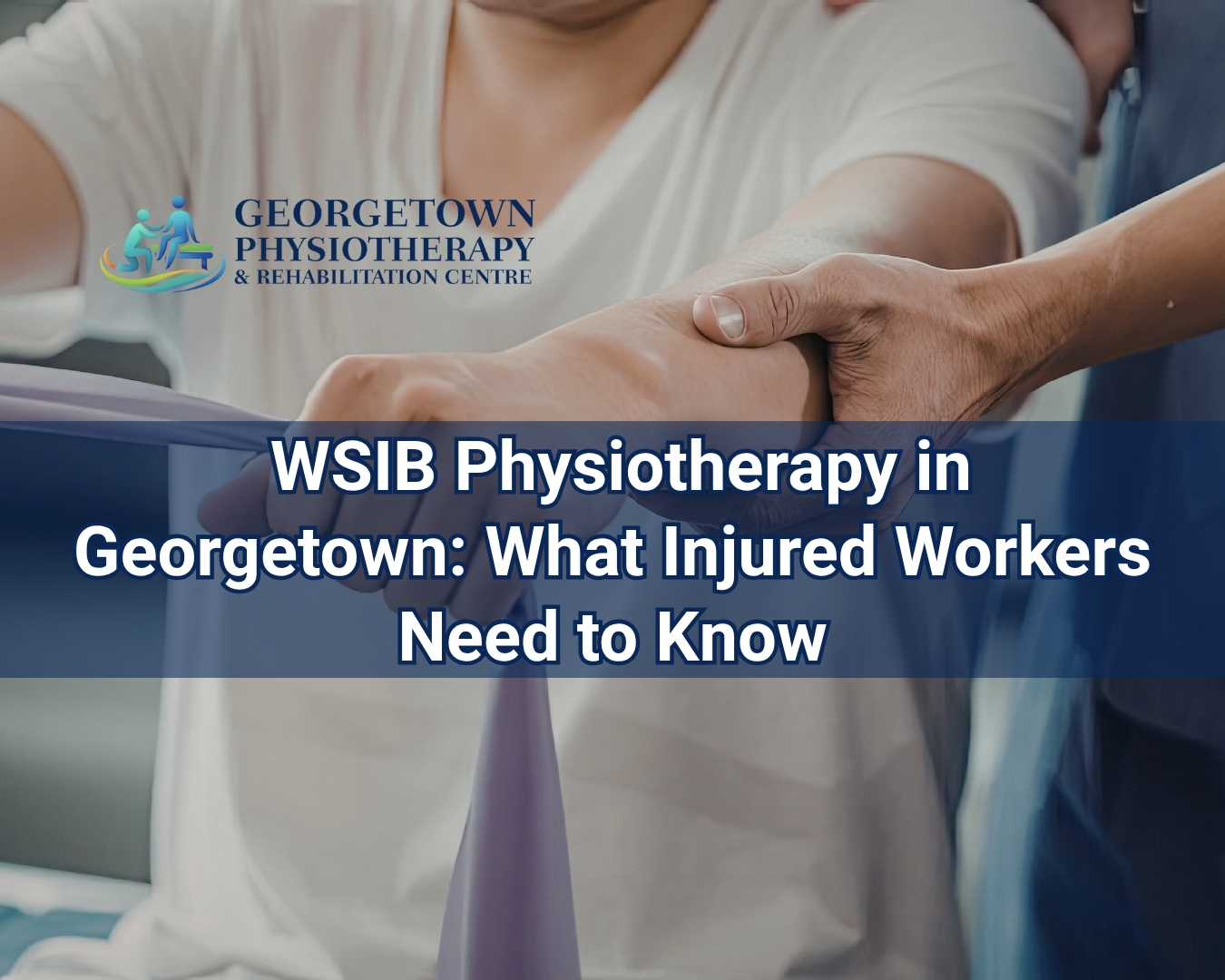
WSIB Physiotherapy in Georgetown: What Injured Workers Need to Know
A workplace injury can happen in any profession—from construction and manufacturing to healthcare, retail, office environments, and transportation. Whether you slipped on a wet floor, strained your back while lifting, developed repetitive strain from your daily tasks, or suffered another work-related injury, getting the right treatment as early as possible can make a significant difference in your recovery.
If you’ve been searching for “WSIB physiotherapy near me in Georgetown,” you’re likely looking for information about your treatment options and the next steps after a workplace injury. Fortunately, eligible Ontario workers may receive physiotherapy through the Workplace Safety and Insurance Board (WSIB) to support recovery and a safe return to work. WSIB-covered physiotherapy is designed to help injured workers recover while minimizing long-term disability and restoring function.
At Georgetown Physiotherapy & Rehabilitation Centre, we provide personalized rehabilitation programs that focus on reducing pain, restoring movement, rebuilding strength, and helping injured workers safely return to their jobs.
What Is WSIB Physiotherapy?
WSIB physiotherapy is rehabilitation provided to workers who have suffered work-related injuries or illnesses and have an eligible WSIB claim.
The goal of treatment is to:
- Reduce pain
- Improve mobility
- Restore strength
- Promote healing
- Improve functional abilities
- Support a safe return to work
Ontario physiotherapists can assess and treat work-related injuries directly, and eligible treatment is covered by WSIB once authorized.
Common Workplace Injuries Treated With WSIB Physiotherapy
Every workplace is different, but many injuries involve muscles, joints, tendons, and ligaments.
Common conditions include:
Lower Back Injuries
Back injuries often occur because of:
- Heavy lifting
- Twisting
- Repetitive bending
- Prolonged standing
Symptoms may include:
- Lower back pain
- Muscle spasms
- Reduced mobility
- Sciatica symptoms
Neck Injuries
Many office workers and manual labourers develop neck pain due to:
- Poor workstation ergonomics
- Repetitive movements
- Heavy lifting
- Sudden workplace accidents
Shoulder Injuries
Common shoulder injuries include:
- Rotator cuff strains
- Tendon injuries
- Shoulder impingement
- Muscle strains
Repetitive Strain Injuries (RSIs)
Repetitive work activities can contribute to:
- Tennis elbow
- Carpal tunnel syndrome
- Wrist pain
- Tendonitis
- Shoulder overuse injuries
Knee and Ankle Injuries
Slip-and-fall accidents frequently result in:
- Knee sprains
- Ligament injuries
- Ankle injuries
- Soft tissue damage
What Should You Do After a Workplace Injury?
Taking the right steps immediately after an injury can help protect both your health and your WSIB claim.
1. Report the Injury
Inform your employer as soon as possible.
Prompt reporting helps begin the WSIB claims process and ensures your injury is properly documented.
2. Seek Medical Attention
Visit a healthcare professional promptly for an assessment.
Early diagnosis allows treatment to begin before the condition worsens.
3. Complete the Required WSIB Forms
Depending on your situation, you may need to complete the required worker forms while your employer submits their report to WSIB.
Your healthcare provider can also submit the necessary clinical documentation to support your claim.
4. Begin Physiotherapy
Early physiotherapy helps reduce pain, improve function, and support a faster return to normal activities.
How Physiotherapy Helps Injured Workers
Physiotherapy is much more than pain relief.
The goal is to restore your ability to safely perform work-related tasks.
Comprehensive Assessment
Every treatment begins with a detailed evaluation of:
- Pain levels
- Range of motion
- Strength
- Mobility
- Balance
- Functional limitations
- Job demands
This assessment allows your physiotherapist to develop a treatment plan specific to your injury and occupation.
Pain Management
Your rehabilitation program may include:
- Manual therapy
- Therapeutic exercises
- Mobility training
- Stretching
- Education on body mechanics
These treatments help reduce pain while encouraging safe movement.
Restoring Mobility
Many workplace injuries result in stiffness and reduced movement.
Physiotherapy helps improve:
- Joint flexibility
- Walking ability
- Functional movement
- Overall mobility
Strengthening Injured Areas
Progressive strengthening exercises help rebuild:
- Muscles
- Tendons
- Joint stability
- Endurance
Improved strength supports a safer return to physically demanding work.
Functional Rehabilitation
A key component of WSIB physiotherapy is preparing patients to safely return to work.
Treatment may include:
- Lifting mechanics
- Balance training
- Functional strengthening
- Job-specific movement training
- Endurance exercises
The rehabilitation program is often adapted to match your specific job responsibilities.
Why Early Physiotherapy Matters
Waiting too long to begin treatment may result in:
- Increased pain
- Reduced mobility
- Muscle weakness
- Longer recovery
- Delayed return to work
Research supports early, evidence-based physiotherapy programs to improve recovery and facilitate return-to-work outcomes for injured workers.
Additional Treatments That May Support Recovery
Depending on your injury, your physiotherapist may recommend complementary treatments.
Chiropractic Care
Chiropractic care may help:
- Improve joint mobility
- Reduce stiffness
- Restore movement
Massage Therapy
Massage therapy may help:
- Reduce muscle tension
- Improve circulation
- Improve flexibility
- Promote relaxation
Laser Therapy
Laser therapy may help:
- Reduce inflammation
- Promote tissue healing
- Reduce pain
- Improve circulation
Combining multiple rehabilitation services often provides a more comprehensive approach to recovery.
Returning to Work Safely
Returning to work is one of the primary goals of WSIB rehabilitation.
Your physiotherapist may help by:
- Monitoring your progress
- Assessing your functional abilities
- Providing guidance on safe movement
- Recommending workplace modifications when appropriate
- Supporting a gradual return-to-work plan
The objective is to help you return safely while reducing the risk of re-injury.
Tips for Injured Workers
To support your recovery:
- Report your injury immediately.
- Attend all physiotherapy appointments.
- Complete your home exercise program.
- Stay active within your physiotherapist’s recommendations.
- Communicate any changes in your symptoms.
- Follow return-to-work advice carefully.
Consistency is one of the biggest factors influencing recovery success.
Why Georgetown Residents Choose Georgetown Physiotherapy & Rehabilitation Centre
Workers searching for & Rehabilitation Centre because of our personalized, evidence-based approach to rehabilitation.
We provide:
- WSIB Physiotherapy
- Physiotherapy
- Chiropractic Care
- Massage Therapy
- Laser Therapy
- MVA Injury Rehabilitation
Our treatment programs focus on:
- Pain relief
- Mobility restoration
- Strength development
- Functional recovery
- Safe return to work
- Long-term injury prevention
Every rehabilitation plan is tailored to your injury, occupation, and recovery goals.
Start Your Recovery With Confidence
A workplace injury doesn’t have to keep you from returning to the job and activities you enjoy. With early assessment, personalized physiotherapy, and a structured rehabilitation program, many injured workers successfully regain their strength, mobility, and confidence.
If you’re searching for WSIB physiotherapy near me in Georgetown, Georgetown Physiotherapy & Rehabilitation Centre is here to support your recovery every step of the way.
Contact Georgetown Physiotherapy & Rehabilitation Centre
Address:
333 Mountainview Rd S, Unit #2
Georgetown, ON L7G 5S5, Canada
Phone: +1 905-702-6633
Website: Georgetown Physiotherapy & Rehabilitation Centre
Email: info@georgetownphysiotherapy.ca
Internal Link Suggestions
- Physiotherapy Near Me in Georgetown: What to Expect During Your First Visit
- Car Accident Recovery in Georgetown: When Should You Start Physiotherapy?
- The Benefits of Combining Physiotherapy, Chiropractic Care, and Massage Therapy
- Chiropractor Near Me in Georgetown: When Should You See a Chiropractor?
- Laser Therapy Near Me in Georgetown: A Drug-Free Option for Pain Relief
- Why Georgetown Residents Trust Georgetown Physiotherapy & Rehabilitation Centre for Recovery