




 Call For Appointment
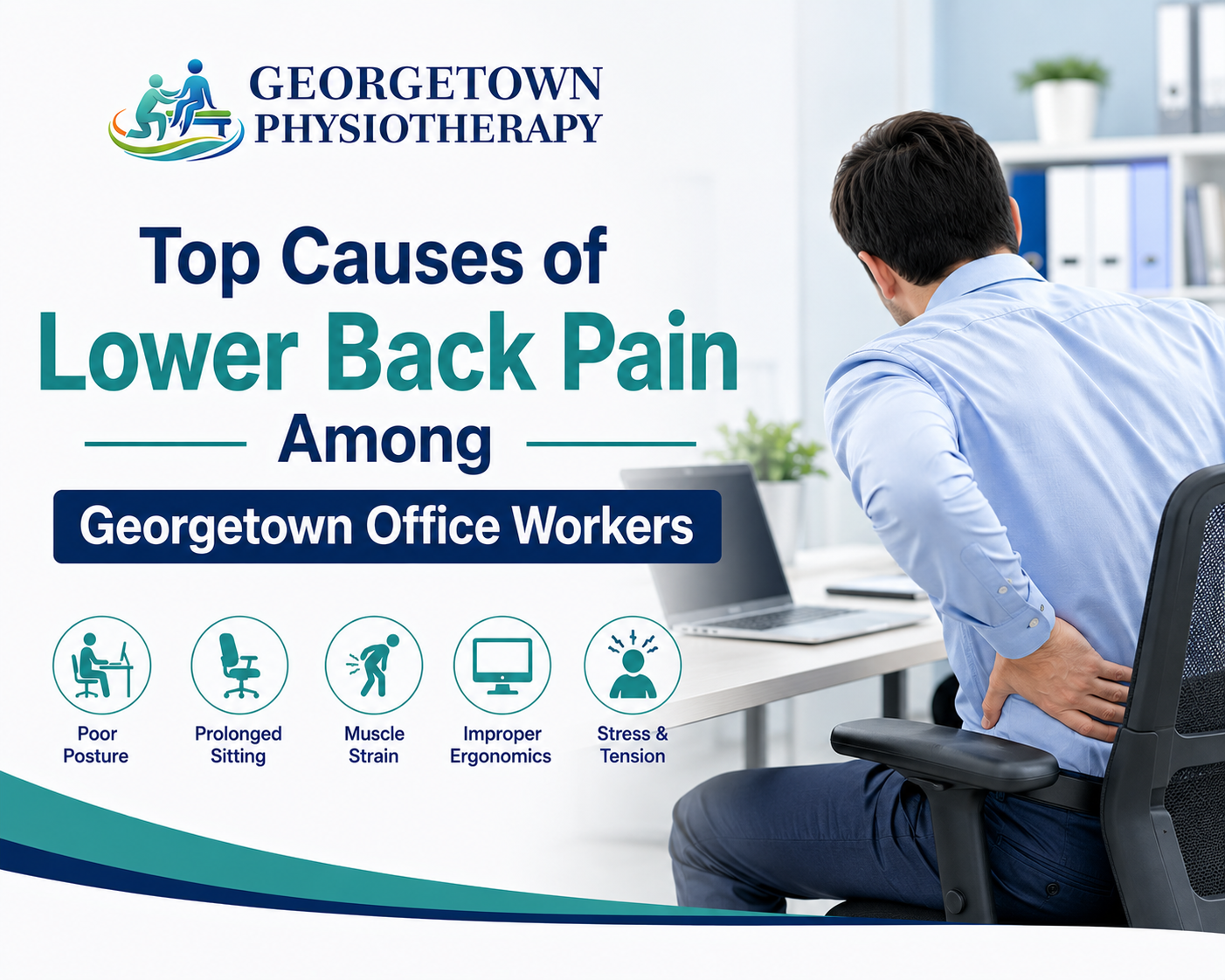
Top Causes of Lower Back Pain Among Georgetown Office Workers
Lower back pain is one of the most common health complaints among office workers. Spending long hours sitting at a desk, working on a computer, or attending virtual meetings may seem physically easy, but these daily habits can place significant stress on the muscles, joints, and spine. Over time, this can lead to persistent discomfort, reduced mobility, and even chronic pain.
If you’ve been searching you’re not alone. Many professionals in Georgetown experience back pain due to prolonged sitting, poor posture, repetitive movements, and a lack of physical activity. The good news is that many cases of lower back pain can be effectively managed with physiotherapy, ergonomic improvements, and healthy movement habits.
At Georgetown Physiotherapy & Rehabilitation Centre, we help office workers identify the root cause of their back pain and develop personalized rehabilitation programs that promote long-term recovery and prevent future injuries.
Why Office Workers Are More Prone to Lower Back Pain
Modern office jobs require employees to spend extended periods sitting while using computers and other digital devices. Although sitting may not appear physically demanding, prolonged static postures can place continuous pressure on the lower back and surrounding muscles.
Research shows that prolonged sitting and physical inactivity are associated with an increased risk of lower back pain in office-based workers. Regular movement and ergonomic improvements can help reduce this risk.
1. Prolonged Sitting
Sitting for several hours without taking breaks is one of the leading causes of lower back pain.
Extended sitting may lead to:
- Increased pressure on spinal discs
- Tight hip muscles
- Weak core muscles
- Reduced circulation
- Muscle fatigue
Even with a comfortable office chair, remaining in one position for too long can contribute to stiffness and discomfort.
Prevention Tips
- Stand every 30–60 minutes.
- Take short walking breaks.
- Stretch throughout the day.
- Alternate between sitting and standing if possible.
2. Poor Posture
Many office workers unknowingly develop poor posture while working.
Common postural habits include:
- Slouching
- Leaning forward
- Rounded shoulders
- Forward head posture
Poor posture increases stress on the lower back, neck, and shoulders, leading to muscle fatigue and joint strain over time.
Physiotherapists assess posture and provide corrective exercises to improve spinal alignment and reduce pain.
3. Weak Core Muscles
The core muscles support the spine during daily activities.
When these muscles become weak, the lower back must compensate, increasing the likelihood of pain and injury.
Weak core muscles may contribute to:
- Poor posture
- Reduced spinal stability
- Increased strain during lifting
- Recurring back pain
Physiotherapy programs often include progressive core strengthening exercises to improve spinal support.
4. Poor Workstation Ergonomics
An improperly designed workstation can place unnecessary stress on the body.
Common ergonomic problems include:
- Monitor positioned too low
- Chair without lumbar support
- Keyboard placed too high
- Unsupported feet
- Poor desk height
Small adjustments to workstation setup can significantly reduce strain on the spine.
Ideal Ergonomic Tips
- Keep your monitor at eye level.
- Sit with your feet flat on the floor.
- Maintain your knees at approximately 90 degrees.
- Keep your shoulders relaxed.
- Support the natural curve of your lower back.
5. Lack of Physical Activity
Many office workers spend most of their day sitting and perform very little physical activity outside of work.
Physical inactivity can lead to:
- Muscle weakness
- Joint stiffness
- Reduced flexibility
- Poor endurance
Regular exercise helps maintain healthy muscles and joints while improving posture and reducing back pain.
6. Repetitive Movements
Although office work may not involve heavy lifting, repetitive movements can still contribute to musculoskeletal problems.
Examples include:
- Constant mouse use
- Repetitive keyboard work
- Frequent reaching
- Twisting while seated
Over time, repetitive strain may contribute to muscle tightness and postural imbalances.
7. Stress and Muscle Tension
Workplace stress often affects the body as well as the mind.
Stress commonly contributes to muscle tension in the:
- Lower back
- Neck
- Shoulders
Chronic muscle tension can increase discomfort and reduce flexibility.
Massage therapy and relaxation techniques may help reduce stress-related muscle tightness.
Common Symptoms of Lower Back Pain
Office-related back pain may include:
- Dull aching pain
- Morning stiffness
- Muscle tightness
- Pain after prolonged sitting
- Difficulty standing up
- Reduced flexibility
- Pain when bending
- Pain that improves with movement
If symptoms persist or worsen, professional assessment is recommended.
When Should You See a Physiotherapist?
Consider booking an assessment if:
- Pain lasts longer than one week.
- Symptoms keep returning.
- Pain interferes with work or sleep.
- You experience numbness or tingling.
- Movement becomes restricted.
- Everyday activities become difficult.
Early treatment often leads to faster recovery and helps prevent chronic back pain.
How Physiotherapy Helps Lower Back Pain
Physiotherapy addresses the underlying causes of pain rather than simply treating symptoms.
At Georgetown Physiotherapy & Rehabilitation Centre, treatment begins with a comprehensive assessment of:
- Posture
- Strength
- Flexibility
- Mobility
- Walking mechanics
- Workplace habits
Based on your assessment, a personalized rehabilitation program is developed.
Treatment May Include
- Manual therapy
- Core strengthening exercises
- Mobility training
- Stretching
- Postural correction
- Ergonomic education
- Home exercise programs
The goal is to reduce pain while helping you move more efficiently and confidently.
Additional Treatments That May Support Recovery
Chiropractic Care
Chiropractic treatment may help:
- Improve spinal mobility
- Reduce joint stiffness
- Restore movement
Massage Therapy
Massage therapy may help:
- Reduce muscle tension
- Improve circulation
- Promote relaxation
Laser Therapy
Laser therapy may help:
- Reduce inflammation
- Support tissue healing
- Reduce pain
Combining multiple therapies often provides a comprehensive approach to recovery.
Tips to Prevent Lower Back Pain at Work
Simple daily habits can make a significant difference.
Move Frequently
Avoid sitting continuously for long periods.
Stretch Daily
Gentle stretching helps reduce stiffness and improve flexibility.
Strengthen Your Core
A stronger core supports better posture and spinal stability.
Improve Your Workspace
Ensure your workstation is properly adjusted to your body.
Stay Active Outside Work
Regular walking, swimming, cycling, or strength training helps maintain overall spinal health.
Why Georgetown Office Workers Choose Georgetown Physiotherapy & Rehabilitation Centre
Patients searching for Physiotherapy & Rehabilitation Centre because of our personalized, evidence-based approach to rehabilitation.
Our services include:
Our treatment plans focus on:
- Pain relief
- Improved posture
- Core strengthening
- Mobility restoration
- Injury prevention
- Long-term wellness
Every rehabilitation program is customized to meet the patient’s individual needs and work demands.
Take Control of Your Back Health
Lower back pain doesn’t have to become part of your daily routine. With early intervention, proper ergonomics, regular movement, and personalized physiotherapy, most office workers can reduce pain, improve mobility, and prevent future injuries.
If you’re searching for Physiotherapy & Rehabilitation Centre is here to help you recover and stay active.
Our experienced team is dedicated to helping Georgetown office workers move better, feel stronger, and enjoy healthier, pain-free lives.
Contact Georgetown Physiotherapy & Rehabilitation Centre
Address:
333 Mountainview Rd S, Unit #2
Georgetown, ON L7G 5S5, Canada
Phone: +1 905-702-6633