



 Call For Appointment
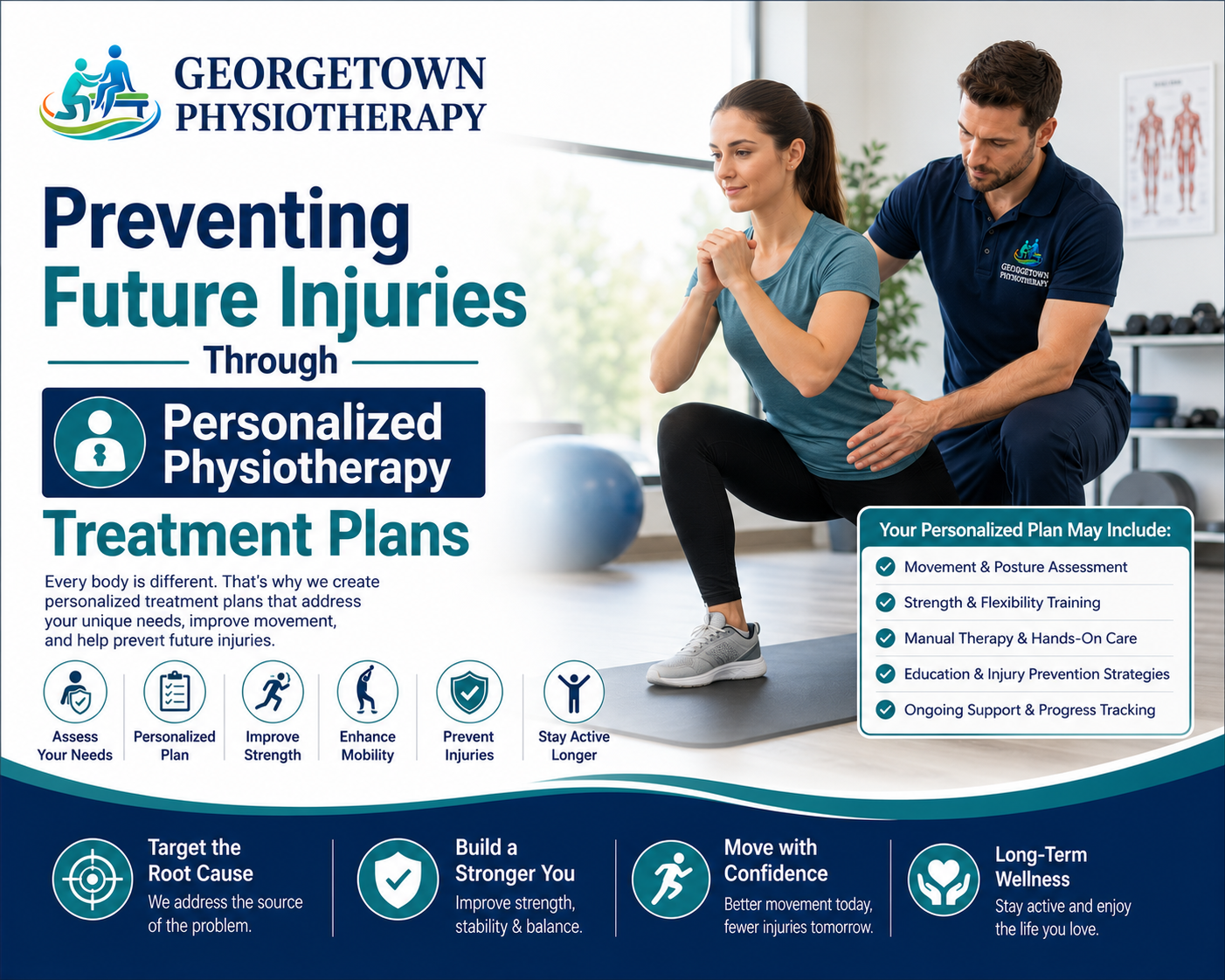
Preventing Future Injuries Through Personalized Physiotherapy Treatment Plans
Recovering from an injury is only one part of the rehabilitation journey. Just as important is preventing the same injury—or a new one—from happening again. Whether you’re an athlete, an office worker, a senior, or someone recovering from a workplace or motor vehicle accident, a personalized physiotherapy treatment plan can help you build strength, improve movement, and reduce the risk of future injuries.
Many injuries occur because of poor posture, muscle imbalances, repetitive movements, weak supporting muscles, or incorrect movement patterns. Simply treating pain without addressing these underlying causes often leads to recurring problems. That is why personalized rehabilitation is one of the most effective ways to promote long-term health and mobility.
At Georgetown Physiotherapy & Rehabilitation Centre, every treatment plan is designed around the patient’s individual condition, lifestyle, goals, and recovery progress. By combining evidence-based therapies with education and targeted exercises, the clinic helps patients recover safely while reducing the likelihood of future injuries.
Why Injury Prevention Matters
Many people seek physiotherapy only after an injury has occurred. However, preventing injuries before they happen—or preventing them from returning—is equally important.
Injury prevention helps you:
- Stay active and independent
- Reduce the risk of recurring pain
- Improve strength and flexibility
- Enhance balance and coordination
- Return to work safely
- Improve sports performance
- Reduce the likelihood of surgery
- Support long-term joint health
Whether you’re recovering from an ankle sprain, back pain, shoulder injury, or knee surgery, preventing future problems should always be part of your rehabilitation plan.
What Is a Personalized Physiotherapy Treatment Plan?
A personalized physiotherapy treatment plan is a customized rehabilitation program created after a comprehensive assessment of your condition, movement patterns, medical history, and lifestyle.
Instead of providing the same exercises to every patient, your physiotherapist develops a plan that targets your specific needs.
The plan may include:
- Pain management strategies
- Mobility exercises
- Strengthening programs
- Stretching routines
- Balance training
- Functional movement retraining
- Posture correction
- Education on body mechanics
- Home exercise programs
- Injury prevention strategies
As you recover, the plan is adjusted to match your progress and changing goals.
The Importance of a Thorough Assessment
Every successful treatment plan begins with a detailed evaluation.
During your assessment, your physiotherapist may examine:
- Medical history
- Current symptoms
- Pain levels
- Joint mobility
- Muscle strength
- Flexibility
- Balance
- Walking pattern (gait)
- Posture
- Functional movements
- Work demands
- Sports or recreational activities
This assessment helps identify the underlying causes of pain or movement limitations instead of simply treating symptoms.
Addressing the Root Cause of Injury
Many injuries occur because of factors that develop gradually over time.
Examples include:
- Weak core muscles
- Tight hip muscles
- Poor posture
- Limited joint mobility
- Muscle imbalances
- Poor lifting techniques
- Repetitive workplace tasks
- Incorrect sports mechanics
If these issues are not corrected, pain often returns after the initial injury heals.
Personalized physiotherapy focuses on correcting these contributing factors to reduce the risk of re-injury.
Building Strength for Long-Term Protection
Strong muscles support your joints and absorb stress during everyday activities.
A personalized strengthening program may target:
- Core muscles
- Hip muscles
- Shoulder stabilizers
- Leg muscles
- Back muscles
- Gluteal muscles
Improved strength helps protect joints, improve posture, and increase overall stability.
Improving Flexibility and Mobility
Restricted movement places additional stress on surrounding muscles and joints.
Stretching and mobility exercises help:
- Increase range of motion
- Improve flexibility
- Reduce stiffness
- Improve posture
- Enhance movement efficiency
- Lower injury risk
Your physiotherapist will recommend stretches based on your individual needs and recovery stage.
Correcting Movement Patterns
Many injuries are caused by poor movement habits that develop over time.
Examples include:
- Poor squat technique
- Improper lifting mechanics
- Walking abnormalities
- Running inefficiencies
- Shoulder movement restrictions
- Poor posture while sitting
Movement retraining teaches your body to move more efficiently, reducing unnecessary stress on muscles and joints.
The Role of Physiotherapy in Injury Prevention
Physiotherapy is much more than pain relief.
It helps patients:
- Restore normal movement
- Improve flexibility
- Increase strength
- Improve balance
- Enhance coordination
- Correct posture
- Prevent recurring injuries
- Improve confidence during movement
Treatment plans are designed to help patients safely return to work, sports, hobbies, and everyday activities.
Complementary Treatments That Support Recovery
Depending on your condition, your personalized treatment plan may include additional therapies.
Laser Therapy
Laser Therapy uses therapeutic light energy to stimulate tissue healing and reduce inflammation.
Potential benefits include:
- Faster tissue repair
- Reduced pain
- Improved circulation
- Drug-free pain management
Laser Therapy is often used to support physiotherapy and accelerate recovery.
Massage Therapy
Massage Therapy helps reduce muscle tension, improve circulation, and increase flexibility.
It may be recommended to:
- Reduce muscle tightness
- Improve comfort
- Support rehabilitation exercises
- Promote relaxation
- Improve soft tissue mobility
Chiropractic Care
Chiropractic Care may help improve spinal alignment and joint mobility when appropriate.
It is often incorporated into a comprehensive rehabilitation program to improve movement and reduce joint restrictions.
Injury Prevention for Athletes
Athletes place high demands on their bodies, making injury prevention especially important.
Personalized physiotherapy can help athletes:
- Improve performance
- Increase flexibility
- Strengthen supporting muscles
- Correct movement mechanics
- Reduce overuse injuries
- Return to sport safely
Sport-specific rehabilitation helps minimize the risk of future injuries while improving overall performance.
Supporting Workplace Injury Prevention
Many workplace injuries result from repetitive movements, prolonged sitting, poor ergonomics, or improper lifting techniques.
Through WSIB Physiotherapy, patients receive rehabilitation that focuses on:
- Safe movement techniques
- Workplace ergonomics
- Strength development
- Functional rehabilitation
- Return-to-work planning
These strategies help reduce the likelihood of future workplace injuries.
Preventing Injuries After a Motor Vehicle Accident
Following a motor vehicle accident, lingering weakness, stiffness, or reduced mobility can increase the risk of future injuries.
MVA Injury Care focuses on restoring normal movement, rebuilding strength, improving flexibility, and helping patients return safely to their daily routines.
Healthy Habits That Support Injury Prevention
Alongside professional treatment, healthy lifestyle habits contribute to long-term success.
Your physiotherapist may recommend:
- Regular exercise
- Daily stretching
- Maintaining proper posture
- Taking movement breaks at work
- Staying physically active
- Safe lifting techniques
- Wearing supportive footwear
- Maintaining a healthy body weight
- Following a home exercise program
These simple habits can significantly reduce your risk of recurring injuries.
Why Choose Georgetown Physiotherapy & Rehabilitation Centre?
At Georgetown Physiotherapy & Rehabilitation Centre, rehabilitation is focused on helping patients achieve lasting recovery—not just temporary pain relief.
The clinic provides:
- Physiotherapy
- Personalized Treatment Plans
- Laser Therapy
- Massage Therapy
- Chiropractic Care
- WSIB Physiotherapy
- MVA Injury Care
- Individualized Exercise Programs
- Injury Prevention Education
Every patient receives one-on-one attention and a customized rehabilitation program based on their goals, lifestyle, and physical condition.
The clinic proudly serves Georgetown, Acton, Glen Williams, Limehouse, Stewarttown, Norval, Halton Hills, and surrounding communities.
Long-Term Success Requires Ongoing Care
Recovering from an injury does not end when the pain goes away.
Continuing your strengthening exercises, maintaining healthy movement habits, and following your personalized treatment plan can help protect your body for years to come.
Regular physiotherapy check-ups may also identify small movement problems before they develop into larger injuries.
Conclusion
Preventing injuries is just as important as treating them. A personalized physiotherapy treatment plan helps address the root causes of pain, improve movement, build strength, and reduce the likelihood of future injuries. By combining professional rehabilitation with healthy daily habits, patients can enjoy better mobility, improved confidence, and a more active lifestyle.
At Georgetown Physiotherapy & Rehabilitation Centre, every treatment plan is tailored to the individual. Through Physiotherapy, Laser Therapy, Massage Therapy, Chiropractic Care, WSIB Physiotherapy, and MVA Injury Care, the clinic is committed to helping patients recover fully, prevent future injuries, and achieve long-term health and wellness.
Contact Georgetown Physiotherapy & Rehabilitation Centre
Georgetown Physiotherapy & Rehabilitation Centre
Address: 333 Mountainview Rd S, Unit #2, Georgetown, ON L7G 5S5, Canada
Phone: +1 905-702-6633
Email: info@georgetownphysiotherapy.ca
Website: https://georgetownphysiotherapy.ca/
If you want to recover safely and reduce your risk of future injuries, schedule an assessment with Georgetown Physiotherapy & Rehabilitation Centre. Our experienced team will create a personalized physiotherapy treatment plan designed to improve your strength, mobility, and long-term quality of life.