



 Call For Appointment
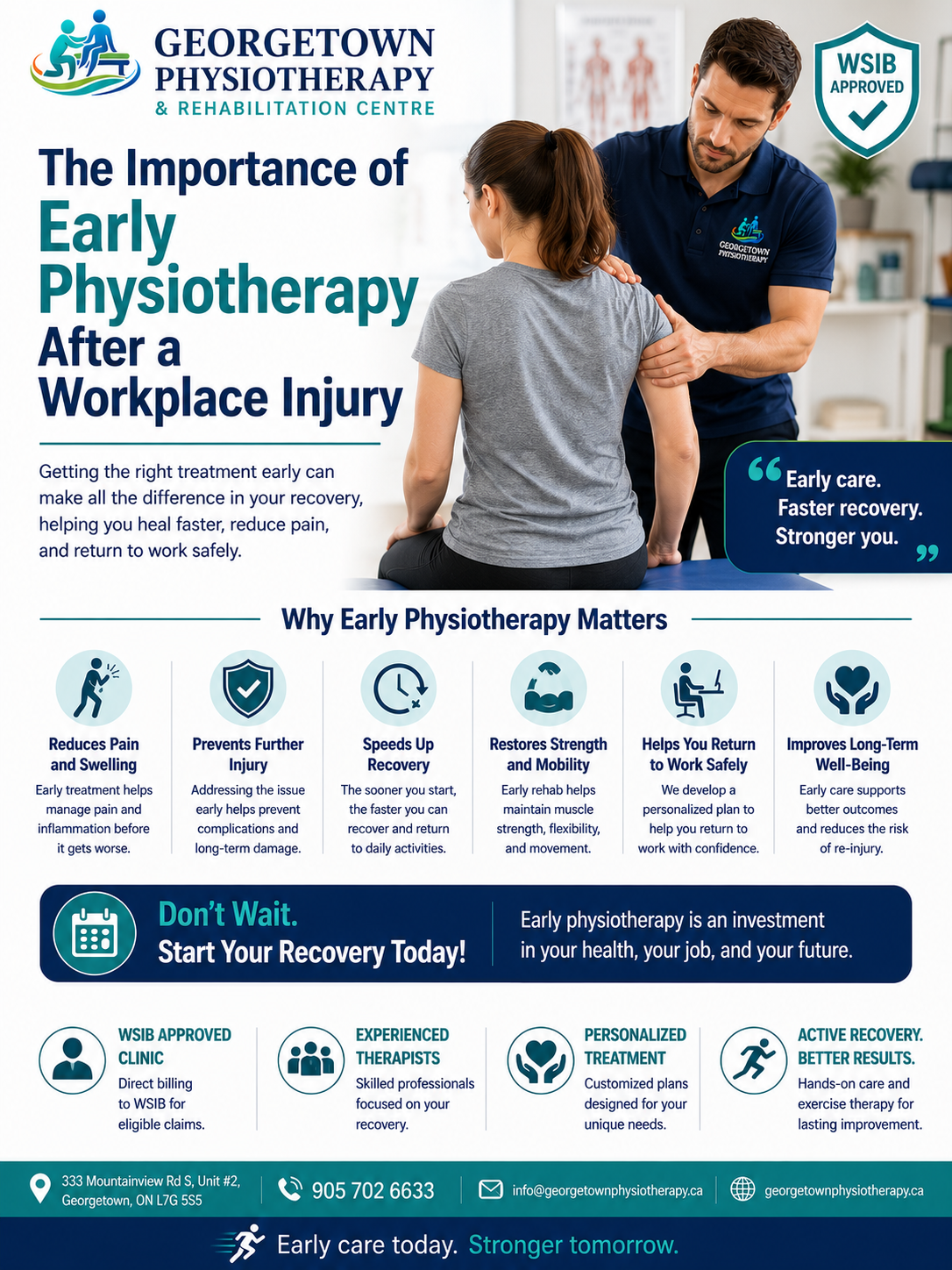
The Importance of Early Physiotherapy After a Workplace Injury
A workplace injury can happen suddenly during a fall, lifting incident, collision, or awkward movement. Other work-related problems may develop gradually through repetitive tasks, prolonged positions, or repeated physical demands. Whatever the cause, an injury can affect your ability to move comfortably, complete daily activities, and perform your job.
Early physiotherapy after a workplace injury may help by providing a timely assessment of your symptoms, movement, functional limitations, and rehabilitation needs. When physiotherapy is appropriate, an individualized treatment plan may focus on managing symptoms, restoring mobility, rebuilding strength, improving physical function, and preparing for a gradual return to suitable activities.
However, “early” does not mean rushing into aggressive treatment immediately after every injury. Serious injuries and concerning symptoms may require urgent medical assessment first. The right starting point depends on the nature and severity of the injury.
For workers looking for workplace injury physiotherapy in Georgetown, understanding when and why to seek appropriate care can help create a clearer path toward recovery.
Why Does Early Attention to a Workplace Injury Matter?
It can be tempting to ignore an injury, especially when symptoms initially seem manageable.
Some workers hope the pain will disappear on its own. Others worry about missing work or disrupting their responsibilities. In some cases, people continue performing the same demanding activities despite increasing discomfort.
Not every minor ache requires extensive treatment. However, persistent, worsening, or function-limiting symptoms should not simply be ignored.
Seeking an appropriate assessment can help answer important questions:
- What movements or activities are currently difficult?
- What factors may be contributing to the symptoms?
- Is physiotherapy appropriate?
- Are there signs that medical assessment is needed?
- What activities may be reasonable during recovery?
- What functional goals should rehabilitation address?
Early assessment can help replace uncertainty with a more structured plan.
What Should You Do After a Workplace Injury?
The appropriate response depends on the circumstances and severity of the injury, but several general steps may be important.
Report the Injury Promptly
Inform your employer or supervisor about a work-related injury or illness as soon as possible.
Provide accurate information about what happened, when it happened, and the symptoms you are experiencing. Prompt reporting can help ensure that the incident is documented and that applicable workplace and WSIB processes can begin.
Seek Urgent Medical Care When Necessary
Physiotherapy is not the first step for every injury.
Seek urgent medical attention when an injury involves severe trauma or concerning symptoms such as significant neurological changes, severe or rapidly worsening symptoms, loss of consciousness, suspected fracture, serious bleeding, or other signs of a medical emergency.
When in doubt about the seriousness of an injury, seek appropriate medical guidance.
Obtain an Appropriate Assessment
For many musculoskeletal workplace injuries, assessment by a qualified healthcare professional can help determine the next steps.
A physiotherapist can assess movement, strength, function, and physical limitations when physiotherapy is appropriate for the condition.
Follow the Relevant Workplace and WSIB Process
Ontario workers may need to follow specific reporting and claim procedures depending on the circumstances of the workplace injury.
Eligibility, benefits, treatment authorization, and claim decisions are determined according to the applicable process. Workers should confirm official requirements directly with WSIB and other relevant parties rather than assuming that every treatment is automatically covered.
What Is Early Physiotherapy After a Workplace Injury?
Early physiotherapy means seeking appropriate physiotherapy assessment and rehabilitation without an unnecessary delay when physiotherapy is suitable for the injury.
It does not mean that every injured worker should immediately begin intense exercises or aggressive treatment.
The early stage of rehabilitation may instead focus on:
- Understanding the injury and symptoms
- Identifying functional limitations
- Managing appropriate levels of activity
- Maintaining or gradually restoring movement
- Addressing pain and stiffness
- Establishing realistic recovery goals
- Planning a safe progression of rehabilitation
The exact approach should be based on the individual.
A worker with a mild muscle strain may have very different needs from someone recovering from a more complex injury.
How Can Early Physiotherapy Support Workplace Injury Recovery?
1. Establishing a Clear Starting Point
One of the benefits of an early physiotherapy assessment is establishing a baseline.
The physiotherapist may examine factors such as:
- Range of motion
- Strength
- Balance
- Functional movement
- Activity tolerance
- Pain behaviour
- Work-related limitations
This information helps identify where you are at the beginning of rehabilitation and provides a reference point for monitoring progress.
Without an assessment, it can be difficult to know whether you are improving functionally or simply avoiding activities that trigger symptoms.
2. Identifying Movement and Functional Limitations
A workplace injury may affect more than the painful area.
For example, a back injury may make it difficult to:
- Bend
- Lift
- Sit for extended periods
- Stand for long periods
- Walk comfortably
- Complete physically demanding tasks
A shoulder injury may affect reaching, lifting, carrying, dressing, or overhead activities.
Physiotherapy looks at how the injury affects function. This can help make rehabilitation more relevant to the activities you need to perform in daily life and at work.
3. Providing Guidance About Movement and Activity
After an injury, people often have questions about movement.
Shou Which activities should you avoid?
There is no single answer that applies to every workplace injury.
Too much activity may aggravate some conditions, while prolonged unnecessary inactivity may contribute to stiffness, weakness, reduced tolerance, or fear of movement.
A physiotherapist can help provide individualized guidance based on the injury, symptoms, assessment findings, and stage of recovery.
4. Addressing Pain and Stiffness
Pain and stiffness can make movement difficult after a workplace injury.
Depending on the condition and clinical assessment, physiotherapy may include a combination of:
- Education
- Therapeutic exercise
- Movement strategies
- Hands-on techniques
- Progressive activity
- Other appropriate treatment approaches
The objective is not simply to provide temporary symptom relief. Rehabilitation should also consider movement, strength, function, and the physical demands of daily life.
5. Reducing Unnecessary Loss of Physical Capacity
When pain causes someone to avoid activity for an extended period, physical capacity may decline.
Depending on the individual, prolonged inactivity can contribute to reduced:
- Strength
- Endurance
- Mobility
- Confidence with movement
- Tolerance for work-related tasks
Appropriate rehabilitation may help maintain or gradually rebuild these abilities.
The key word is appropriate. Exercise and activity should be matched to the person’s condition and progressed according to tolerance and clinical judgment.
Common Workplace Injuries That May Benefit From Physiotherapy
Work-related musculoskeletal injuries can occur across many industries.
Back Injuries
Back pain may develop after lifting, carrying, bending, twisting, a sudden incident, or repeated physical demands.
Physiotherapy may focus on mobility, strength, movement, activity tolerance, and functional goals.
Neck Injuries
Neck pain may occur after an accident or develop gradually with repetitive tasks and sustained work positions.
Treatment depends on the symptoms, assessment findings, and functional limitations.
Shoulder Injuries
Repetitive reaching, overhead work, lifting, carrying, or sudden incidents may affect the shoulder.
Rehabilitation may address movement, strength, control, and the physical demands of work.
Muscle Strains and Joint Sprains
Sudden movements, overexertion, slips, trips, and falls may lead to strains or sprains.
The rehabilitation approach depends on the affected area and severity of the injury.
Repetitive Strain Injuries
Some workplace injuries develop gradually.
Repeated movements, sustained positions, and ongoing physical demands may contribute to symptoms affecting areas such as the neck, shoulders, elbows, wrists, or hands.
Lower-Extremity Injuries
Workplace incidents may also affect the hips, knees, ankles, and feet.
Physiotherapy may address walking, balance, strength, mobility, and functional tasks when appropriate.
Why Is Waiting Too Long Sometimes a Problem?
Delaying appropriate assessment does not automatically mean that an injury will become worse. However, unnecessary delays can create challenges for some people.
A worker may begin changing the way they move to avoid discomfort. They may stop certain activities completely, become less active, or continue performing tasks that repeatedly aggravate symptoms.
Over time, this can make the recovery picture more complicated.
Possible challenges may include:
- Ongoing pain or stiffness
- Reduced movement
- Loss of strength or endurance
- Reduced tolerance for work tasks
- Difficulty returning to previous activities
- Uncertainty about what activities are appropriate
Early assessment may help identify these issues and establish a more organized rehabilitation strategy.
Does Early Physiotherapy Mean a Faster Recovery?
Not necessarily.
It is important to avoid promising that early physiotherapy will always produce a faster recovery.
Recovery depends on many factors, including:
- The type of injury
- The severity of the injury
- The tissues involved
- The physical demands of the job
- Previous injuries
- General health
- Individual response to rehabilitation
- Psychosocial and workplace factors
Early physiotherapy may provide timely assessment, education, and a structured rehabilitation plan, but recovery timelines remain individual.
The goal is appropriate care and functional progress—not rushing the body through an unrealistic timeline.
The Importance of an Individualized Treatment Plan
No two workplace injuries are exactly the same.
Even two workers with similar back pain may require different rehabilitation plans.
Consider an office worker and a warehouse worker.
The office worker may need to improve tolerance for:
- Prolonged sitting
- Computer work
- Repeated desk tasks
The warehouse worker may need to improve tolerance for:
- Lifting
- Carrying
- Bending
- Walking
- Repeated physical tasks
The diagnosis may be similar, but the functional demands are different.
An individualized physiotherapy plan considers:
- The injury
- Current symptoms
- Physical limitations
- Job requirements
- Daily activities
- Recovery goals
- Response to rehabilitation
This helps make treatment more relevant to the individual rather than following the same generic program for every patient.
How Early Physiotherapy May Support a Return to Work
Returning to work is often an important goal after a workplace injury.
However, returning to work does not always mean immediately resuming every pre-injury task at full intensity.
Depending on the injury, functional abilities, job demands, and applicable return-to-work process, rehabilitation may involve gradually improving the physical abilities needed for work.
These may include:
- Lifting
- Carrying
- Reaching
- Walking
- Standing
- Sitting
- Bending
- Strength
- Endurance
- Balance
- Repeated movements
Physiotherapy can focus on building physical capacity and monitoring functional progress.
The broader return-to-work process may involve the worker, employer, healthcare providers, and WSIB, depending on the circumstances.
What Happens at an Early Physiotherapy Assessment?
The first appointment generally begins with a conversation about the injury.
Your physiotherapist may ask:
- How did the injury happen?
- When did symptoms begin?
- What movements make symptoms better or worse?
- How is the injury affecting your work?
- What daily activities are difficult?
- Have you experienced similar injuries before?
- What are your recovery goals?
A physical assessment may then evaluate relevant factors such as:
- Range of motion
- Strength
- Functional movement
- Balance
- Activity tolerance
- Other findings relevant to the injury
Based on the assessment, the physiotherapist can discuss an appropriate treatment and rehabilitation plan.
What Should You Bring to Your First Appointment?
Depending on your circumstances, consider bringing:
- Relevant WSIB claim information
- Details about the workplace incident
- Information about your symptoms
- Relevant medical documents, if available
- Information about your job duties
- Details about modified work or restrictions, if applicable
- A list of medications when relevant
Wear comfortable clothing that allows the injured area to be assessed when possible.
Common Mistakes After a Workplace Injury
Ignoring Persistent Symptoms
Continuing to ignore symptoms that are worsening or affecting function can delay appropriate assessment.
Pushing Through Significant Pain
The idea that you should simply “work through” every injury is not appropriate for all conditions.
Activity should be matched to the injury and stage of recovery.
Avoiding All Movement
Complete inactivity is also not the right solution for every injury.
When appropriate, gradual movement and rehabilitation may help restore function.
Returning to Full Duties Before You Are Ready
A premature return to physically demanding tasks may be difficult if strength, mobility, endurance, or functional capacity have not sufficiently recovered.
Comparing Your Recovery With Someone Else’s
Recovery timelines vary.
Your colleague’s experience does not determine how long your injury should take to recover.
Frequently Asked Questions About Early Physiotherapy After a Workplace Injury
How soon should I see a physiotherapist after a workplace injury?
The appropriate timing depends on the type and severity of the injury. Serious injuries or concerning symptoms may require urgent medical assessment. When physiotherapy is appropriate, seeking an assessment without unnecessary delay may help establish a rehabilitation plan.
Do I need to wait until the pain is severe?
No. You do not necessarily need to wait until symptoms become severe before seeking appropriate assessment. Persistent, worsening, or function-limiting symptoms may justify professional evaluation.
Can physiotherapy help with a work-related back injury?
Physiotherapy may be appropriate for many musculoskeletal back injuries. Treatment depends on the nature of the condition, symptoms, functional limitations, and assessment findings.
Can physiotherapy help with repetitive strain injuries?
Physiotherapy may help assess and manage some repetitive strain injuries. Rehabilitation may consider movement, strength, activity demands, work habits, and other relevant factors.
Will WSIB cover my physiotherapy?
Coverage depends on the individual claim and applicable WSIB requirements. Do not assume that every treatment is automatically covered. Confirm your specific situation with WSIB and the healthcare provider.
Can I return to work while receiving physiotherapy?
Some people may continue working or return with suitable duties while receiving rehabilitation, depending on their abilities, job demands, and applicable return-to-work plan. Individual circumstances vary.
How long will workplace injury physiotherapy take?
There is no universal timeline. Recovery depends on the injury, severity, job demands, individual health factors, and response to rehabilitation.
Looking for Workplace Injury Physiotherapy in Georgetown?
A workplace injury can affect your mobility, independence, daily activities, and ability to perform your job. Seeking appropriate care early can help you better understand the injury and establish a structured recovery plan.
At Georgetown Physiotherapy & Rehabilitation Centre, we provide physiotherapy and rehabilitation services for people dealing with work-related musculoskeletal injuries, pain, movement limitations, and functional concerns.
Georgetown Physiotherapy & Rehabilitation Centre
333 Mountainview Rd S, Unit #2 Georgetown, ON L7G 5S5, Canada
Phone: +1 905-702-6633
Email: info@georgetownphysiotherapy.ca
Contact the clinic to discuss appointment availability and your rehabilitation needs.
Take an Informed First Step After a Workplace Injury
After a workplace injury, it can be difficult to know whether you should rest, keep moving, modify your activities, or seek treatment.
An appropriate assessment can help provide direction.
Early physiotherapy after a workplace injury may help identify movement and functional limitations, establish individualized rehabilitation goals, and guide a progressive approach to recovery when physiotherapy is appropriate.
If you are looking for workplace injury physiotherapy in Georgetown, contact Georgetown Physiotherapy & Rehabilitation Centre to learn more about available physiotherapy and rehabilitation services and request an appointment.
For official information about workplace injury claims, reporting requirements, eligibility, benefits, and WSIB processes, consult the Workplace Safety and Insurance Board directly.