



 Call For Appointment
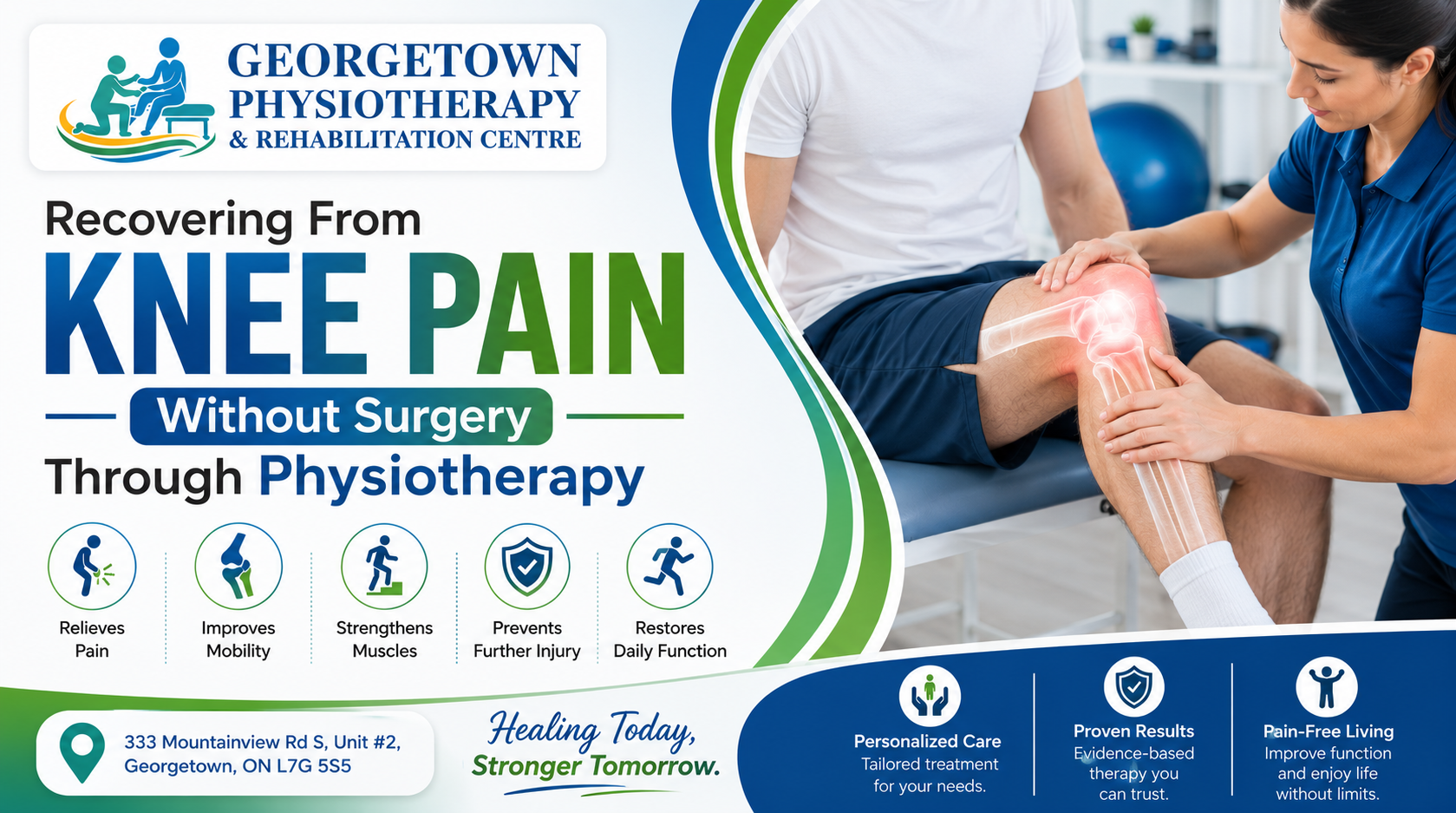
Recovering From Knee Pain Without Surgery Through Physiotherapy
Knee pain is one of the most common musculoskeletal problems affecting adults of all ages. Whether it develops after a sports injury, a workplace incident, repetitive movements, arthritis, or gradual wear and tear, knee pain can make everyday activities such as walking, climbing stairs, standing, exercising, or even getting out of a chair difficult.
Many people worry that persistent knee pain automatically means surgery will be necessary. Fortunately, many musculoskeletal knee conditions can often be managed with conservative treatment, including physiotherapy, depending on the underlying diagnosis and individual circumstances. Physiotherapy focuses on identifying the cause of pain, improving movement, restoring strength, and helping patients return to their daily activities with greater confidence.
At Georgetown Physiotherapy & Rehabilitation Centre, we provide individualized physiotherapy treatment plans designed to help patients improve knee function, reduce pain, and support long-term recovery using evidence-informed rehabilitation techniques.
Understanding Knee Pain
The knee is one of the largest and most complex joints in the body. It plays an essential role in nearly every lower-body movement, including walking, running, climbing stairs, squatting, jumping, and standing.
The joint is made up of bones, cartilage, ligaments, tendons, muscles, and supporting soft tissues that work together to provide stability and movement.
Because the knee absorbs significant forces during daily activities, pain can develop from many different conditions. Identifying the underlying cause is essential before beginning treatment.
Common Causes of Knee Pain
1. Osteoarthritis
Knee osteoarthritis is one of the most common causes of persistent knee pain, particularly among older adults.
Symptoms may include:
- Joint stiffness
- Pain during walking
- Difficulty climbing stairs
- Reduced mobility
- Swelling after activity
Although physiotherapy cannot reverse arthritis, it may help improve joint function, strengthen supporting muscles, reduce discomfort, and improve confidence with movement.
2. Ligament Injuries
Ligaments help stabilize the knee joint.
Sports injuries, sudden twists, awkward landings, or workplace accidents may affect structures such as the ACL, MCL, PCL, or LCL.
Treatment depends on the severity of the injury, and some ligament injuries require specialist assessment. For many patients, physiotherapy plays an important role before or after surgery, or as part of conservative management when appropriate.
3. Meniscus Injuries
The meniscus acts as a cushion between the thigh bone and shin bone.
Meniscus injuries may occur during sports, twisting movements, or age-related degeneration.
Depending on the type of injury and individual assessment, conservative rehabilitation may be appropriate for some patients, while others may require orthopedic consultation.
4. Patellofemoral Pain
Pain around the kneecap is common among runners, active individuals, and people who frequently climb stairs or squat.
Symptoms often include:
- Pain when climbing stairs
- Discomfort while squatting
- Pain after prolonged sitting
- Knee discomfort during running
Physiotherapy commonly focuses on strengthening, movement training, and activity modification.
5. Tendinitis
Repetitive jumping, running, or physically demanding work can irritate the tendons around the knee.
A rehabilitation program may gradually improve tendon capacity through carefully progressed exercise.
6. Sports Injuries
Athletes participating in soccer, basketball, hockey, tennis, volleyball, running, and other sports place high physical demands on the knee.
Rehabilitation should be individualized according to the sport, position, training level, and recovery goals.
7. Workplace Injuries
Jobs involving lifting, kneeling, climbing, prolonged standing, or repetitive movements may contribute to knee pain.
Treatment plans should consider the physical requirements of the patient’s occupation to support a safe return to work.
Does Knee Pain Always Require Surgery?
No.
Many people assume surgery is the only solution for persistent knee pain, but this is not always the case.
For many musculoskeletal conditions, healthcare providers may recommend conservative treatment before considering surgical options. Physiotherapy is often part of this conservative approach.
However, certain injuries—such as some severe ligament tears, fractures, or significant structural damage—may require orthopedic evaluation or surgery. The appropriate treatment depends on the diagnosis, symptoms, imaging when indicated, activity goals, and professional assessment.
A physiotherapist can help determine whether conservative rehabilitation is appropriate or whether referral for further medical evaluation is advisable.
How Physiotherapy Can Help Knee Pain
Comprehensive Assessment
Effective rehabilitation begins with understanding why the knee hurts.
Your physiotherapist may assess:
- Pain location
- Range of motion
- Muscle strength
- Walking pattern
- Balance
- Joint stability
- Functional movements
- Previous injuries
- Daily activities
- Work demands
- Sports participation
- Personal goals
The assessment guides an individualized treatment plan rather than relying on generalized exercises.
Pain Management
Depending on your condition, treatment may include:
- Manual therapy
- Therapeutic exercise
- Soft tissue techniques
- Movement education
- Activity modification
- Laser therapy when appropriate
- Shockwave therapy for selected conditions where clinically indicated
Pain management is important, but rehabilitation also focuses on restoring movement and function.
Strengthening the Supporting Muscles
Strong muscles help support the knee during everyday activities.
A rehabilitation program may strengthen:
- Quadriceps
- Hamstrings
- Gluteal muscles
- Calf muscles
- Core muscles where appropriate
Exercises are progressed gradually according to your abilities and goals.
Improving Mobility
Restricted movement can affect walking, climbing stairs, squatting, and other activities.
Physiotherapy may include mobility exercises to improve comfortable movement while respecting tissue healing and symptom response.
Restoring Balance and Function
Many knee conditions affect confidence during movement.
Rehabilitation may include balance exercises, functional training, stair practice, and sport- or work-specific activities to help you safely return to everyday tasks.
Physiotherapy for Knee Arthritis
Although arthritis cannot be cured, physiotherapy can play an important role in helping people remain active.
An individualized program may help:
- Improve joint movement
- Increase muscle strength
- Reduce stiffness
- Improve walking ability
- Enhance balance
- Support participation in daily activities
Remaining physically active is often an important component of long-term arthritis management.
Knee Pain After Sports Injuries
Athletes often want to return to sport as quickly as possible.
However, returning too soon before strength, balance, and movement have recovered may increase the risk of re-injury.
Physiotherapy may include:
- Progressive strengthening
- Balance training
- Agility exercises
- Running progression
- Jump training
- Sport-specific rehabilitation
- Functional testing before return to activity
Recovery timelines vary depending on the injury and the individual.
Knee Pain and Workplace Activities
Physically demanding jobs place unique stresses on the knee.
Workers may regularly perform tasks such as:
- Lifting
- Kneeling
- Climbing stairs
- Carrying heavy loads
- Walking long distances
- Standing for prolonged periods
A personalized rehabilitation plan considers these occupational demands to help improve functional capacity and prepare for a safe return to work.
Can Physiotherapy Help You Avoid Surgery?
In many situations, conservative treatment may improve symptoms enough that surgery is not immediately necessary.
However, physiotherapy should not be viewed as a guarantee that surgery can always be avoided.
Some knee conditions respond well to rehabilitation, while others may eventually require orthopedic assessment or surgical management.
The goal of physiotherapy is to maximize function, reduce pain where possible, improve physical capacity, and help patients make informed treatment decisions based on professional assessment.
Common Mistakes People Make With Knee Pain
Ignoring Persistent Symptoms
Ongoing pain should not simply be accepted as part of aging or activity.
Persistent symptoms deserve appropriate assessment.
Resting Completely
Extended inactivity may contribute to weakness and reduced function for many musculoskeletal conditions.
Appropriate movement is often an important part of recovery.
Returning to Sport Too Quickly
Pain reduction does not necessarily mean the knee has regained the strength or stability needed for demanding activities.
Following Generic Online Exercise Programs
Not every knee condition requires the same rehabilitation exercises.
Treatment should be based on individual assessment findings.
Focusing Only on Pain Relief
Reducing pain is important, but long-term rehabilitation should also restore strength, mobility, endurance, balance, and confidence with movement.
How Long Does Knee Rehabilitation Take?
There is no universal recovery timeline.
Rehabilitation depends on factors such as:
- Diagnosis
- Severity of the condition
- Duration of symptoms
- Previous injuries
- Age
- Activity goals
- Occupation
- Response to treatment
Your physiotherapist will monitor progress and adjust your treatment plan accordingly.
Frequently Asked Questions
Can physiotherapy help knee pain without surgery?
Yes. Many musculoskeletal knee conditions may improve with conservative physiotherapy treatment, although some injuries still require surgical assessment depending on the diagnosis.
Is surgery always necessary for knee pain?
No. Many cases can be managed conservatively, but severe injuries or structural damage may require orthopedic consultation.
Can physiotherapy help knee arthritis?
Physiotherapy may help improve mobility, strength, function, and pain management for people living with knee osteoarthritis.
How many physiotherapy sessions will I need?
Treatment duration varies according to your condition, recovery goals, and progress.
Can I continue exercising with knee pain?
The appropriate level of activity depends on your diagnosis. A physiotherapist can recommend suitable modifications and exercises based on your assessment.
What happens during my first physiotherapy appointment?
Your first visit usually includes a detailed discussion about your symptoms, medical history, functional limitations, goals, and a physical examination to develop an individualized treatment plan.
Knee Pain Physiotherapy in Georgetown
At Georgetown Physiotherapy & Rehabilitation Centre, we believe every patient deserves an individualized rehabilitation plan.
Following a comprehensive assessment, treatment may include therapeutic exercise, manual therapy, movement education, laser therapy, shockwave therapy, home exercise programs, and other evidence-informed physiotherapy techniques when clinically appropriate.
Our focus is helping you move with greater confidence, improve knee function, and return to your everyday activities.
Georgetown Physiotherapy & Rehabilitation Centre
Address: 333 Mountainview Rd S, Unit #2, Georgetown, ON L7G 5S5, Canada
Phone: +1 905-702-6633
Email: info@georgetownphysiotherapy.ca
Website: https://georgetownphysiotherapy.ca/
Take the First Step Toward Better Knee Health
Knee pain can make even simple daily activities challenging, but surgery is not always the only option.
For many musculoskeletal conditions, an individualized physiotherapy program may help reduce pain, improve mobility, rebuild strength, and restore function while supporting your long-term recovery goals.
If you are looking for knee pain physiotherapy in Georgetown, contact Georgetown Physiotherapy & Rehabilitation Centre to schedule a comprehensive assessment. Together, we can create a personalized rehabilitation plan that helps you move more comfortably and confidently while working toward your personal, occupational, and recreational goals.