





 Call For Appointment
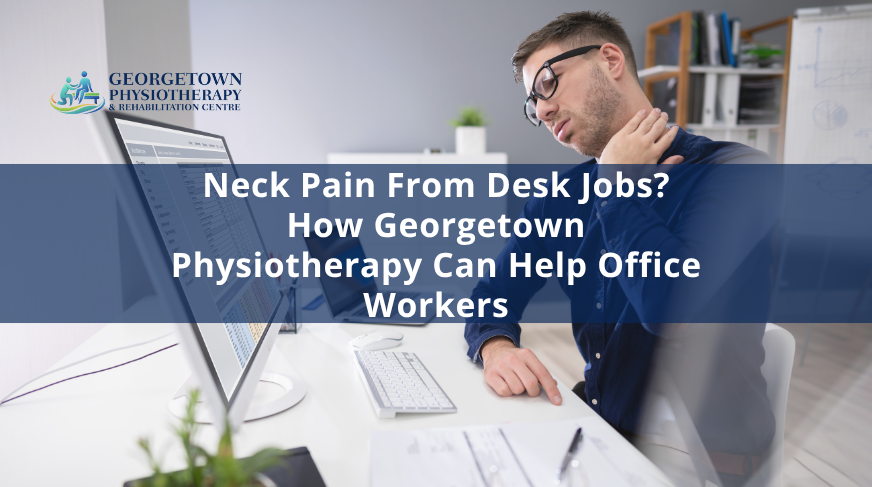
Neck Pain From Desk Jobs? How Georgetown Physiotherapy Can Help Office Workers
For many people in Georgetown, a typical workday means spending hours in front of a computer. Whether you’re working from an office, at home, or in a hybrid environment, prolonged screen time can gradually lead to neck pain, shoulder stiffness, headaches, and upper back discomfort.
If you notice your neck feeling sore by the end of the day, struggle to turn your head comfortably, or experience tension headaches after long meetings, you’re not alone. Desk-related neck pain has become increasingly common, particularly among office workers who spend much of their day sitting and performing repetitive computer tasks.
The encouraging news is that many cases of mechanical neck pain respond well to conservative treatment. Physiotherapy focuses on identifying the factors contributing to your symptoms and creating a personalised rehabilitation plan to improve movement, restore strength, and help prevent recurring pain.
Rehabilitation Centre, we help office workers manage through evidence-informed movement education, ergonomic advice, and active rehabilitation designed to support long-term spinal health.
Why Desk Jobs Can Cause Neck Pain
The human body is designed for regular movement rather than remaining in one position for several hours.
During computer work, people often develop habits such as:
- Leaning towards the monitor
- Rounded shoulders
- Forward head posture
- Slouching in the chair
- Elevated shoulders while typing
- Looking down at laptops or mobile devices
- Sitting without movement breaks
Over time, these positions may increase stress on the muscles, joints, ligaments, and connective tissues around the neck and upper back.
Research suggests that remaining in one position for prolonged periods may contribute more to discomfort than any single posture itself. Regular movement throughout the day is one of the most effective ways to reduce strain.
Common Symptoms of Desk-Related Neck Pain
Office workers commonly report:
- Neck stiffness
- Pain when turning the head
- Shoulder tightness
- Upper back discomfort
- Tension headaches
- Muscle fatigue
- Reduced neck mobility
- Pain after long meetings
- Difficulty concentrating because of discomfort
- Symptoms that worsen throughout the workday
If these symptoms continue for several days or begin affecting work or daily activities, an assessment by a physiotherapist is recommended.
Common Causes of Office Neck Pain
Prolonged Sitting
Remaining seated for long periods reduces movement, allowing muscles to become fatigued and joints to stiffen.
Poor Workstation Ergonomics
A monitor positioned too low, a chair without adequate support, or frequently reaching for a mouse can increase strain on the neck and shoulders.
Forward Head Position
As the head moves further in front of the shoulders, the muscles of the neck often have to work harder to support it, contributing to fatigue and discomfort over time.
Repetitive Computer Work
Typing, mouse use, and repeated small movements can overload muscles when combined with insufficient rest breaks.
Stress
Workplace stress can increase muscle tension, particularly around the neck, shoulders, and jaw, making existing symptoms feel worse.
How Physiotherapy Can Help
Every treatment programme begins with understanding the underlying cause of your symptoms.
Comprehensive Assessment
Your physiotherapist may assess:
- Neck mobility
- Shoulder movement
- Muscle strength
- Upper back mobility
- Functional posture
- Workstation habits
- Balance and coordination
- Daily work activities
- Previous injuries
- Lifestyle factors
This assessment helps identify the physical factors contributing to your pain.
Pain Management
Depending on your assessment, treatment may include:
- Manual therapy
- Therapeutic exercise
- Soft tissue treatment
- Joint mobilisation
- Activity modification
- Movement education
- Laser therapy where clinically appropriate
The objective is to improve function while helping reduce pain.
Strengthening Key Muscles
Many office workers benefit from strengthening:
- Deep neck flexors
- Shoulder stabilisers
- Upper back muscles
- Rotator cuff muscles
- Core muscles
Improved strength may help reduce strain during prolonged computer work.
Restoring Mobility
Restricted movement often contributes to ongoing discomfort.
Your physiotherapist may recommend:
- Neck mobility exercises
- Thoracic spine mobility exercises
- Shoulder stretching
- Flexibility training
- Functional movement exercises
Improving mobility often helps make everyday movements more comfortable.
Ergonomic Advice
A personalised workstation assessment may include recommendations such as:
- Monitor positioned at eye level
- Chair adjusted to support the lower back
- Keyboard and mouse within comfortable reach
- Feet supported on the floor
- Frequently used items placed close to the body
Simple changes can sometimes significantly reduce unnecessary strain.
Healthy Workplace Habits That Support Recovery
Move Every Hour
Stand, stretch, or walk for a few minutes every 30–60 minutes.
Frequent movement breaks are generally more beneficial than remaining seated all day.
Complete Your Home Exercise Programme
Exercises prescribed by your physiotherapist are designed specifically for your symptoms and recovery goals.
Consistency often leads to better long-term results than performing many random exercises.
Stay Physically Active
Walking, recreational exercise, and regular physical activity support muscle health and spinal function.
Avoid Holding One Position
Even an ergonomically correct posture becomes stressful if maintained for too long.
Changing positions throughout the day helps distribute physical loads more evenly.
Manage Stress
Healthy sleep habits, regular exercise, relaxation techniques, and work-life balance may help reduce muscle tension associated with stress.
Common Mistakes Office Workers Make
Ignoring Early Symptoms
Minor stiffness can gradually become persistent pain if the contributing factors remain unchanged.
Skipping Movement Breaks
Working continuously for several hours may increase muscle fatigue and joint stiffness.
Relying Only on Pain Medication
Medication may temporarily reduce discomfort but does not address strength, mobility, or movement habits contributing to neck pain.
Copying Online Exercise Videos
Different causes of neck pain require different rehabilitation strategies.
Exercises should be selected after an individual assessment.
Frequently Asked Questions
Can physiotherapy help neck pain caused by desk work?
Yes. Physiotherapy may help improve mobility, strengthen supporting muscles, provide ergonomic advice, and restore normal movement following an individual assessment.
Is poor posture the only cause of neck pain?
No. Neck pain is usually influenced by several factors, including prolonged sitting, repetitive work, muscle weakness, stress, workstation setup, and reduced physical activity.
Should I stop working if my neck hurts?
Not necessarily. Many people continue working with temporary modifications, movement breaks, and an appropriate rehabilitation programme.
How long does recovery take?
Recovery depends on the cause of your symptoms, how long they have been present, your activity level, and how consistently you follow your rehabilitation plan.
Can physiotherapy help prevent neck pain from returning?
Yes. Physiotherapy focuses on addressing the underlying contributors to pain through strengthening, movement retraining, ergonomic education, and self-management strategies, which may help reduce the risk of recurrence.
Why Choose Georgetown Physiotherapy & Rehabilitation Centre?
At Georgetown Physiotherapy & Rehabilitation Centre, we understand the physical demands placed on today’s office workers.
Our experienced team develops personalised treatment plans that may include:
- Physiotherapy
- Manual Therapy
- Therapeutic Exercise
- Massage Therapy
- Chiropractic Care
- Laser Therapy
- Shockwave Therapy
- Ergonomic Education
- Home Exercise Programmes
Whether your symptoms are caused by prolonged computer work, repetitive office tasks, or poor workplace ergonomics, we focus on helping you move comfortably, improve productivity, and reduce the likelihood of future injuries.
Georgetown Physiotherapy & Rehabilitation Centre
Address: 333 Mountainview Rd S, Unit #2, Georgetown, ON L7G 5S5, Canada
Phone: +1 905-702-6633
Email: info@georgetownphysiotherapy.ca
Website: https://georgetownphysiotherapy.ca/
Work Comfortably Again
Neck pain caused by desk work doesn’t have to become part of your daily routine.
With a personalised physiotherapy programme, ergonomic improvements, strengthening exercises, and healthier movement habits, many office workers experience meaningful improvements in comfort, mobility, and overall function.
If you’re looking for , book an assessment with Rehabilitation Centre. Our team will identify the factors contributing to your symptoms and create a customised treatment plan that helps you work comfortably and stay active for the long term.