

 Call For Appointment
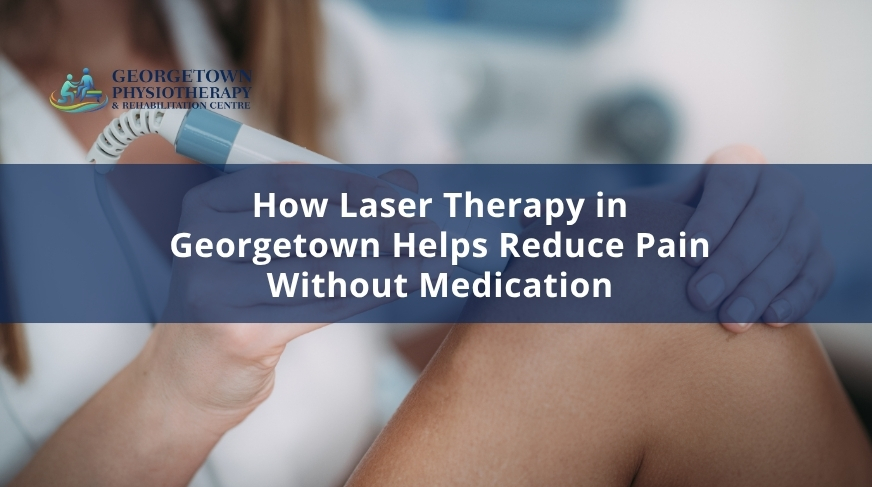
How Laser Therapy in Georgetown Helps Reduce Pain Without Medication
Many people living with muscle pain, joint discomfort, sports injuries, or chronic musculoskeletal conditions want effective pain relief without relying solely on medication. While medicines can play an important role for some individuals, they may not always address the underlying cause of pain or be suitable for long-term use.
One treatment that has gained attention in physiotherapy is laser therapy, also known as Low-Level Laser Therapy (LLLT) or photo biomodulation therapy. This non-invasive treatment uses specific wavelengths of light to stimulate biological processes within tissues. Research suggests that, for certain musculoskeletal conditions, laser therapy may help reduce pain, support tissue healing, and improve function, particularly when combined with exercise-based rehabilitation rather than used as a standalone treatment.
At Rehabilitation Centre, is incorporated into personalized rehabilitation programmes when clinically appropriate, helping patients recover from injuries and return to daily activities with greater comfort and confidence.
What Is Laser Therapy?
Therapeutic laser therapy uses low-intensity light energy to interact with cells in muscles, tendons, ligaments, joints, and other soft tissues.
Unlike surgical lasers, therapeutic lasers:
- Do not cut tissue
- Do not generate high levels of heat
- Are non-invasive
- Are generally painless during treatment
The light energy is absorbed by cells, where it is believed to support normal cellular activity involved in tissue repair and recovery.
How Does Laser Therapy Work?
Although research is ongoing, photobiomodulation is thought to influence cells by:
- Supporting cellular energy production (ATP)
- Modulating inflammatory processes
- Promoting local circulation
- Supporting tissue repair mechanisms
- Influencing pain signalling pathways
These biological effects may contribute to pain reduction and improved recovery in appropriately selected patients.
Importantly, laser therapy is usually one component of a broader rehabilitation programme that includes exercise, education, and functional training.
Conditions That May Benefit From Laser Therapy
Following an assessment, laser therapy may be recommended for selected musculoskeletal conditions such as:
- Neck pain
- Lower back pain
- Shoulder pain
- Tennis elbow
- Golfer’s elbow
- Knee pain
- Plantar fasciitis
- Tendinopathies
- Muscle strains
- Ligament sprains
- Sports injuries
- Repetitive strain injuries
The suitability of laser therapy depends on the diagnosis, stage of healing, and individual patient factors.
Benefits of Laser Therapy
1. Non-Invasive Treatment
Laser therapy does not involve injections or surgery.
Treatment is performed externally through the skin, making it a comfortable option for many patients.
2. Drug-Free Pain Management
For appropriate conditions, laser therapy may help reduce pain as part of a comprehensive rehabilitation programme.
It should not be viewed as a replacement for medications prescribed by your physician but may complement other conservative treatments when clinically appropriate.
3. Supports Tissue Healing
Research suggests photobiomodulation may help support normal tissue repair processes following muscle, tendon, and ligament injuries.
This may contribute to improved recovery when combined with active rehabilitation.
4. Complements Physiotherapy
Laser therapy is most effective when integrated into a personalized treatment plan that also includes:
- Therapeutic exercise
- Manual therapy
- Mobility training
- Strengthening exercises
- Movement education
- Home exercise programmes
Addressing both symptoms and underlying movement impairments helps improve long-term outcomes.
5. Comfortable Treatment Experience
Most patients experience little to no discomfort during treatment.
Sessions are generally short, allowing many people to return to normal daily activities afterwards.
What Happens During a Laser Therapy Session?
Your appointment typically begins with a physiotherapy assessment.
Your physiotherapist will determine whether laser therapy is appropriate for your condition.
If recommended, treatment usually involves:
- Identifying the affected tissues
- Positioning the laser applicator over the treatment area
- Delivering light energy for several minutes
- Monitoring your response
- Combining treatment with rehabilitation exercises and education
The number of sessions varies depending on your diagnosis, symptom severity, and progress.
Laser Therapy Combined With Physiotherapy
Research consistently supports multimodal rehabilitation rather than relying on passive treatments alone.
At Georgetown Physiotherapy & Rehabilitation Centre, may be combined with:
- Physiotherapy
- Manual therapy
- Therapeutic exercise
- Functional rehabilitation
- Stretching
- Strength training
- Balance training
- Massage therapy
- Chiropractic care
- Home exercise programmes
This comprehensive approach addresses both pain and the movement-related factors contributing to injury.
Everyday Habits That Support Recovery
Your recovery continues beyond the clinic.
Helpful strategies include:
- Completing your prescribed exercises
- Staying physically active within recommended limits
- Sleeping adequately
- Following ergonomic advice
- Maintaining healthy movement habits
- Gradually returning to activity
- Avoiding sudden increases in physical workload
Consistency often plays a major role in long-term recovery.
Common Misconceptions About Laser Therapy
“Laser Therapy Works Instantly”
Some patients notice early improvements, while others require multiple treatments as part of their rehabilitation programme.
Recovery depends on the condition being treated, the stage of healing, and individual factors.
“Laser Therapy Replaces Exercise”
Exercise remains one of the most effective interventions for many musculoskeletal conditions.
A thorough assessment helps determine whether it is an appropriate option for your diagnosis.
“If the Pain Improves, I’m Fully Recovered”
Pain relief does not always mean strength, mobility, or tissue function has fully returned.
Completing your rehabilitation programme helps reduce the likelihood of recurrence.
Frequently Asked Questions
Is laser therapy safe?
For appropriately selected patients, therapeutic laser therapy is generally considered safe when delivered by trained healthcare professionals. Your clinician will screen for contraindications and determine whether the treatment is suitable for your condition.
Does laser therapy hurt?
No. Most patients feel little or no discomfort during treatment. Some may notice a mild warming sensation, while many feel nothing at all.
How many laser therapy sessions will I need?
The number of treatments depends on your diagnosis, symptom duration, tissue healing, and response to rehabilitation. Your physiotherapist will review your progress regularly and adjust your treatment plan accordingly.
Can laser therapy replace pain medication?
Laser therapy should not replace medications prescribed by your physician. For some musculoskeletal conditions, it may be used alongside other evidence-based treatments as part of a comprehensive rehabilitation plan.
Is laser therapy effective on its own?
Current evidence generally supports using laser therapy alongside exercise, education, and other physiotherapy interventions rather than as a standalone treatment.
Why Choose Georgetown Physiotherapy & Rehabilitation Centre?
At Georgetown Physiotherapy & Rehabilitation Centre, every patient receives an individualized assessment to determine the most appropriate treatment options.
When clinically indicated, laser therapy may be incorporated into a comprehensive rehabilitation plan that includes:
- Physiotherapy
- Laser Therapy
- Manual Therapy
- Therapeutic Exercise
- Functional Rehabilitation
- Massage Therapy
- Chiropractic Care
- Strength & Mobility Training
- Home Exercise Programmes
- Injury Prevention Education
Our multidisciplinary team focuses on helping patients reduce pain, restore movement, improve function, and return to the activities they enjoy through evidence-informed, patient-centred care.
Georgetown Physiotherapy & Rehabilitation Centre
Address: 333 Mountainview Rd S, Unit #2, Georgetown, ON L7G 5S5, Canada
Phone: +1 905-702-6633
Email: info@georgetownphysiotherapy.ca
Website: https://georgetownphysiotherapy.ca/
Explore a Drug-Free Option for Pain Relief
Living with musculoskeletal pain doesn’t always mean relying solely on medication.
For many people, laser therapy—combined with physiotherapy and active rehabilitation—may help reduce pain, support healing, and improve everyday function.
If you’re looking for book an assessment with Physiotherapy & Rehabilitation Centre. Our experienced team will determine whether laser therapy is appropriate for your condition and create a personalized rehabilitation plan to help you recover safely and confidently.