



 Call For Appointment
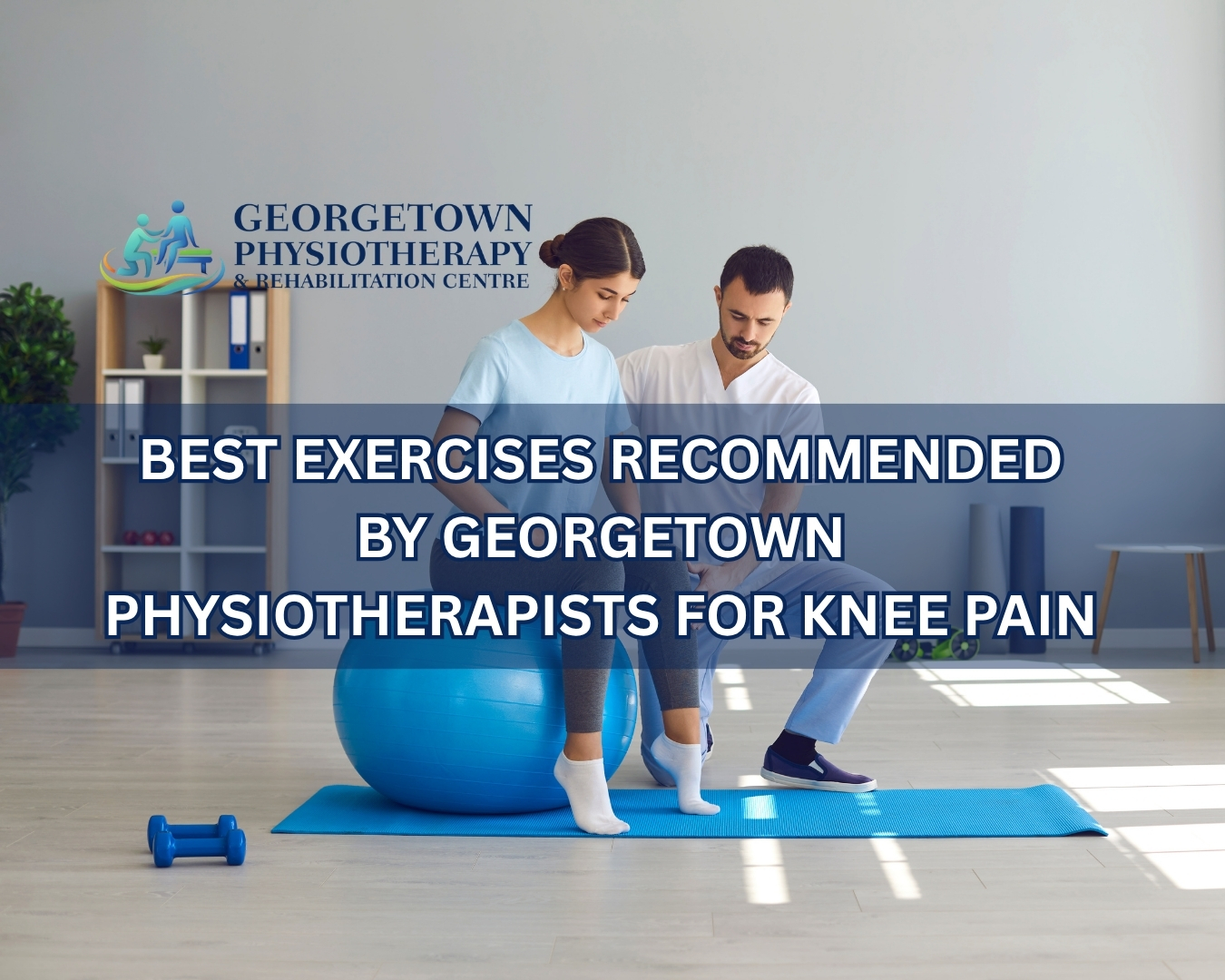
Best Exercises Recommended by Georgetown Physiotherapists for Knee Pain
Knee pain is one of the most common mobility problems affecting people of all ages. Whether caused by sports injuries, arthritis, muscle weakness, aging, repetitive movement, or poor posture, knee discomfort can make daily activities such as walking, climbing stairs, exercising, or standing for long periods difficult and painful.
Many Georgetown residents experience knee pain related to physically demanding work, active lifestyles, prolonged sitting, or age-related joint degeneration. While rest may temporarily reduce discomfort, long-term recovery often depends on improving muscle strength, flexibility, mobility, and joint stability.
Physiotherapy exercises play a major role in knee rehabilitation because they help support the joint naturally while reducing pressure, stiffness, and instability.
At Georgetown Physiotherapy & Rehabilitation Centre, rehabilitation programs are designed to help patients improve knee strength, reduce pain, and restore movement safely through personalized physiotherapy care.
Common Causes of Knee Pain
Knee pain can develop from many different conditions and movement problems.
Common causes include:
- Arthritis
- Sports injuries
- Ligament strain
- Muscle weakness
- Poor posture
- Overuse injuries
- Tendon irritation
- Meniscus injuries
- Repetitive stress
- Age-related joint wear
Weak muscles around the knee may increase pressure on the joint and contribute to pain over time.
Why Exercise Helps Knee Pain
Many people avoid movement when their knees hurt, but controlled exercises are often one of the most effective ways to support recovery.
Physiotherapy exercises may help:
- Strengthen supporting muscles
- Improve flexibility
- Reduce stiffness
- Improve balance
- Increase mobility
- Support joint stability
- Reduce injury risk
Research consistently shows that exercise therapy plays an important role in managing knee pain and improving function, especially for conditions such as osteoarthritis.
Important Tips Before Starting Knee Exercises
Before beginning any exercise program, it is important to:
- Move slowly and carefully
- Avoid exercises causing severe pain
- Focus on proper form
- Warm up before activity
- Follow professional guidance if symptoms are severe
Exercises should always be adjusted according to the individual’s condition, mobility level, and rehabilitation goals.
Best Physiotherapist-Recommended Exercises for Knee Pain
Straight Leg Raises
Straight leg raises help strengthen the quadriceps muscles, which support knee stability.
How to Perform:
- Lie flat on your back
- Bend one knee while keeping the other leg straight
- Slowly lift the straight leg upward
- Hold briefly
- Lower slowly
Benefits:
- Strengthens thigh muscles
- Supports knee stability
- Reduces joint stress
Heel Slides
Heel slides improve knee flexibility and mobility.
How to Perform:
- Lie on your back
- Slowly slide one heel toward the hips
- Bend the knee comfortably
- Slide the leg back down
Benefits:
- Improves range of motion
- Reduces stiffness
- Encourages gentle movement
Quad Sets
Quad sets strengthen the front thigh muscles without placing excess pressure on the knee.
How to Perform:
- Sit or lie with legs extended
- Tighten the thigh muscles
- Press the knee gently downward
- Hold for several seconds
- Relax and repeat
Benefits:
- Improves muscle activation
- Supports knee alignment
- Helps reduce weakness
Hamstring Stretches
Tight hamstrings may increase stress on the knees and lower back.
How to Perform:
- Sit with one leg extended
- Reach gently toward the toes
- Keep the back straight
- Hold the stretch comfortably
Benefits:
- Improves flexibility
- Reduces muscle tension
- Supports better movement
Calf Raises
Calf raises strengthen the lower leg muscles and improve balance.
How to Perform:
- Stand while holding a stable surface
- Slowly rise onto the toes
- Lower the heels gradually
Benefits:
- Improves leg strength
- Supports walking stability
- Enhances balance
Step-Ups
Step-ups help improve functional strength and knee control.
How to Perform:
- Step onto a low platform or stair
- Push upward carefully
- Step back down slowly
- Repeat on both sides
Benefits:
- Improves balance
- Builds leg strength
- Supports daily movement activities
Wall Sits
Wall sits strengthen the thighs and glute muscles that support the knees.
How to Perform:
- Stand against a wall
- Slowly slide downward into a seated position
- Hold briefly
- Return slowly to standing
Benefits:
- Improves lower body strength
- Supports knee stability
- Builds endurance
Clamshell Exercises
Clamshells strengthen hip muscles that help stabilize the knees.
How to Perform:
- Lie on one side with knees bent
- Keep feet together
- Lift the top knee upward
- Lower slowly
Benefits:
- Improves hip strength
- Supports knee alignment
- Reduces stress on the joint
Low-Impact Activities for Knee Pain
Many physiotherapists recommend low-impact activities because they improve mobility without excessive joint pressure.
Helpful activities may include:
- Walking
- Swimming
- Cycling
- Water exercises
- Gentle yoga
- Stretching programs
Low-impact movement helps improve circulation, flexibility, and muscle strength safely.
Exercises to Avoid During Severe Knee Pain
Some activities may worsen knee discomfort if performed incorrectly or too aggressively.
Examples include:
- Deep squats
- High-impact jumping
- Sudden twisting movements
- Heavy lifting without support
- Running on hard surfaces during flare-ups
A physiotherapist can recommend safer exercise alternatives depending on the condition.
How Physiotherapy Helps Knee Pain Recovery
Professional physiotherapy helps identify the root cause of knee discomfort and creates a personalized rehabilitation plan.
At Georgetown Physiotherapy & Rehabilitation Centre, treatment programs may include:
- Strengthening exercises
- Mobility training
- Stretching programs
- Manual therapy
- Posture correction
- Balance exercises
- Soft tissue therapy
The goal is to improve mobility while reducing pain and preventing future injuries.
Massage Therapy for Knee Pain
Massage therapy may help reduce muscle tightness around the knee joint and improve circulation.
Benefits may include:
- Reduced muscle tension
- Better flexibility
- Improved circulation
- Reduced stress-related tightness
Massage therapy is often combined with physiotherapy during rehabilitation programs.
Chiropractic Care for Joint Alignment
Poor posture and movement mechanics can affect knee function and joint stress.
Chiropractic care may help improve:
- Joint mobility
- Posture
- Balance
- Lower body alignment
- Movement patterns
Integrated rehabilitation approaches often improve long-term recovery outcomes.
Laser Therapy for Knee Pain
- Improve circulation
- Support tissue healing
- Reduce chronic pain
This treatment is often combined with physiotherapy exercises for comprehensive rehabilitation.
When to Seek Professional Help for Knee Pain
You should seek professional rehabilitation support if you experience:
- Persistent knee pain
- Swelling
- Difficulty walking
- Knee instability
- Reduced flexibility
- Pain during daily activities
- Sports-related injuries
- Difficulty climbing stairs
Early treatment often improves recovery and helps prevent worsening joint problems.
Why Georgetown Residents Choose Georgetown Physiotherapy & Rehabilitation Centre
Many Georgetown residents trust Georgetown Physiotherapy & Rehabilitation Centre for personalized rehabilitation and mobility care.
Services include:
- Physiotherapy
- Knee Rehabilitation
- Massage Therapy
- Chiropractic Care
- Laser Therapy
- Sports Injury Rehabilitation
Treatment programs are designed to help patients improve strength, mobility, and long-term joint health safely.
Final Thoughts
Knee pain can significantly affect mobility, independence, and quality of life, but the right exercises and rehabilitation approach can make a major difference.
Whether your knee pain is related to arthritis, sports injuries, posture problems, or muscle weakness, professional physiotherapy can help you recover safely and improve overall movement confidence.
Contact Information
Georgetown Physiotherapy & Rehabilitation Centre
333 Mountainview Rd S, Unit #2, Georgetown, ON L7G 5S5, Canada
Phone: +1 905 702 6633
Email: info@georgetownphysiotherapy.ca
Website: Georgetown Physiotherapy Official Website