



 Call For Appointment

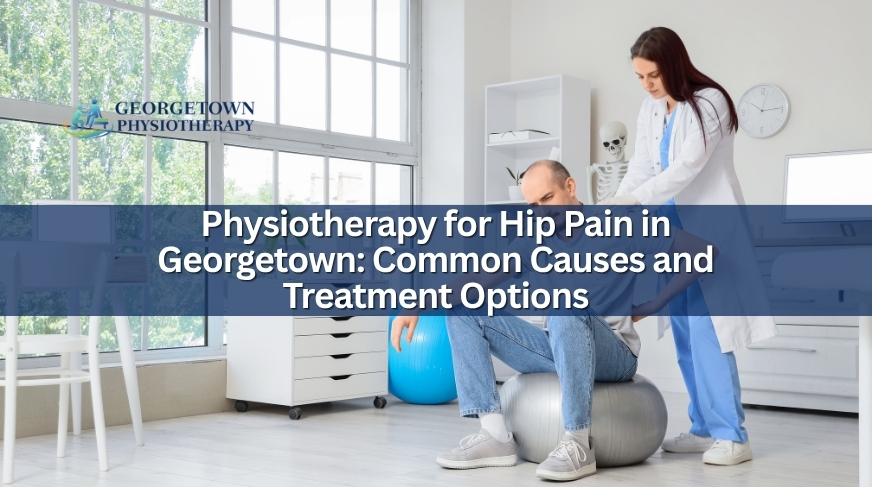
Physiotherapy for Hip Pain in Georgetown: Common Causes and Treatment Options
Hip pain can affect much more than the hip itself.
Walking, climbing stairs, getting into a car, sitting at work, exercising or even turning over in bed can become uncomfortable when hip movement is painful or restricted.
For people searching for hip pain physiotherapy in Georgetown, one of the most important things to understand is that hip pain can have many possible causes. It is not always caused by arthritis, and the location of the pain does not necessarily tell you exactly what is happening.
Hip symptoms may be associated with muscles, tendons, joints, bursae, the lower back or other structures around the hip and pelvis.
That is why an individualized assessment is an important starting point.
At Georgetown Physiotherapy & Rehabilitation Centre, physiotherapy assessment and rehabilitation can focus on understanding your symptoms, identifying relevant movement and strength limitations, and developing a plan around your daily activities and recovery goals.
Can Physiotherapy Help Hip Pain?
Physiotherapy may help people with certain types of hip pain by addressing mobility, strength, movement patterns, physical activity and functional limitations.
Treatment depends on the underlying problem.
A rehabilitation program may include therapeutic exercises, strengthening, mobility work, education, activity modification and other clinically appropriate techniques.
Because hip pain has many possible causes, the first step is determining what may be contributing to your symptoms rather than assuming that every hip problem requires the same treatment.
What Can Cause Hip Pain?
Hip pain can develop gradually or appear suddenly after an injury.
Some common causes include:
- Osteoarthritis
- Tendon-related problems
- Muscle strains
- Bursitis
- Sports injuries
- Repetitive loading
- Reduced mobility
- Previous injuries
- Pain referred from the lower back
The location and pattern of symptoms can provide useful information, but they do not necessarily establish the cause on their own.
For example, pain that feels like it is coming from the hip can sometimes be related to the lower back or surrounding tissues.
This is why an assessment can be valuable when symptoms persist.
1. Hip Osteoarthritis
Osteoarthritis is one possible cause of ongoing hip pain and stiffness.
People with hip osteoarthritis may experience difficulty with:
- Walking
- Stairs
- Getting out of a chair
- Getting into a vehicle
- Putting on shoes or socks
- Exercise
- Longer periods of standing
Stiffness may also make certain hip movements more difficult.
For people with osteoarthritis, therapeutic exercise and physical activity are important parts of management. NICE guidance recommends tailored exercise for people with osteoarthritis, including local strengthening and general aerobic fitness according to individual needs.
Physiotherapy may therefore focus on maintaining or improving physical function rather than promising to reverse the underlying joint changes.
2. Hip Tendon Problems
Tendons connect muscles to bones and help transfer force during movement.
Tendon-related hip pain can develop when the demands placed on a tendon exceed its current capacity.
This may happen after:
- Increasing exercise too quickly
- Changing sporting activities
- Repetitive movements
- Increased walking
- Changes in training volume
- Other changes in physical load
Rehabilitation may involve gradually improving the affected area’s ability to tolerate load.
Depending on the assessment, this can involve progressive strengthening and modifications to activities that are currently aggravating symptoms.
3. Hip Bursitis and Lateral Hip Pain
Some people experience pain around the outside of the hip.
This can be associated with greater trochanteric pain syndrome, which may involve structures such as the gluteal tendons and surrounding tissues.
Pain may become noticeable when:
- Lying on the affected side
- Walking for longer periods
- Climbing stairs
- Standing on one leg
- Running
- Performing certain hip movements
Treatment depends on the individual’s presentation.
Physiotherapy may focus on strengthening, activity modification, load management and gradually rebuilding tolerance to everyday activities.
4. Muscle Strain
A sudden increase in activity or an awkward movement can sometimes strain muscles around the hip.
Athletes may experience muscle injuries during:
- Sprinting
- Kicking
- Jumping
- Rapid changes of direction
- High-intensity training
Symptoms may include localized pain, tenderness and difficulty with certain movements.
Rehabilitation can be progressed gradually from comfortable movement toward strengthening and functional activity.
5. Sports-Related Hip Pain
Hip pain can occur in people who participate in running, soccer, hockey, basketball, cycling, weight training and other activities.
Sports-related hip symptoms may develop because of:
- Sudden increases in training
- Repetitive loading
- Reduced recovery
- Strength limitations
- Changes in technique
- Previous injuries
The appropriate rehabilitation plan depends on the sport and the demands placed on the hip.
A runner returning to training will have different requirements from someone who simply wants to walk comfortably.
6. Pain Referred From the Lower Back
Not all pain felt around the hip originates from the hip joint.
The lower back and hip region are closely connected through movement and nerve structures.
Some people may experience symptoms around the buttock or hip region when the source is associated with the lower back.
This is another reason why a comprehensive assessment is important.
A physiotherapist may examine both the hip and surrounding areas when determining what may be contributing to your symptoms.
Where Do You Feel Hip Pain?
The location of your pain can provide useful clues, although it cannot diagnose the problem by itself.
Front of the Hip
Pain at the front of the hip or groin may occur with certain joint-related conditions or other problems involving structures around the hip.
Outside of the Hip
Pain around the outside of the hip can be associated with lateral hip conditions such as greater trochanteric pain syndrome.
Buttock
Pain around the buttock can have several possible causes, including hip-related or lower-back-related problems.
Back of the Hip
Pain behind the hip may involve muscles, the lower back or other surrounding structures.
If you are unsure where the pain is coming from, professional assessment can help clarify the presentation.
What Happens During a Hip Physiotherapy Assessment?
A physiotherapy assessment usually begins with a detailed conversation.
Your physiotherapist may ask:
- When did the pain begin?
- Did it start after an injury?
- Has your activity level recently changed?
- What movements increase symptoms?
- Does walking make it worse?
- Do you have difficulty with stairs?
- Does sitting for long periods affect your symptoms?
- Are you involved in sports?
- Have you experienced previous hip or back problems?
- What activities do you want to return to?
The physical assessment may then examine:
- Hip range of motion
- Strength
- Walking
- Balance
- Functional movement
- Lower-back movement
- Surrounding muscle function
- Activities that reproduce symptoms
The purpose is to develop a more complete picture of your condition.
How Can Physiotherapy Help Hip Pain?
Once the contributing factors have been assessed, treatment can be tailored to your needs.
1. Therapeutic Exercise
Exercise may be used to improve strength, mobility and physical capacity.
Depending on the problem, exercises may target:
- Hip muscles
- Gluteal muscles
- Core muscles
- Thigh muscles
- Lower-leg muscles
The exercises should be progressed according to your current ability.
2. Strengthening
Weakness can sometimes contribute to difficulty performing everyday or sporting activities.
A progressive strengthening program can help improve your ability to tolerate physical demands.
For hip osteoarthritis, evidence reviewed by NICE includes exercise programs involving strengthening of hip-related muscle groups as part of rehabilitation.
3. Mobility Exercises
If restricted movement is contributing to your functional limitations, your physiotherapist may recommend appropriate mobility exercises.
The goal is to improve useful movement without unnecessarily aggravating symptoms.
4. Activity Modification
You may not need to completely stop exercising.
Instead, your activity may need to be adjusted.
For example, depending on your symptoms, your physiotherapist may help modify:
- Exercise intensity
- Training volume
- Walking distance
- Recovery periods
- Repetitive movements
- Sporting activities
The goal is to find an appropriate level of activity and gradually build capacity.
5. Movement Retraining
Sometimes the way you perform a movement may need attention.
Your physiotherapist may assess tasks such as:
- Squatting
- Walking
- Step-ups
- Lunging
- Getting out of a chair
- Single-leg activities
If relevant, exercises can then be used to improve movement control and confidence.
Can Physiotherapy Help Hip Arthritis?
Physiotherapy can be part of the management plan for people with symptomatic hip osteoarthritis.
Exercise and physical activity are central components of osteoarthritis management. NICE recommends tailored therapeutic exercise because it can help improve pain, physical function and quality of life.
However, physiotherapy does not remove the underlying osteoarthritis.
The goal is generally to help you manage symptoms and maintain or improve physical function.
For some people, this may involve strengthening and aerobic exercise.
For others, the emphasis may be on maintaining mobility and adapting activities around their symptoms.
Can Physiotherapy Help Hip Pain Without Surgery?
Many causes of hip pain can be managed without surgery, depending on the underlying condition.
A physiotherapy program may be appropriate for certain muscle, tendon, movement-related and osteoarthritis presentations.
However, physiotherapy cannot guarantee that surgery will never be necessary.
If symptoms are severe, persistent or associated with a condition requiring medical intervention, additional medical assessment may be appropriate.
The best approach depends on the diagnosis and individual circumstances.
What Exercises Are Good for Hip Pain?
There is no single “best” exercise for every person with hip pain.
Exercises should be selected based on:
- The underlying condition
- Current strength
- Mobility
- Pain levels
- Physical activity
- Functional goals
Depending on the assessment, a program may include:
- Hip strengthening
- Glute strengthening
- Core exercises
- Mobility exercises
- Balance exercises
- Aerobic activity
- Functional movements
For people with hip osteoarthritis, clinical evidence includes exercise programs involving strengthening, stretching, aerobic activity and neuromuscular control exercises.
Should You Rest a Painful Hip?
Complete rest is not necessarily the answer.
Too much activity may aggravate some conditions, but prolonged inactivity can also reduce strength and physical capacity.
A more useful approach is often to determine what level of movement your hip can currently tolerate.
You may need to temporarily reduce an aggravating activity and then gradually rebuild your capacity.
This is particularly important for active individuals who want to return to sports or exercise.
How Long Does Hip Physiotherapy Take?
There is no fixed recovery period for hip pain.
The timeline depends on:
- The underlying condition
- How long symptoms have been present
- Severity
- Strength
- Mobility
- Activity requirements
- Previous injuries
- Response to rehabilitation
- Consistency with the recommended program
Some people may notice functional changes relatively early, while others require longer-term rehabilitation.
A responsible treatment plan should be monitored and adjusted rather than promising a guaranteed recovery time.
When Should You Get Hip Pain Assessed?
Consider a professional assessment if hip pain is affecting:
- Walking
- Exercise
- Work
- Stairs
- Sleep
- Getting dressed
- Getting into a car
- Everyday activities
You should also seek appropriate medical attention when symptoms are severe, rapidly worsening or associated with significant trauma or other concerning symptoms.
Persistent hip pain should not automatically be assumed to be a simple muscle problem.
When Might Hip Pain Need Medical Investigation?
Some presentations may require further medical assessment rather than routine physiotherapy alone.
Seek appropriate medical care if hip pain is associated with:
- Major trauma
- Inability to bear weight
- Significant swelling
- Severe or rapidly worsening pain
- Fever or feeling systemically unwell
- Unexplained significant symptoms
- New neurological symptoms
A healthcare professional can determine whether imaging, medical testing or another form of assessment is appropriate.
Frequently Asked Questions
Can physiotherapy help hip pain?
Yes. Physiotherapy may help certain types of hip pain by addressing strength, mobility, physical activity, movement and functional limitations.
What is the most common cause of hip pain?
There is no single cause that applies to everyone. Hip pain can be associated with osteoarthritis, tendon problems, muscle injuries, lateral hip pain conditions, sports injuries or referred pain from the lower back.
Can physiotherapy help hip arthritis?
Yes. Tailored therapeutic exercise and physical activity are important components of osteoarthritis management and may help improve pain and physical function.
Should I stop exercising if my hip hurts?
Not necessarily. Depending on the condition, modifying the type, intensity or amount of activity may be more appropriate than stopping all movement.
What exercises are good for hip pain?
The right exercises depend on the underlying condition and your current physical capacity. A physiotherapist can select and progress exercises based on your assessment and goals.
Can hip pain come from the back?
Yes. Pain experienced around the hip or buttock can sometimes be related to the lower back or surrounding structures.
How long does hip pain take to improve?
Recovery varies significantly depending on the cause, duration and severity of symptoms and response to rehabilitation.
When should I see a physiotherapist for hip pain?
Consider an assessment if hip pain is persistent or is interfering with walking, exercise, work, sleep or other everyday activities.
Where can I get hip pain physiotherapy in Georgetown?
Georgetown Physiotherapy & Rehabilitation Centre provides physiotherapy and rehabilitation services at 333 Mountainview Rd S, Unit #2, Georgetown, Ontario. An assessment can help determine an appropriate approach for your hip symptoms.
Physiotherapy for Hip Pain in Georgetown
Hip pain can affect your mobility, independence, exercise routine and quality of life.
The first step is understanding that hip pain does not have one universal cause, and therefore treatment should not be one-size-fits-all.
An individualized physiotherapy assessment can help identify relevant mobility, strength and functional limitations and determine what type of rehabilitation may be appropriate.
At Georgetown Physiotherapy & Rehabilitation Centre, treatment can be tailored around your symptoms, activity requirements and personal goals.
Georgetown Physiotherapy & Rehabilitation Centre
333 Mountainview Rd S, Unit #2Georgetown, ON L7G 5S5
Phone: +1 905 702 6633
Email: info@georgetownphysiotherapy.ca
If hip pain is affecting your movement, exercise, work or everyday activities, contact the clinic to discuss an assessment and appropriate next steps.