




 Call For Appointment
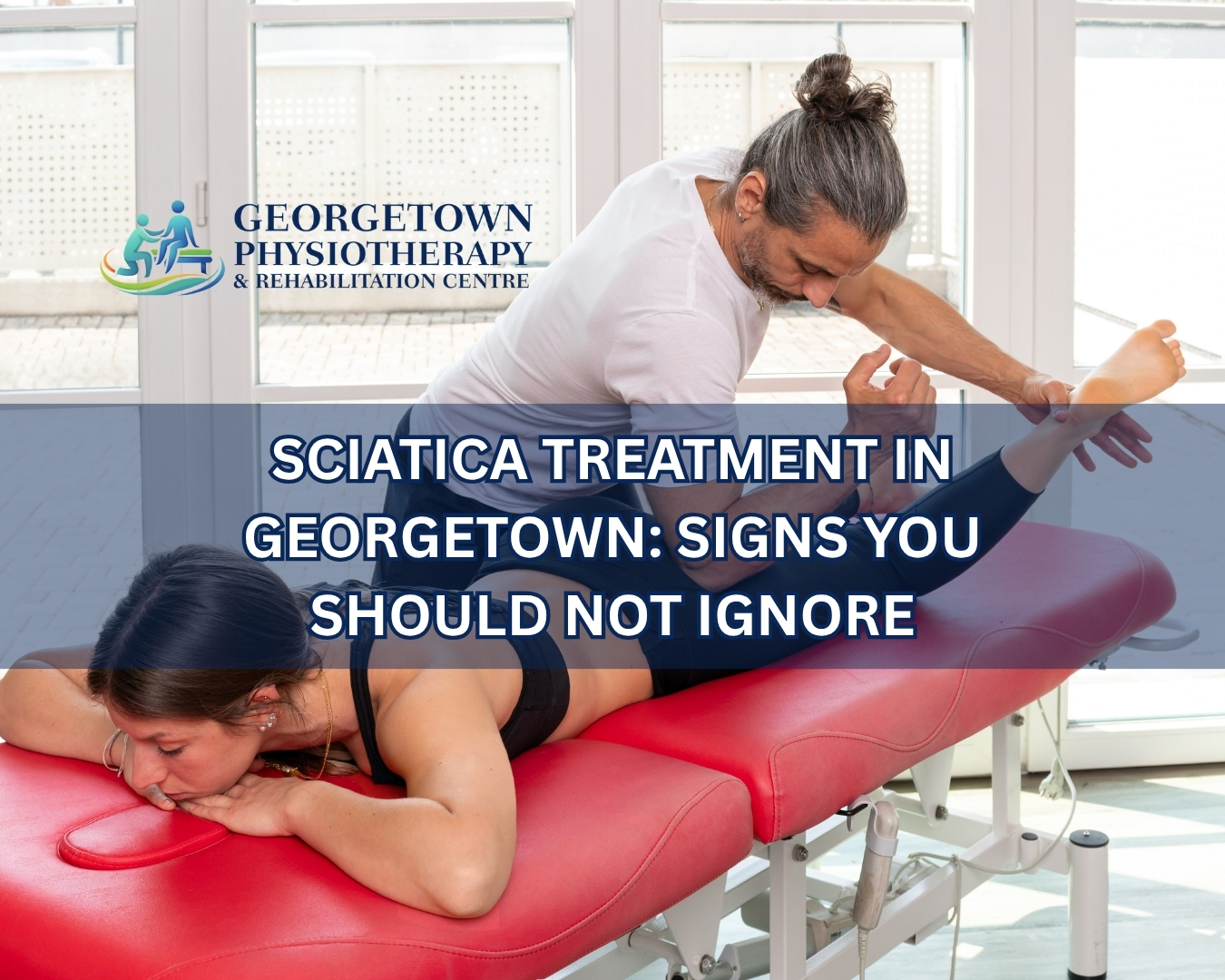
Sciatica Treatment in Georgetown: Signs You Should Not Ignore
Sciatica is one of the most common causes of lower back and leg pain affecting adults today. The condition can range from mild discomfort to severe nerve pain that interferes with walking, sitting, sleeping, and daily activities. Many people initially ignore the symptoms, hoping the pain will disappear on its own. However, untreated sciatica may worsen over time and significantly impact mobility and quality of life.
For many Georgetown residents, long hours sitting at desks, physically demanding work, poor posture, heavy lifting, and lack of physical activity can all contribute to lower back problems and sciatic nerve irritation.
Recognizing the early warning signs and seeking professional treatment can help reduce pain, improve movement, and prevent long-term complications.
At Georgetown Physiotherapy & Rehabilitation Centre, rehabilitation programs are designed to help patients manage sciatica symptoms through physiotherapy, chiropractic care, massage therapy, and personalized recovery plans.
What Is Sciatica?
Sciatica refers to pain caused by irritation or compression of the sciatic nerve, the largest nerve in the body. The sciatic nerve runs from the lower back through the hips and down each leg.
When the nerve becomes compressed or inflamed, it may cause symptoms such as:
- Lower back pain
- Sharp leg pain
- Tingling sensations
- Numbness
- Muscle weakness
- Burning discomfort
- Pain while sitting or walking
Sciatica usually affects one side of the body, although symptoms can vary depending on the severity of nerve irritation.
Common Causes of Sciatica
Sciatica is often related to conditions affecting the lower spine and surrounding tissues.
Herniated or Bulging Discs
One of the most common causes of sciatica is a herniated disc pressing against the sciatic nerve.
Poor Posture
Long periods of sitting with poor posture can place extra stress on the lower back and spinal structures.
Muscle Tightness
Tight muscles in the lower back, hips, or buttocks may contribute to nerve irritation.
Spinal Degeneration
Age-related spinal changes may narrow the spaces around nerves, increasing pressure on the sciatic nerve.
Repetitive Lifting or Physical Strain
Heavy lifting and physically demanding jobs may increase stress on the lower spine.
Sedentary Lifestyle
Lack of movement and weak supporting muscles may contribute to spinal instability and nerve compression.
Signs of Sciatica You Should Not Ignore
Many people mistake sciatica for ordinary back pain. However, certain symptoms may indicate sciatic nerve involvement and should not be ignored.
Pain Traveling Down the Leg
Sciatica pain often radiates from the lower back into the buttocks, hips, and legs.
Tingling or Numbness
Pins-and-needles sensations or numbness in the leg or foot may suggest nerve irritation.
Burning or Sharp Pain
Unlike general muscle soreness, sciatic pain is often described as sharp, burning, or electric-like.
Pain While Sitting
Many individuals experience worsening pain after prolonged sitting because pressure increases around the sciatic nerve.
Muscle Weakness
Weakness in the leg or foot may affect walking, climbing stairs, or standing comfortably.
Difficulty Moving Normally
Reduced flexibility and limited movement are common with moderate to severe sciatica.
When Sciatica Requires Immediate Medical Attention
Some symptoms may indicate more serious nerve compression and require urgent medical evaluation.
Seek immediate medical care if you experience:
- Loss of bladder or bowel control
- Severe leg weakness
- Sudden numbness in both legs
- Loss of coordination
- Severe worsening pain
These symptoms may indicate serious spinal conditions requiring urgent treatment.
How Physiotherapy Helps Sciatica
Physiotherapy is one of the most effective conservative treatments for sciatica and lower back pain.
Treatment programs focus on:
- Reducing nerve irritation
- Improving mobility
- Strengthening supporting muscles
- Correcting posture
- Improving flexibility
- Reducing inflammation
At Georgetown Physiotherapy & Rehabilitation Centre, physiotherapy programs are tailored to the patient’s symptoms, mobility level, and recovery goals.
Physiotherapy Treatments for Sciatica
Treatment plans may include:
Stretching Exercises
Gentle stretching helps reduce tension in muscles surrounding the sciatic nerve.
Strengthening Exercises
Core strengthening improves spinal support and may reduce pressure on the lower back.
Mobility Training
Movement-focused exercises help improve flexibility and reduce stiffness.
Posture Correction
Poor posture is a major contributor to lower back stress and sciatic irritation.
Manual Therapy
Hands-on therapy techniques may help improve joint mobility and reduce muscular tension.
Chiropractic Care for Sciatica
- Improve spinal movement
- Reduce nerve pressure
- Improve posture
- Relieve lower back stiffness
- Improve mobility
Many patients combine chiropractic care with physiotherapy for more complete rehabilitation support.
Massage Therapy for Muscle Tension
Tight muscles around the lower back and hips can worsen sciatic symptoms.
Massage therapy may help:
- Relax tight muscles
- Improve circulation
- Reduce muscle spasms
- Improve flexibility
- Reduce stress-related tension
Massage therapy is often used alongside physiotherapy during sciatica rehabilitation.
Laser Therapy for Pain Relief
- Reduce inflammation
- Improve circulation
- Support tissue recovery
- Reduce chronic pain symptoms
Combined rehabilitation approaches often produce better long-term results for chronic sciatica.
Lifestyle Habits That May Help Prevent Sciatica
Certain daily habits can help reduce lower back stress and prevent future flare-ups.
Maintain Good Posture
Proper sitting and standing posture reduces pressure on the lower spine.
Stay Physically Active
Regular movement and exercise help strengthen supporting muscles.
Avoid Prolonged Sitting
Long periods of sitting may increase sciatic nerve irritation.
Lift Properly
Using correct lifting techniques helps protect the lower back.
Stretch Regularly
Stretching improves flexibility and reduces muscular tension.
Exercises Often Recommended for Sciatica
A physiotherapist may recommend exercises such as:
- Hamstring stretches
- Core strengthening exercises
- Pelvic tilts
- Gentle lower back mobility exercises
- Hip stretches
Exercises should always be customized based on the individual’s condition and pain level.
Can Sciatica Go Away on Its Own?
Some mild sciatica cases improve gradually with rest, movement, and conservative care. However, persistent or worsening symptoms should not be ignored.
Without proper treatment, chronic sciatica may lead to:
- Ongoing pain
- Reduced mobility
- Muscle weakness
- Difficulty performing daily activities
- Long-term nerve irritation
Early rehabilitation often improves recovery outcomes significantly.
Why Georgetown Residents Choose Georgetown Physiotherapy & Rehabilitation Centre
Many Georgetown residents trust Georgetown Physiotherapy & Rehabilitation Centre for personalized rehabilitation and pain management support.
Services include:
Treatment plans are designed to help patients improve mobility, reduce pain, and restore confidence in movement.
Final Thoughts
Sciatica can significantly affect comfort, mobility, and daily life if left untreated. Recognizing the warning signs early and seeking professional rehabilitation support can help reduce pain and improve long-term recovery.
If you are experiencing persistent lower back pain, leg discomfort, numbness, or mobility problems, professional sciatica treatment may help you return to normal activities more comfortably and confidently.
Contact Information
Georgetown Physiotherapy & Rehabilitation Centre
333 Mountainview Rd S, Unit #2, Georgetown, ON L7G 5S5, Canada
Phone: +1 905 702 6633
Email: info@georgetownphysiotherapy.ca
Website: Georgetown Physiotherapy Official Website