
 Call For Appointment
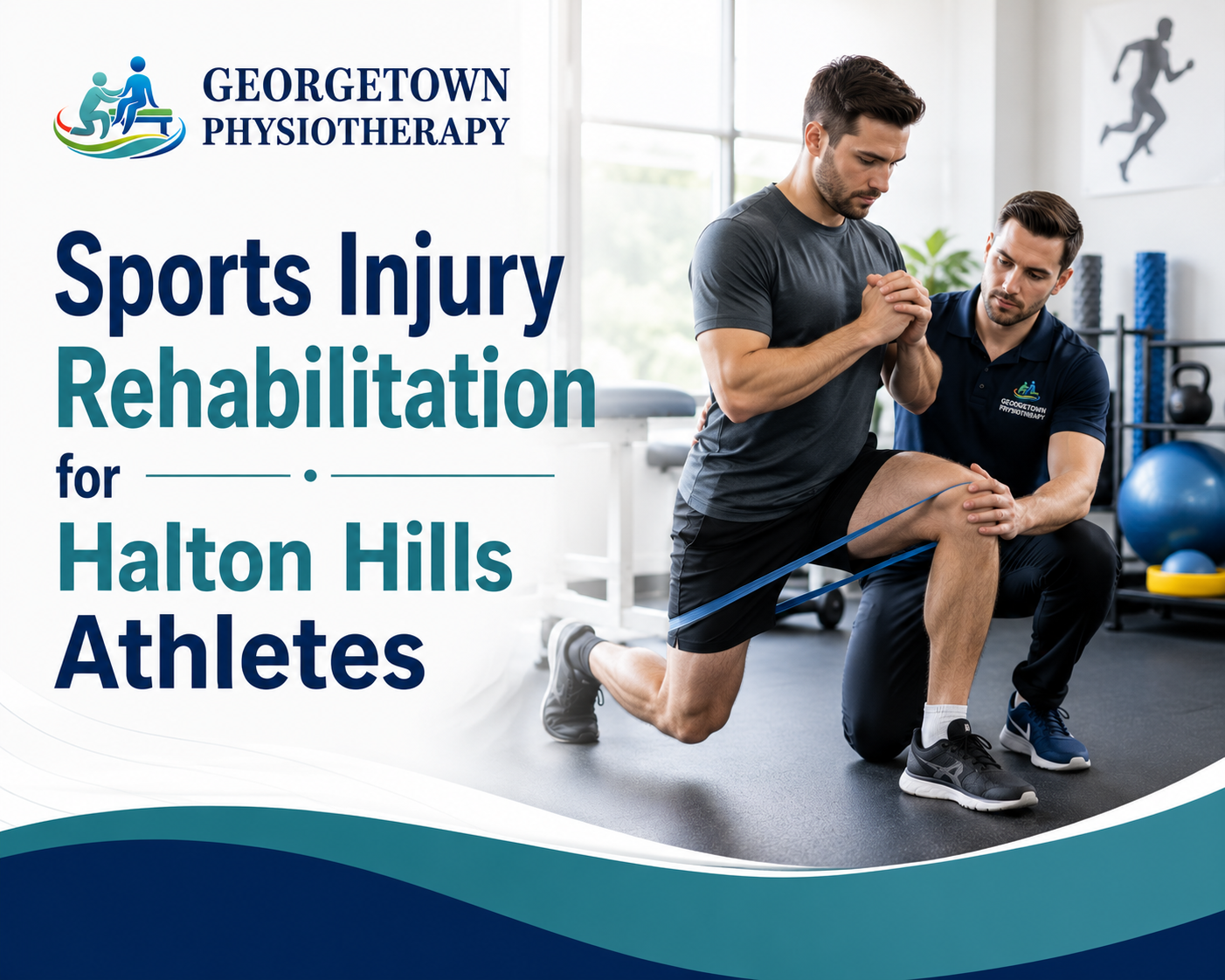
Sports Injury Rehabilitation for Halton Hills Athletes
Whether you’re a competitive athlete, weekend warrior, or someone who enjoys recreational sports, injuries can happen when you least expect them. A sprained ankle, torn ligament, strained muscle, or shoulder injury can affect your mobility, performance, and everyday life. Fortunately, sports injury rehabilitation for Halton Hills athletes helps you recover safely while reducing the risk of future injuries.
At Georgetown Physiotherapy & Rehabilitation Centre, athletes from Georgetown, Halton Hills, Acton, Glen Williams, Norval, and surrounding communities receive personalized rehabilitation programs designed to restore strength, improve mobility, and help them return to the sports they love.
Why Sports Injury Rehabilitation Matters
Many athletes focus only on pain relief, but successful recovery requires much more than simply waiting for the pain to disappear. Without proper rehabilitation, returning to sports too early can increase the risk of recurring injuries and long-term joint problems.
Professional physiotherapy rehabilitation helps:
- Reduce pain naturally
- Restore joint mobility
- Improve flexibility
- Build muscle strength
- Enhance balance and coordination
- Prevent future injuries
- Improve sports performance
- Safely return to competition
Every rehabilitation program is tailored to the individual’s injury, activity level, and athletic goals.
Common Sports Injuries Among Halton Hills Athletes
Athletes participating in hockey, soccer, baseball, basketball, volleyball, tennis, golf, cycling, running, CrossFit, and other recreational sports commonly experience injuries such as:
Ankle Sprains
Quick direction changes and awkward landings often result in ankle ligament injuries. Physiotherapy focuses on restoring stability, strength, and balance while preventing chronic ankle instability.
Knee Injuries
Knee pain is one of the most common reasons athletes seek physiotherapy. Conditions include:
- ACL injuries
- MCL sprains
- Meniscus tears
- Runner’s knee
- Patellar tendonitis
Targeted rehabilitation strengthens surrounding muscles and improves knee mechanics.
Shoulder Injuries
Swimming, baseball, volleyball, weightlifting, and racquet sports place significant stress on the shoulder.
Common conditions include:
- Rotator cuff injuries
- Shoulder impingement
- Labral injuries
- Shoulder instability
Early treatment improves recovery and reduces the likelihood of chronic shoulder pain.
Muscle Strains
Hamstring, quadriceps, calf, and groin strains frequently occur during sprinting, jumping, and explosive movements.
Proper rehabilitation promotes healing while restoring flexibility and strength.
Tennis Elbow and Golfer’s Elbow
Repetitive arm movements may cause tendon irritation around the elbow, making sports participation painful.
Physiotherapy reduces inflammation while improving muscle function.
Lower Back Pain
Running, cycling, golf, rowing, and weight training can contribute to lower back pain due to poor movement patterns, muscle imbalance, or repetitive stress.
A rehabilitation program focuses on strengthening the core and improving spinal stability.
What Causes Sports Injuries?
Sports injuries can develop because of several factors, including:
- Poor warm-up routines
- Muscle weakness
- Limited flexibility
- Overtraining
- Poor posture
- Incorrect movement mechanics
- Sudden increases in training intensity
- Previous untreated injuries
- Inadequate recovery between workouts
Identifying these contributing factors is an important part of rehabilitation.
How Physiotherapy Helps Athletes Recover
Comprehensive Assessment
Recovery begins with a detailed physiotherapy assessment that evaluates:
- Range of motion
- Muscle strength
- Joint mobility
- Functional movement
- Balance
- Coordination
- Sport-specific mechanics
This assessment helps identify the root cause of the injury rather than simply treating symptoms.
Pain Management
Depending on the injury, treatment may include:
- Manual therapy
- Soft tissue mobilization
- Therapeutic exercise
- Laser therapy
- Shockwave therapy
- Joint mobilization
- Taping techniques
- Stretching programs
These evidence-based treatments help reduce pain while supporting natural healing.
Strength and Conditioning
As pain decreases, strengthening exercises become an important part of recovery.
Programs often target:
- Core muscles
- Hip stability
- Knee control
- Shoulder stability
- Ankle strength
Improving strength helps protect joints during athletic activities.
Mobility and Flexibility
Restricted movement increases the likelihood of re-injury.
Your physiotherapist will guide you through stretching and mobility exercises that restore normal movement while improving athletic performance.
Balance and Proprioception Training
Athletes need excellent balance and body awareness to perform safely.
Exercises may include:
- Balance boards
- Single-leg exercises
- Stability drills
- Functional movement training
These activities help reduce future injury risk.
Sport-Specific Rehabilitation
Before returning to competition, rehabilitation progresses to sport-specific movements such as:
- Sprinting
- Jumping
- Cutting
- Pivoting
- Throwing
- Landing mechanics
- Agility drills
This gradual progression ensures athletes return safely and confidently.
Injury Prevention Is Part of Recovery
Sports rehabilitation doesn’t end when pain disappears.
Physiotherapists educate athletes on:
- Proper warm-up routines
- Safe training progression
- Recovery strategies
- Flexibility exercises
- Strength maintenance
- Movement efficiency
These preventive strategies reduce the chances of future injuries.
Sports We Commonly Treat
Georgetown Physiotherapy & Rehabilitation Centre helps athletes participating in:
- Hockey
- Soccer
- Baseball
- Basketball
- Volleyball
- Tennis
- Pickleball
- Running
- Cycling
- Swimming
- Golf
- CrossFit
- Weightlifting
- Martial Arts
- Dance
Whether you’re a young athlete, adult recreational player, or competitive competitor, personalized rehabilitation can help you recover safely.
When Should You See a Physiotherapist?
Schedule an assessment if you experience:
- Pain during sports
- Swelling after activity
- Joint instability
- Muscle weakness
- Difficulty running or jumping
- Limited mobility
- Recurrent injuries
- Pain lasting more than a few days
Early intervention often leads to faster recovery and better long-term outcomes.
Why Choose Georgetown Physiotherapy & Rehabilitation Centre?
Georgetown Physiotherapy & Rehabilitation Centre provides evidence-based care focused on helping athletes recover safely and efficiently. Every treatment plan is personalized to your injury, sport, and goals, ensuring you receive the support needed to regain confidence and return to peak performance.
Whether you’re recovering from an acute injury or managing a chronic sports condition, the clinic offers comprehensive physiotherapy solutions to help you move better and perform at your best.
Visit Georgetown Physiotherapy & Rehabilitation Centre
If you’re looking for professional Sports Injury Rehabilitation for Halton Hills Athletes, the experienced team at Georgetown Physiotherapy & Rehabilitation Centre is here to help. From injury assessment to complete rehabilitation and injury prevention, personalized care is designed to get you back to doing what you love.
Georgetown Physiotherapy & Rehabilitation Centre
Address: 333 Mountainview Rd S, Unit #2, Georgetown, ON L7G 5S5
Phone: +1 (905) 702-6633
Website: https://georgetownphysiotherapy.ca
Proudly serving patients from Georgetown, Halton Hills, Acton, Glen Williams, Norval, Limehouse, Stewarttown, and surrounding communities.
Book your physiotherapy assessment today and take the first step toward a stronger, safer, and faster recovery.