




 Call For Appointment
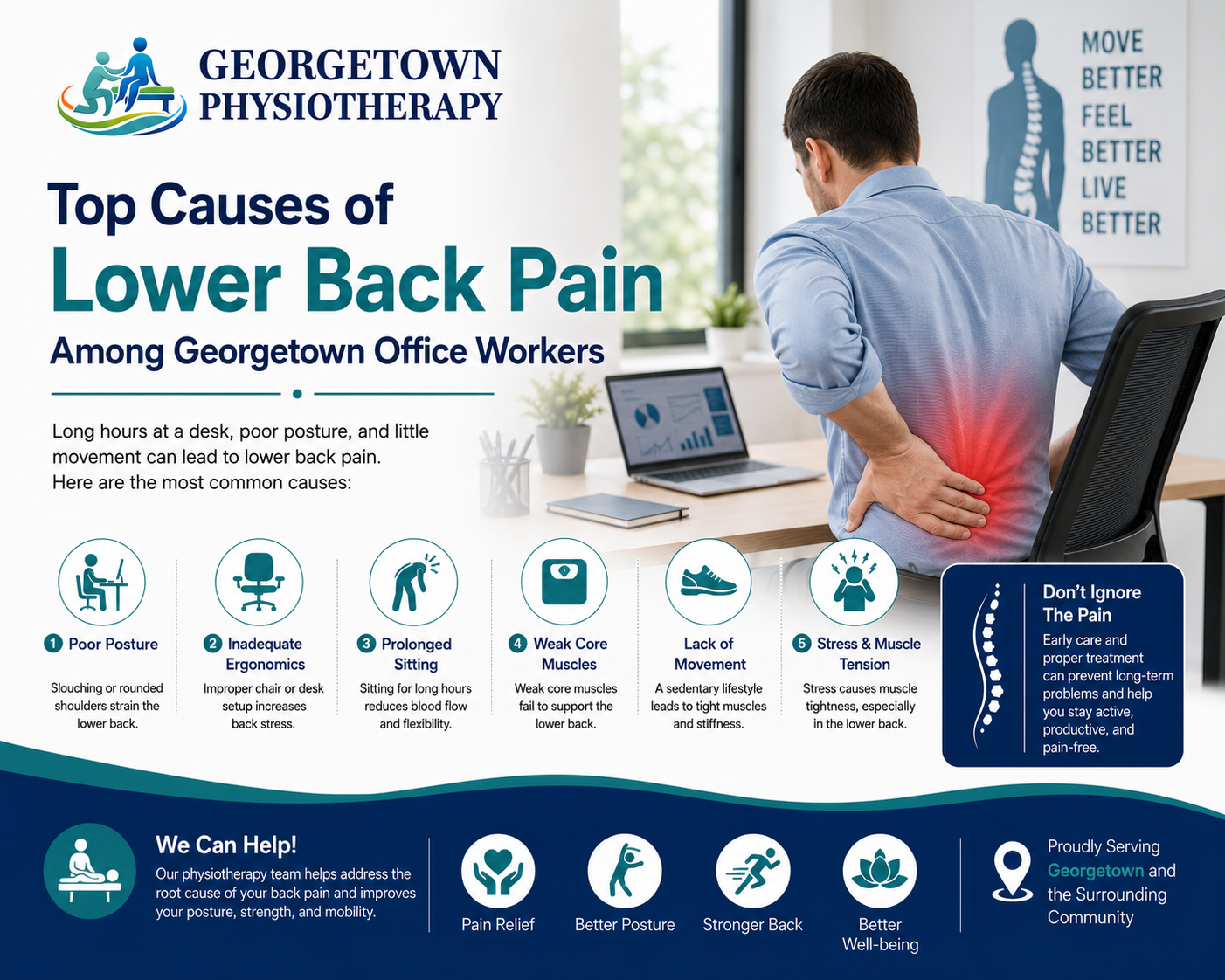
Top Causes of Lower Back Pain Among Georgetown Office Workers
Lower back pain is one of the leading reasons office workers seek healthcare. While office jobs may not involve heavy lifting or physically demanding tasks, sitting for long hours, maintaining poor posture, and performing repetitive computer work can place continuous stress on the spine. Over time, these everyday habits may lead to stiffness, muscle fatigue, reduced mobility, and persistent pain that affects both work performance and quality of life.
If you’re searching for lower back pain treatment near me in Georgetown, you’re not alone. Many professionals working in Georgetown, Acton, Halton Hills, Glen Williams, and surrounding communities experience back pain caused by modern workplace habits. Fortunately, early intervention through physiotherapy and healthy ergonomic practices can help reduce pain, restore movement, and prevent long-term problems.
At Georgetown Physiotherapy & Rehabilitation Centre, we provide personalized assessments and rehabilitation programs designed to identify the underlying cause of lower back pain and help patients return to comfortable, active living.
Why Office Workers Commonly Develop Back Pain
The human body is designed for movement. However, office work often requires people to remain seated for most of the day while focusing on a computer screen. When movement decreases and poor posture becomes a daily habit, muscles weaken, joints become stiff, and the lower back absorbs increased stress.
Rather than developing suddenly, many cases of office-related back pain build gradually over months or years.
1. Sitting for Too Long
Extended sitting is one of the biggest contributors to lower back discomfort.
Remaining seated for hours may:
- Increase pressure on the lumbar spine
- Reduce circulation
- Tighten hip flexor muscles
- Weaken core muscles
- Cause stiffness in the back and hips
Taking regular movement breaks throughout the day can help reduce this stress.
2. Poor Posture
Many people unknowingly sit with:
- Rounded shoulders
- A forward head position
- A slouched lower back
- Uneven weight distribution
Poor posture places extra strain on the spine and supporting muscles, making pain more likely over time.
Learning proper sitting posture is often an important part of physiotherapy treatment.
3. Weak Core Muscles
Your abdominal, pelvic, and back muscles work together to stabilize your spine.
When these muscles become weak, the lower back has to compensate, increasing the risk of pain and fatigue.
Physiotherapy programs frequently include exercises to strengthen the core and improve spinal stability.
4. Improper Workstation Setup
An office workstation that isn’t adjusted correctly may contribute to unnecessary strain.
Common problems include:
- Monitor below eye level
- Chair without lumbar support
- Keyboard positioned too far away
- Unsupported feet
- Desk height that forces awkward arm positions
Small ergonomic adjustments often make a noticeable difference in comfort.
5. Lack of Physical Activity
Many office workers spend most of the day sitting and may have limited physical activity outside work.
This can lead to:
- Muscle weakness
- Joint stiffness
- Reduced flexibility
- Poor endurance
Regular exercise helps keep the muscles that support the spine strong and flexible.
6. Repetitive Movements
Typing, using a mouse, reaching for office supplies, and turning repeatedly toward multiple screens may seem harmless, but repeating these movements every day can contribute to muscle imbalance and discomfort.
Changing positions regularly and incorporating stretching into your workday can help reduce repetitive strain.
7. Stress and Muscle Tension
Workplace stress often affects the body as much as the mind.
Stress can cause muscles in the lower back, shoulders, and neck to remain tense for prolonged periods, increasing discomfort and limiting movement.
Relaxation techniques, exercise, and massage therapy may help manage stress-related muscle tension.
8. Incorrect Lifting Technique
Although office workers don’t usually perform heavy manual labour, lifting office equipment, storage boxes, or water bottles with poor technique can strain the lower back.
Always bend at the knees, keep the load close to your body, and avoid twisting while lifting.
Common Symptoms of Office-Related Lower Back Pain
Symptoms may include:
- A dull ache after sitting
- Morning stiffness
- Pain when standing up
- Muscle tightness
- Difficulty bending forward
- Pain after long meetings or drives
- Pain radiating into the hips or legs
- Reduced flexibility
If these symptoms persist, worsen, or interfere with your daily activities, it’s important to seek professional assessment.
How Physiotherapy Can Help
Physiotherapy focuses on treating the cause of lower back pain instead of simply masking symptoms.
At Georgetown Physiotherapy & Rehabilitation Centre, your physiotherapist begins with a detailed assessment that may include:
- Posture evaluation
- Range of motion testing
- Muscle strength assessment
- Flexibility testing
- Walking and movement analysis
- Functional activity assessment
- Workplace habit review
Based on the results, a personalized treatment plan is developed.
Treatment may include:
- Manual therapy
- Core strengthening exercises
- Stretching programs
- Mobility exercises
- Postural retraining
- Ergonomic education
- Home exercise guidance
The goal is to help you move more comfortably while reducing the likelihood of future episodes.
Complementary Rehabilitation Services
Depending on your condition, additional services may support your recovery.
Chiropractic Care
Chiropractic care may help improve spinal mobility and reduce joint stiffness.
Massage Therapy
Massage therapy may reduce muscle tension, improve circulation, and promote relaxation.
Laser Therapy
Laser therapy may help reduce inflammation and support healing in certain soft tissue conditions.
When appropriate, these treatments can complement physiotherapy as part of a comprehensive rehabilitation plan.
Tips to Prevent Lower Back Pain
To protect your back while working:
- Stand and stretch every 30–60 minutes.
- Maintain good sitting posture.
- Adjust your workstation ergonomically.
- Strengthen your core muscles.
- Stay physically active outside work.
- Avoid sitting for prolonged periods without breaks.
- Lift objects using proper technique.
Consistently following these habits can help reduce the risk of recurring pain.
Why Choose Georgetown Physiotherapy & Rehabilitation Centre?
Patients from Georgetown, Acton, Halton Hills, and nearby communities trust Georgetown Physiotherapy & Rehabilitation Centre because we provide individualized rehabilitation programs based on each person’s condition, occupation, and goals.
Our services include:
- Physiotherapy
- Chiropractic Care
- Massage Therapy
- Laser Therapy
- WSIB Physiotherapy
- MVA Injury Rehabilitation
Our treatment approach focuses on:
- Reducing pain
- Improving mobility
- Restoring strength
- Correcting movement patterns
- Preventing future injuries
- Supporting long-term spinal health
Every patient receives a customized treatment plan designed to help them return to work and daily activities with confidence.
Conclusion
Lower back pain is common among office workers, but it doesn’t have to become a permanent part of your life. Understanding the causes of back pain, improving workplace ergonomics, staying active, and seeking early physiotherapy can make a significant difference in your recovery.
If you’re looking for lower back pain treatment near me in Georgetown, Georgetown Physiotherapy & Rehabilitation Centre offers personalized care to help you reduce pain, improve movement, and get back to doing what matters most.
Contact Georgetown Physiotherapy & Rehabilitation Centre
Address:
333 Mountainview Rd S, Unit #2
Georgetown, ON L7G 5S5, Canada
Phone: +1 905-702-6633
Website: Georgetown Physiotherapy & Rehabilitation Centre
Email: info@georgetownphysiotherapy.ca
Internal Linking Suggestions
- Physiotherapy Near Me in Georgetown: What to Expect During Your First Visit
- Neck Pain Treatment Near Me in Georgetown: Common Causes and Solutions
- How Georgetown Residents Can Prevent Lower Back Pain While Working From Home
- Shoulder Pain Treatment Near Me in Georgetown Without Surgery
- Chiropractor Near Me in Georgetown: When Should You See a Chiropractor?
- Laser Therapy Near Me in Georgetown: A Drug-Free Option for Pain Relief