


 Call For Appointment
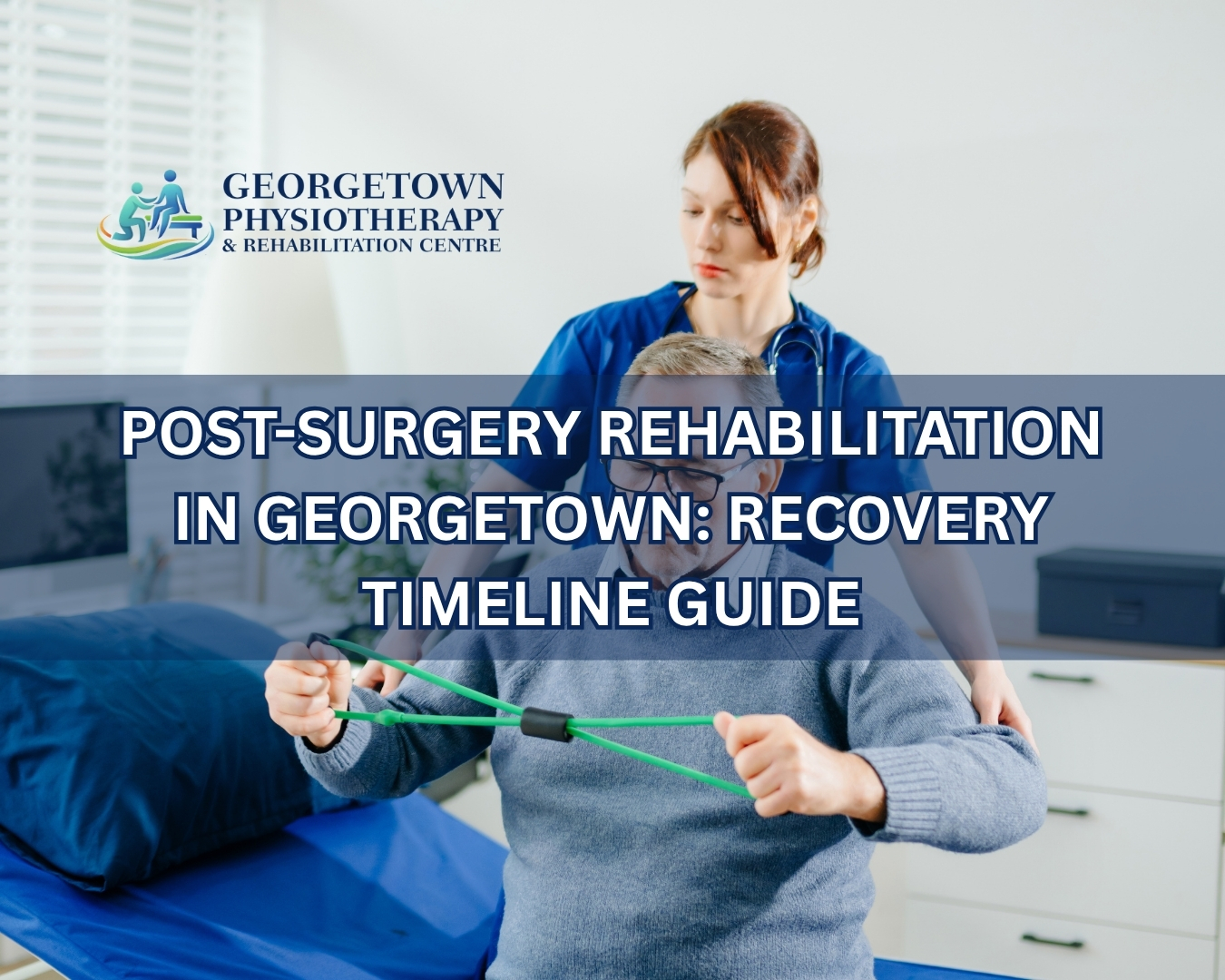
Post-Surgery Rehabilitation in Georgetown: Recovery Timeline Guide
Recovering after surgery can take time, patience, and proper rehabilitation support. Although surgery may correct the underlying condition, the recovery process plays an equally important role in restoring mobility, strength, and overall physical function. Without proper rehabilitation, stiffness, weakness, and limited movement may continue affecting daily activities for months.
Fortunately, structured physiotherapy and rehabilitation programs can help patients recover safely and regain confidence in movement. Many residents searching for post-surgery rehabilitation in Georgetown now choose professional rehabilitation clinics to support recovery and improve long-term outcomes.
Why Post-Surgery Rehabilitation Is Important
Surgery often affects muscles, joints, ligaments, and surrounding tissues. As a result, patients may experience weakness, swelling, pain, and reduced flexibility during recovery.
Post-surgery rehabilitation helps patients:
- Restore mobility
- Improve flexibility
- Reduce pain and stiffness
- Rebuild muscle strength
- Improve circulation
- Prevent complications
- Support long-term recovery
Additionally, structured rehabilitation programs help patients gradually return to normal daily activities safely.
Common Surgeries That Require Rehabilitation
Many surgical procedures benefit from professional physiotherapy and rehabilitation support.
Common surgeries requiring rehabilitation include:
- Knee replacement surgery
- Hip replacement surgery
- ACL reconstruction
- Rotator cuff surgery
- Shoulder surgery
- Spinal surgery
- Fracture repair surgery
- Arthroscopic procedures
- Tendon repair surgery
Because every surgery and recovery process is different, treatment plans should always be customized according to the patient’s condition and goals.
Understanding the Recovery Timeline After Surgery
Recovery timelines vary depending on:
- Type of surgery
- Age and overall health
- Physical condition before surgery
- Consistency with rehabilitation
- Severity of the condition treated
However, most recovery programs generally progress through several rehabilitation stages.
Phase 1: Early Recovery (First Few Days to 2 Weeks)
During the early recovery phase, the primary focus is reducing pain, swelling, and stiffness while protecting the surgical area.
Treatment during this stage may include:
- Gentle mobility exercises
- Pain management techniques
- Circulation improvement exercises
- Ice and swelling management
- Light stretching
- Assisted movement training
Additionally, physiotherapists monitor healing progress carefully to ensure safe recovery.
Common Goals During Early Recovery
- Reduce swelling
- Improve circulation
- Protect healing tissues
- Prevent joint stiffness
- Begin gentle movement safely
Although movement may feel uncomfortable initially, early mobility often helps improve long-term recovery outcomes.
Phase 2: Strength and Mobility Recovery (2 to 6 Weeks)
As healing progresses, rehabilitation gradually focuses on improving flexibility, balance, and muscle strength.
Treatment during this stage may include:
- Strengthening exercises
- Balance training
- Stretching programs
- Posture correction
- Joint mobility exercises
- Functional movement training
Furthermore, rehabilitation programs are adjusted according to the patient’s comfort level and healing progress.
Common Goals During This Stage
- Improve flexibility
- Restore joint movement
- Rebuild muscle strength
- Improve walking and balance
- Reduce pain during movement
Consistency becomes extremely important during this phase because gradual progression supports safer recovery.
Phase 3: Functional Rehabilitation (6 Weeks to Several Months)
Once basic mobility improves, rehabilitation focuses on restoring full physical function and helping patients return to work, sports, and daily activities.
Treatment may include:
- Advanced strengthening exercises
- Endurance training
- Functional movement exercises
- Sport-specific rehabilitation
- Stability training
- Activity-based recovery programs
As strength improves, patients gradually regain confidence in movement and physical performance.
Common Goals During Functional Rehabilitation
- Restore normal movement patterns
- Improve endurance and stability
- Return to daily activities safely
- Prevent reinjury
- Improve long-term physical function
Because every recovery process is unique, some patients may require longer rehabilitation timelines than others.
Physiotherapy After Surgery
Physiotherapy is one of the most important parts of post-surgical recovery. Rather than simply focusing on pain relief, physiotherapy helps improve movement patterns, flexibility, and muscle support around the surgical area.
Depending on the surgery, physiotherapy treatment may include:
- Manual therapy
- Stretching exercises
- Strengthening programs
- Mobility training
- Balance exercises
- Posture correction
- Soft tissue therapy
Together, these treatments help improve recovery while reducing the risk of long-term stiffness and weakness.
Exercises Commonly Used During Rehabilitation
Specific exercises are selected based on the type of surgery and recovery stage.
Common post-surgery exercises may include:
- Range-of-motion exercises
- Gentle stretching
- Resistance band exercises
- Core strengthening exercises
- Walking programs
- Balance exercises
- Stability training
Importantly, rehabilitation exercises should always be performed under professional guidance to avoid strain or reinjury.
Managing Pain and Swelling After Surgery
Pain and swelling are common during recovery. Fortunately, professional rehabilitation treatments may help improve comfort naturally.
Pain management strategies may include:
- Ice therapy
- Mobility exercises
- Manual therapy
- Laser therapy
- Circulation improvement exercises
- Soft tissue treatment
Additionally, following professional recovery recommendations often helps reduce complications and improve healing speed.
Laser Therapy for Post-Surgical Recovery
- Improve circulation
- Reduce swelling
- Support tissue repair
- Reduce discomfort
- Improve mobility
Consequently, many rehabilitation programs combine laser therapy with physiotherapy exercises for improved recovery outcomes.
Massage Therapy During Recovery
- Muscle tightness
- Scar tissue management
- Stress reduction
- Improved flexibility
- Soft tissue recovery
As a result, many patients experience improved comfort and mobility during recovery.
Tips for Faster and Safer Recovery
Although every recovery process is different, certain habits may support healing and rehabilitation success.
Helpful recovery tips include:
- Following rehabilitation exercises consistently
- Avoiding overexertion
- Maintaining proper posture
- Staying physically active safely
- Attending all therapy sessions
- Following medical recommendations
- Getting adequate rest and hydration
Most importantly, patience and consistency play major roles in successful post-surgical recovery.
When Should You Start Rehabilitation?
In many cases, rehabilitation begins shortly after surgery depending on the procedure and medical recommendations. Early physiotherapy often helps reduce stiffness and supports safer movement during healing.
However, treatment timelines should always follow guidance from healthcare professionals and rehabilitation specialists.
Personalized Post-Surgery Rehabilitation Programs
Every patient recovers differently. Therefore, rehabilitation plans should always be tailored according to:
- Surgical procedure
- Pain levels
- Mobility limitations
- Strength and flexibility
- Recovery goals
- Daily activity requirements
At Georgetown Physiotherapy & Rehabilitation Centre, rehabilitation professionals carefully assess each patient’s condition to create customized recovery programs focused on long-term success.
Why Georgetown Residents Choose Professional Rehabilitation Clinics
Choosing a trusted local rehabilitation clinic makes ongoing treatment more convenient and accessible. Since post-surgical recovery often requires multiple therapy sessions, many Georgetown residents prefer nearby physiotherapy services.
Patients commonly look for clinics that provide:
- Personalized rehabilitation programs
- Experienced physiotherapists
- Flexible appointment scheduling
- Modern therapy techniques
- Multiple rehabilitation services under one roof
- Patient-focused care
Georgetown Physiotherapy & Rehabilitation Centre continues helping local residents recover safely after surgery through professional physiotherapy and rehabilitation services.
Start Your Recovery Journey Today
Recovering after surgery requires proper guidance, consistency, and professional rehabilitation support. Fortunately, physiotherapy and rehabilitation programs can help improve mobility, reduce pain, and restore physical strength safely.
Whether you are recovering from knee surgery, shoulder surgery, spinal procedures, or sports-related operations, personalized rehabilitation services can help support your recovery goals and improve long-term physical function.
Contact Information
Georgetown Physiotherapy & Rehabilitation Centre
333 Mountainview Rd S, Unit #2
Georgetown, ON L7G 5S5
Canada
- Phone: +1 905 702 6633
- Email: info@georgetownphysiotherapy.ca
- Website: Georgetown Physiotherapy & Rehabilitation Centre