



 Call For Appointment
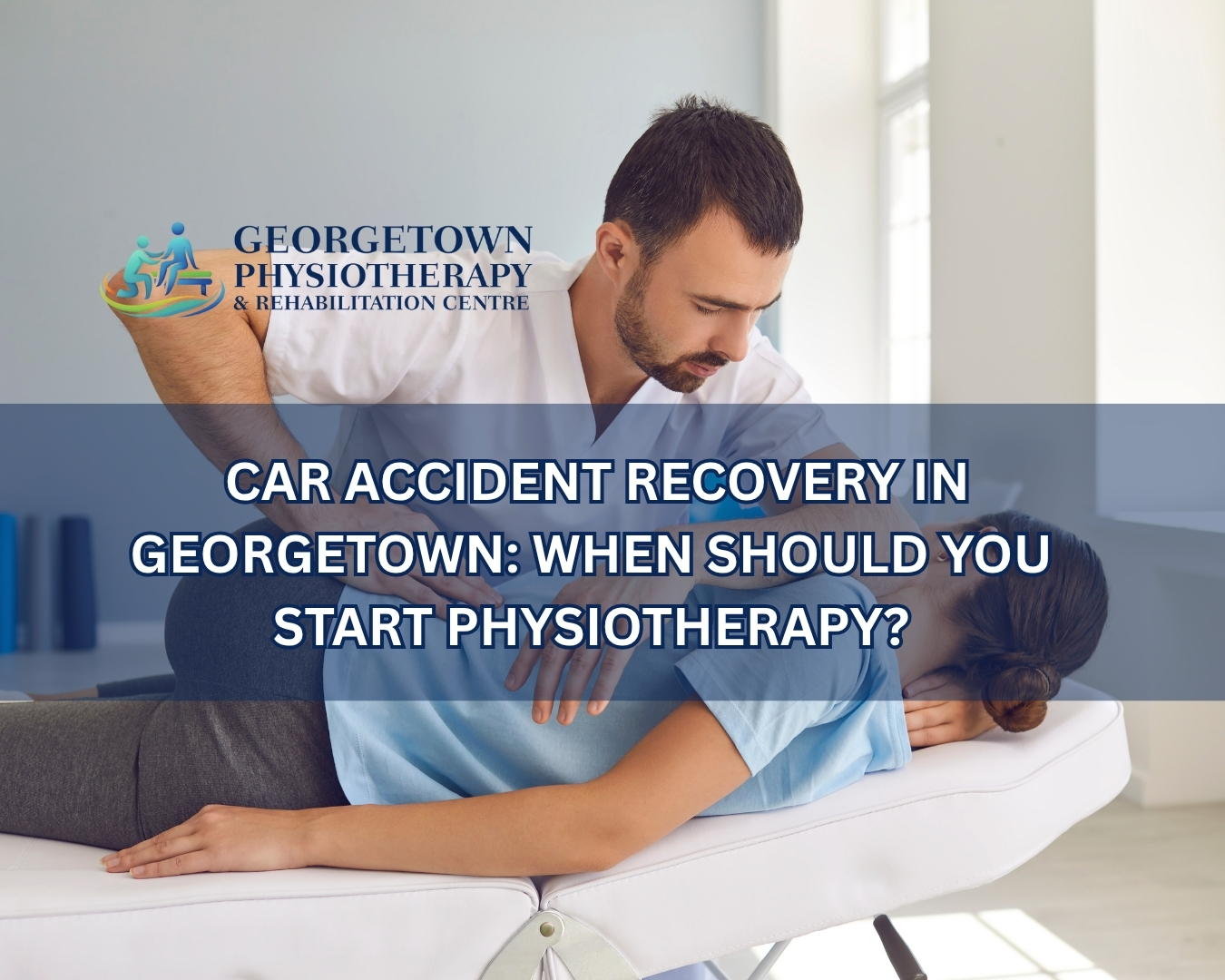
Car Accident Recovery in Georgetown: When Should You Start Physiotherapy?
A car accident can change your life in an instant. Even a seemingly minor collision can result in injuries that affect your mobility, comfort, work performance, and overall quality of life. While some injuries are immediately noticeable, others may take hours or even days to appear. This is why many accident victims underestimate the seriousness of their condition and delay seeking treatment.
One of the most common questions people ask after a motor vehicle accident is: “When should I start physiotherapy?” The answer is simple—as soon as possible after receiving medical evaluation and clearance.
Early physiotherapy intervention can play a critical role in reducing pain, restoring movement, preventing chronic issues, and helping you return to your normal activities more quickly.
At Georgetown Physiotherapy & Rehabilitation Centre, we provide comprehensive motor vehicle accident (MVA) rehabilitation programs designed to support every stage of recovery. In this guide, we’ll explain why timing matters, what injuries physiotherapy can treat, and how starting treatment early can improve your recovery outcomes.
Why Car Accident Injuries Are Often Delayed
After a collision, the body releases adrenaline and other stress hormones. These chemicals help you react quickly during an emergency but can also temporarily mask pain and injury symptoms.
As a result, many people leave the accident scene feeling relatively normal, only to develop symptoms later.
Common delayed symptoms include:
- Neck pain
- Back pain
- Shoulder pain
- Headaches
- Muscle stiffness
- Dizziness
- Tingling sensations
- Reduced mobility
- Fatigue
Because symptoms may not appear immediately, it is important to seek medical attention even if you initially feel fine.
Why Early Physiotherapy Matters
One of the biggest mistakes accident victims make is waiting until pain becomes severe before seeking treatment.
The earlier rehabilitation begins, the greater the opportunity to:
- Reduce inflammation
- Restore movement
- Prevent stiffness
- Promote healing
- Avoid chronic pain
- Improve overall recovery outcomes
When injuries are addressed early, rehabilitation programs can often resolve issues before compensation patterns and long-term dysfunction develop.
Common Injuries Treated After a Car Accident
Every accident is different, but certain injuries are particularly common following motor vehicle collisions.
Whiplash
Whiplash is one of the most frequently diagnosed motor vehicle accident injuries.
It occurs when the neck is suddenly forced forward and backward during impact.
Common symptoms include:
- Neck pain
- Stiffness
- Headaches
- Shoulder discomfort
- Reduced range of motion
- Dizziness
Without treatment, whiplash symptoms can persist for months or even years.
Lower Back Pain
The force generated during a collision can place significant stress on the lower back.
Common causes include:
- Muscle strains
- Ligament injuries
- Disc irritation
- Joint dysfunction
Lower back pain often interferes with sitting, standing, walking, and daily activities.
Shoulder Injuries
Seatbelts and sudden impact forces can contribute to shoulder injuries.
These may include:
- Rotator cuff strains
- Tendon injuries
- Joint irritation
- Soft tissue damage
Shoulder pain often becomes noticeable when reaching, lifting, or sleeping.
Headaches
Many accident victims experience headaches following a collision.
These headaches may result from:
- Whiplash
- Muscle tension
- Concussion-related symptoms
- Cervical spine dysfunction
A proper assessment helps identify the source of the problem and guide treatment.
Joint and Soft Tissue Injuries
Car accidents frequently affect:
- Knees
- Hips
- Ankles
- Wrists
- Elbows
Even low-speed collisions can place unexpected stress on these areas.
How Soon Should You Start Physiotherapy?
In most cases, physiotherapy should begin as soon as a healthcare professional has assessed your condition and determined that rehabilitation is appropriate.
Starting treatment within the first few days after an accident often provides the greatest benefits.
Benefits of Early Physiotherapy
Reduced Pain
Early intervention helps manage inflammation and tissue irritation before symptoms become more severe.
Faster Recovery
Prompt treatment encourages healing and helps restore normal movement patterns.
Improved Mobility
Addressing stiffness early prevents long-term restrictions in flexibility and joint movement.
Lower Risk of Chronic Pain
Untreated injuries are more likely to develop into ongoing problems that affect daily life.
Better Functional Outcomes
Early rehabilitation supports a smoother return to work, exercise, driving, and other activities.
What Happens During Your Initial Physiotherapy Assessment?
At Georgetown Physiotherapy & Rehabilitation Centre, your recovery begins with a detailed assessment.
Your physiotherapist will evaluate:
- Injury history
- Accident details
- Pain levels
- Range of motion
- Muscle strength
- Joint mobility
- Functional limitations
Understanding the full extent of your injuries allows us to develop a personalized rehabilitation plan tailored to your needs.
How Physiotherapy Helps After a Car Accident
Physiotherapy focuses on addressing both symptoms and the underlying causes of dysfunction.
Pain Management
Treatment techniques may include:
- Manual therapy
- Therapeutic exercises
- Stretching programs
- Soft tissue treatment
These approaches help reduce discomfort while supporting healing.
Restoring Range of Motion
Accident-related injuries often cause stiffness and restricted movement.
Targeted exercises help improve:
- Neck mobility
- Back flexibility
- Shoulder movement
- Joint function
Strengthening Injured Areas
Weakness often develops following injury and inactivity.
Progressive strengthening programs help restore stability and function.
Improving Functional Movement
The ultimate goal of rehabilitation is helping patients return to their normal activities safely and comfortably.
Additional Treatments That Support Recovery
A multidisciplinary approach often produces the best outcomes.
Laser Therapy
Laser therapy is a non-invasive treatment that may help:
- Reduce inflammation
- Promote tissue healing
- Improve circulation
- Reduce pain
It is commonly used alongside physiotherapy to support recovery.
Massage Therapy
Massage therapy helps address:
- Muscle tension
- Soft tissue restrictions
- Stress-related tightness
- Circulation issues
Many accident victims find massage therapy beneficial during rehabilitation.
Chiropractic Care
Chiropractic treatment may help improve joint mobility and spinal function when clinically appropriate.
Combining chiropractic care with physiotherapy often enhances overall recovery outcomes.
What Happens If You Delay Treatment?
Waiting too long to begin rehabilitation can create additional challenges.
Potential consequences include:
Chronic Pain Development
Persistent inflammation and compensation patterns may contribute to long-term discomfort.
Reduced Mobility
Untreated stiffness can lead to ongoing movement restrictions.
Muscle Weakness
Prolonged inactivity often results in decreased strength and stability.
Slower Recovery
The longer symptoms persist, the more difficult they may become to resolve completely.
Early intervention is generally associated with better outcomes and shorter recovery timelines.
Returning to Work and Daily Activities
One of the main goals of rehabilitation is helping patients return to normal life.
Physiotherapy helps prepare patients for:
- Work duties
- Driving
- Exercise
- Household activities
- Recreational activities
Treatment plans are adjusted as recovery progresses to ensure a safe and gradual return to activity.
Tips for a Successful Recovery
Follow Your Treatment Plan
Consistency is one of the most important factors influencing recovery outcomes.
Stay Active Within Your Limits
Gentle movement often supports healing better than complete inactivity.
Perform Home Exercises
Home exercise programs help reinforce progress made during clinic visits.
Communicate With Your Healthcare Team
Reporting new symptoms or concerns helps ensure treatment remains effective.
Be Patient
Recovery timelines vary depending on injury severity and individual factors.
Why Choose Georgetown Physiotherapy & Rehabilitation Centre?
At Georgetown Physiotherapy & Rehabilitation Centre, we understand the physical and emotional challenges that can follow a motor vehicle accident.
Our team provides personalized rehabilitation programs focused on:
We offer:
- Physiotherapy
- MVA Injury Care
- Laser Therapy
- Massage Therapy
- Chiropractic Care
- Personalized Rehabilitation Programs
Every treatment plan is tailored to the patient’s unique injuries, goals, and lifestyle.
Start Your Recovery Today
After a car accident, waiting for symptoms to disappear on their own can delay healing and increase the risk of long-term problems. Starting physiotherapy early gives your body the best opportunity to recover fully and return to normal activities as quickly as possible.
If you have recently been involved in a motor vehicle accident, professional rehabilitation can help reduce pain, improve mobility, and support a safe recovery.
Contact our team today to learn more about our motor vehicle accident rehabilitation services and begin your journey toward recovery.
Georgetown Physiotherapy & Rehabilitation Centre
333 Mountainview Rd S, Unit #2
Georgetown, ON L7G 5S5, Canada
Phone: +1 905-702-6633
Website: https://georgetownphysiotherapy.ca/
Email: info@georgetownphysiotherapy.ca