

 Call For Appointment
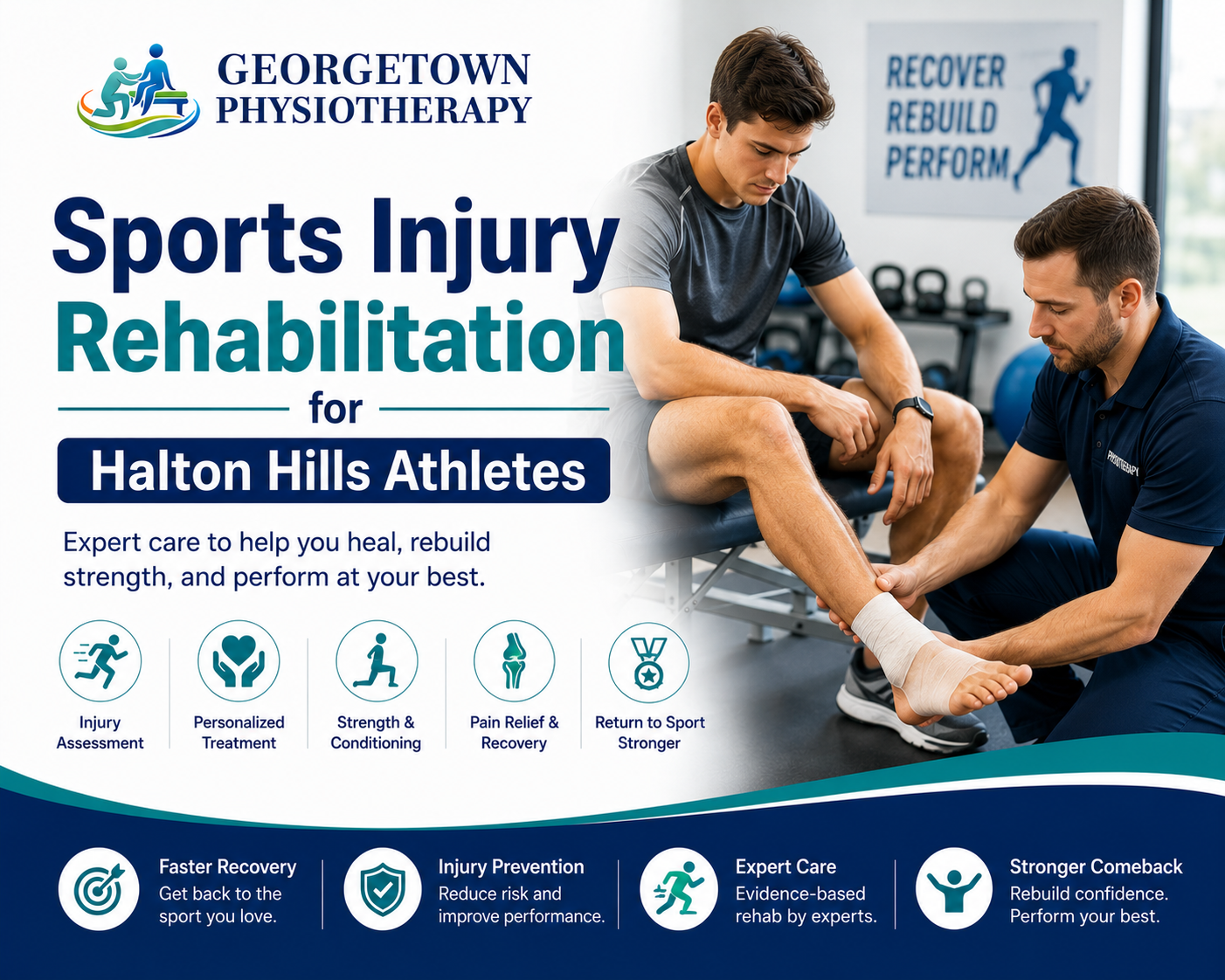
Sports Injury Rehabilitation for Halton Hills Athletes
Whether you’re a competitive athlete, weekend runner, hockey player, soccer enthusiast, cyclist, or fitness lover, injuries can interrupt your training and prevent you from performing at your best. Sports injuries not only affect physical performance but can also impact confidence, motivation, and overall well-being.
If you’re searching for professional physiotherapy can help you recover safely and return to your sport with confidence. A structured rehabilitation program focuses on reducing pain, restoring strength, improving movement, and lowering the risk of future injuries. Evidence shows that successful sports rehabilitation should include progressive strengthening, functional training, and sport-specific return-to-play planning rather than simply waiting for pain to disappear.
At Georgetown Physiotherapy & Rehabilitation Centre, we work with athletes and active individuals throughout Halton Hills, Georgetown, Acton, Glen Williams, Limehouse, and surrounding communities, providing personalized rehabilitation programs that help patients recover and perform at their best.
Why Sports Injury Rehabilitation Is Important
Many athletes try to return to training as soon as the pain begins to improve.
Unfortunately, pain relief does not always mean the injury has fully healed.
Returning too early may increase the risk of:
Sports rehabilitation is designed to restore both healing and performance before returning to competition.
Common Sports Injuries We Treat
Athletes of all ages and skill levels can experience injuries.
Common conditions include:
Ankle Sprains
Frequently seen in:
- Soccer
- Basketball
- Volleyball
- Trail running
Symptoms include:
- Swelling
- Pain
- Instability
- Difficulty walking
Knee Injuries
Common knee conditions include:
- ACL injuries
- MCL sprains
- Meniscus injuries
- Patellofemoral pain
- Runner’s knee
These injuries often require structured rehabilitation before returning to sport.
Shoulder Injuries
Frequently affecting:
- Hockey players
- Swimmers
- Tennis players
- Baseball players
- Volleyball athletes
Common conditions include:
- Rotator cuff injuries
- Shoulder impingement
- Labral injuries
- Shoulder instability
Muscle Strains
Often affecting:
- Hamstrings
- Quadriceps
- Calves
- Groin muscles
Early rehabilitation helps restore flexibility and strength while reducing the risk of recurrence.
Tendon Injuries
Overuse injuries commonly include:
- Achilles tendinopathy
- Patellar tendinopathy
- Tennis elbow
- Golfer’s elbow
- Rotator cuff tendinopathy
These conditions usually improve with progressive loading exercises and physiotherapy.
Common Causes of Sports Injuries
Sports injuries may occur because of:
- Sudden trauma
- Overtraining
- Poor movement mechanics
- Muscle imbalances
- Inadequate warm-up
- Previous injuries
- Poor recovery habits
- Improper training techniques
Identifying these contributing factors helps reduce the likelihood of future injuries.
How Physiotherapy Helps Athletes Recover
Sports physiotherapy goes beyond reducing pain.
At Georgetown Physiotherapy & Rehabilitation Centre, treatment begins with a comprehensive assessment.
Your physiotherapist evaluates:
- Strength
- Mobility
- Flexibility
- Balance
- Functional movement
- Sport-specific demands
- Injury history
This assessment helps create a personalized rehabilitation program.
Phase 1: Pain and Inflammation Management
Early treatment focuses on:
- Reducing pain
- Managing swelling
- Protecting injured tissues
- Restoring gentle movement
Early intervention may support a more efficient recovery process.
Phase 2: Restoring Mobility
Once pain improves, rehabilitation focuses on restoring:
- Joint movement
- Muscle flexibility
- Range of motion
- Functional mobility
Regaining normal movement is essential before progressing to higher-level activities.
Phase 3: Strength Development
Strength training helps restore:
- Muscle power
- Joint stability
- Endurance
- Movement control
Exercises are gradually progressed according to healing and individual goals.
Phase 4: Sport-Specific Rehabilitation
Unlike general physiotherapy, sports rehabilitation includes exercises specific to your sport.
Examples include:
- Sprint drills
- Agility training
- Jumping mechanics
- Direction changes
- Balance exercises
- Landing mechanics
These activities prepare athletes for the physical demands of competition.
Phase 5: Safe Return to Sport
Returning to sport should be based on functional readiness rather than time alone.
Your physiotherapist evaluates factors such as:
- Strength symmetry
- Balance
- Coordination
- Movement quality
- Confidence
- Sport-specific performance
A criteria-based return-to-sport approach helps reduce the risk of re-injury.
Injury Prevention Strategies
Preventing future injuries is an important part of every rehabilitation program.
Your physiotherapist may recommend:
- Dynamic warm-ups
- Strength training
- Flexibility exercises
- Balance training
- Movement retraining
- Recovery planning
- Training load management
These strategies can improve both performance and long-term athletic health.
Additional Treatments That Support Recovery
Depending on your injury, rehabilitation may also include complementary therapies.
Chiropractic Care
Chiropractic care may help:
- Improve joint mobility
- Restore movement
- Reduce stiffness
Massage Therapy
Massage therapy may help:
- Reduce muscle tightness
- Improve circulation
- Promote recovery
- Enhance flexibility
Laser Therapy
Laser therapy may help:
- Reduce inflammation
- Support tissue healing
- Improve circulation
- Reduce pain
Combining therapies often provides a more comprehensive approach to rehabilitation.
Who Can Benefit?
Sports injury rehabilitation is beneficial for:
- Hockey players
- Soccer players
- Runners
- Cyclists
- Tennis players
- Golfers
- Volleyball players
- Basketball players
- Fitness enthusiasts
- Young athletes
- Weekend warriors
Whether you’re training competitively or simply enjoy staying active, rehabilitation can help you return safely.
Why Halton Hills Athletes Choose Georgetown Physiotherapy & Rehabilitation Centre
Athletes from Halton Hills choose Georgetown Physiotherapy & Rehabilitation Centre because we provide individualized rehabilitation programs based on each athlete’s goals, sport, and injury.
Our services include:
- Sports Physiotherapy
- Physiotherapy
- Chiropractic Care
- Massage Therapy
- Laser Therapy
- Post-Surgical Rehabilitation
- Injury Prevention Programs
Our rehabilitation focuses on:
- Pain reduction
- Strength restoration
- Mobility improvement
- Performance enhancement
- Safe return to sport
- Long-term injury prevention
Every athlete receives a customized recovery plan designed to support their return to activity.
Get Back in the Game With Confidence
A sports injury doesn’t have to keep you on the sidelines. With the right program, you can recover safely, rebuild strength, improve performance, and reduce the risk of future injuries.
If you’re looking for , Georgetown Physiotherapy & Rehabilitation Centre is committed to helping athletes return stronger, healthier, and ready to perform at their best.
Contact Georgetown Physiotherapy & Rehabilitation Centre
Address:
333 Mountainview Rd S, Unit #2
Georgetown, ON L7G 5S5, Canada
Phone: +1 905-702-6633
Website: Georgetown Physiotherapy & Rehabilitation Centre
Email: info@georgetownphysiotherapy.ca
Internal Link Suggestions
- Shoulder Pain Treatment Near Me in Georgetown Without Surgery
- Physiotherapy Near Me in Georgetown: What to Expect During Your First Visit
- Best Exercises Recommended by Georgetown Physiotherapists for Knee Pain
- The Benefits of Combining Physiotherapy, Chiropractic Care, and Massage Therapy
- Laser Therapy Near Me in Georgetown: A Drug-Free Option for Pain Relief
- Why Georgetown Residents Trust Georgetown Physiotherapy & Rehabilitation Centre for Recovery