


 Call For Appointment
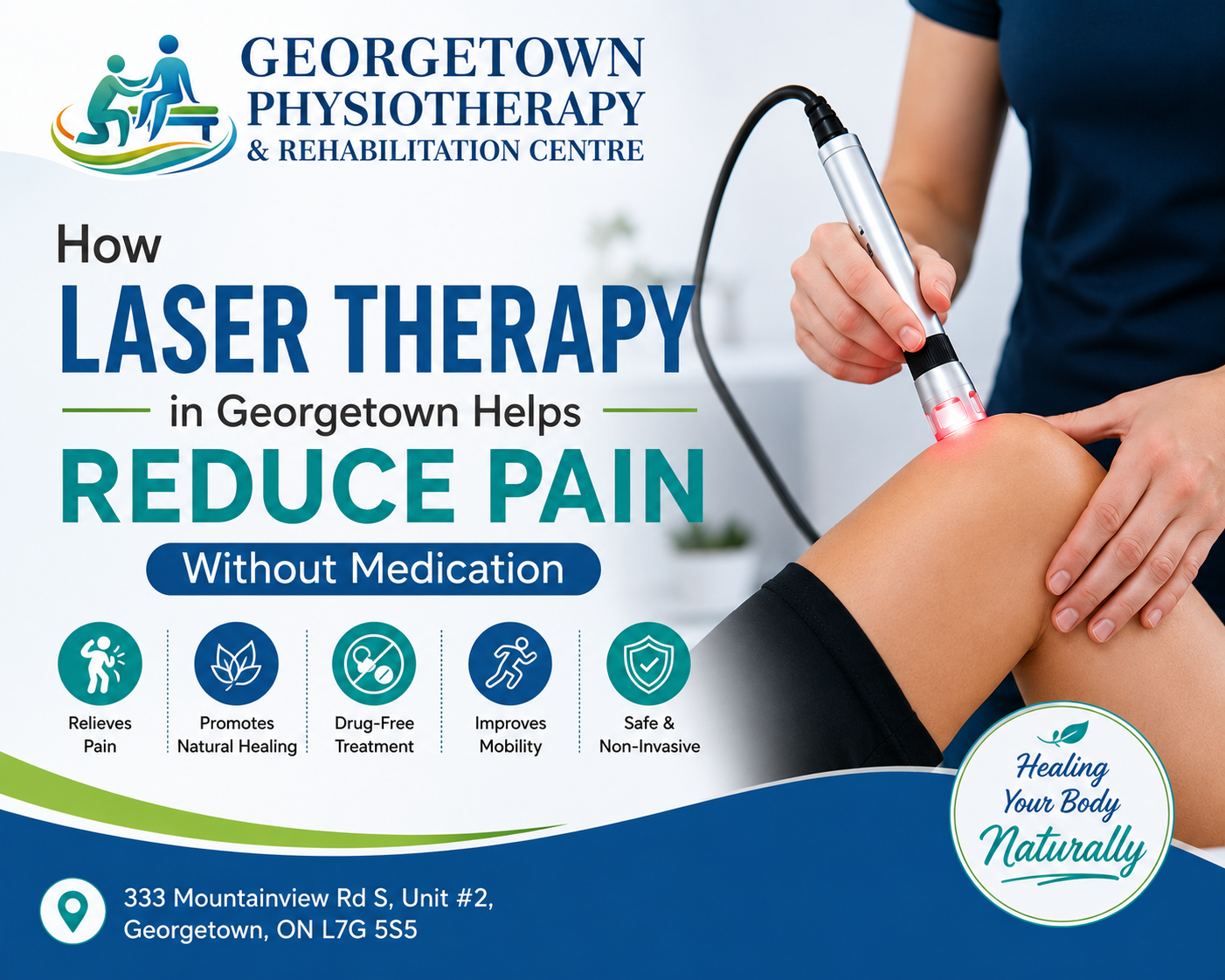
How Laser Therapy in Georgetown Helps Reduce Pain Without Medication
Living with pain can affect nearly every aspect of daily life. Whether it’s persistent back pain, a sports injury, arthritis, tendon irritation, or muscle soreness, ongoing discomfort may interfere with work, exercise, sleep, and everyday activities. While medication can play an important role in pain management for some individuals, many people also look for non-invasive treatment options that may help reduce pain and support recovery.
Laser therapy is one treatment that may help reduce pain and support the body’s natural healing processes without surgery or routine reliance on medication. Depending on the condition being treated, laser therapy may be used alongside physiotherapy, therapeutic exercise, manual therapy, and other rehabilitation techniques to help improve function and mobility.
At Georgetown Physiotherapy & Rehabilitation Centre, laser therapy is incorporated into individualized treatment plans when clinically appropriate. Every patient receives a thorough assessment to determine whether laser therapy may be beneficial for their specific condition and recovery goals.
What Is Laser Therapy?
Laser therapy, sometimes called low-level laser therapy (LLLT) or photobiomodulation therapy, uses specific wavelengths of light that penetrate body tissues. Unlike surgical lasers that cut or remove tissue, therapeutic lasers are designed to deliver light energy to targeted areas without causing tissue damage.
The light energy is absorbed by cells and may stimulate biological processes involved in tissue repair and recovery. Research suggests that laser therapy may help improve cellular activity, support circulation, and reduce inflammation in certain musculoskeletal conditions.
Laser therapy is generally painless, non-invasive, and does not involve injections or surgical procedures.
How Does Laser Therapy Help Reduce Pain?
Pain often develops because tissues become irritated, inflamed, strained, or injured. While the exact biological mechanisms continue to be studied, laser therapy is believed to influence several processes involved in healing.
Supporting Cellular Activity
Cells require energy to repair damaged tissues.
Laser therapy may stimulate cellular metabolism, helping tissues carry out normal repair processes more efficiently. This enhanced cellular activity may contribute to tissue recovery following injury.
Helping Reduce Inflammation
Inflammation is a normal part of healing, but excessive or prolonged inflammation may contribute to ongoing discomfort.
Laser therapy may help influence inflammatory processes, potentially reducing swelling and improving comfort in some individuals.
Improving Circulation
Healthy blood circulation delivers oxygen and nutrients to tissues while helping remove metabolic waste products.
Laser therapy may promote local microcirculation, supporting the body’s natural healing response.
Modulating Pain Signals
Some studies suggest laser therapy may influence pain pathways by affecting nerve sensitivity. While individual responses vary, this may contribute to reduced pain for certain musculoskeletal conditions.
Supporting Tissue Healing
Laser therapy is often used as part of a comprehensive rehabilitation program that includes exercise and movement-based treatment. Rather than masking symptoms alone, the goal is to support tissue recovery while restoring strength, mobility, and function.
Conditions That May Benefit From Laser Therapy
Laser therapy is commonly used for a variety of musculoskeletal conditions. Whether it is appropriate depends on your assessment and diagnosis.
Conditions that may benefit include:
- Back pain
- Neck pain
- Shoulder pain
- Tendinitis
- Tennis elbow
- Plantar fasciitis
- Muscle strains
- Ligament sprains
- Sports injuries
- Arthritis-related joint discomfort
- Soft tissue injuries
- Repetitive strain injuries
Not every condition responds the same way. Your physiotherapist will determine whether laser therapy is appropriate based on your symptoms, goals, and clinical findings.
Laser Therapy for Back and Neck Pain
Back and neck pain are among the most common reasons people seek physiotherapy.
Poor posture, repetitive work, lifting injuries, prolonged sitting, sports activities, and age-related changes can all contribute to discomfort.
Laser therapy may help reduce pain and improve comfort while rehabilitation focuses on restoring movement, strengthening supporting muscles, and improving function.
Rather than relying on passive treatment alone, laser therapy is often combined with therapeutic exercises and education to encourage long-term improvement.
Laser Therapy for Sports Injuries
Athletes and active individuals frequently experience muscle strains, ligament sprains, tendon injuries, and overuse conditions.
Laser therapy may support recovery by helping manage pain and inflammation while allowing rehabilitation exercises to progress appropriately.
Every rehabilitation plan is tailored to the demands of the patient’s sport, activity level, and recovery goals.
Laser Therapy for Arthritis
Arthritis can cause joint pain, stiffness, and reduced mobility.
While laser therapy cannot cure arthritis or reverse joint changes, it may help some individuals manage pain and improve comfort when combined with physiotherapy, exercise, and lifestyle recommendations.
The treatment plan is individualized according to the person’s symptoms, functional limitations, and activity goals.
What Happens During a Laser Therapy Session?
A typical laser therapy appointment begins with a physiotherapy assessment.
Your physiotherapist will discuss:
- Your symptoms
- Medical history
- Previous injuries
- Current activity level
- Functional limitations
- Recovery goals
If laser therapy is considered appropriate, the therapist positions the laser device over the affected area.
The treatment is generally painless. Most patients feel little or no sensation during the procedure, although some may notice mild warmth depending on the equipment being used.
Sessions are usually relatively short, although treatment time varies depending on the area being treated and the condition.
Laser therapy is often combined with other physiotherapy interventions rather than used in isolation.
Laser Therapy vs Pain Medication
Many people ask whether laser therapy can replace pain medication.
The answer depends on the individual’s condition and overall treatment plan.
| Laser Therapy | Pain Medication |
|---|---|
| Non-invasive treatment | Medication-based symptom management |
| May support tissue healing | Primarily helps manage symptoms |
| No injections or surgery | May involve short- or long-term medication use |
| Often combined with physiotherapy | May be used alone or alongside rehabilitation |
| Results vary between individuals | Effectiveness also varies depending on the condition |
Patients should never stop prescribed medication without consulting their physician or other qualified healthcare provider.
For some people, laser therapy becomes one component of a broader rehabilitation strategy that may also include exercise, education, manual therapy, and activity modification.
Laser Therapy vs Traditional Physiotherapy
Laser therapy is not a replacement for physiotherapy.
Instead, it is one treatment tool that may be incorporated into a personalized rehabilitation program.
A comprehensive physiotherapy plan may include:
- Detailed assessment
- Manual therapy
- Therapeutic exercises
- Stretching
- Strength training
- Balance training
- Education
- Activity modification
- Home exercise program
- Laser therapy where appropriate
The goal is to improve overall physical function rather than simply reducing pain.
Benefits of Laser Therapy
When clinically appropriate, laser therapy may offer several potential benefits:
- Non-invasive treatment
- Drug-free pain management option
- No incisions or injections
- Comfortable treatment for many patients
- May help reduce inflammation
- May support tissue healing
- Can be combined with physiotherapy
- Minimal recovery time following treatment
Benefits vary depending on the condition and the individual receiving treatment.
Is Laser Therapy Safe?
Laser therapy is generally considered safe when provided by trained healthcare professionals using appropriate equipment and clinical guidelines.
However, like many healthcare interventions, it may not be suitable for everyone.
Your physiotherapist will review your medical history and determine whether laser therapy is appropriate based on your individual circumstances.
How Many Laser Therapy Sessions Will I Need?
There is no standard number of treatments that applies to everyone.
The number of sessions depends on factors such as:
- The condition being treated
- Severity of symptoms
- Duration of the problem
- Individual response to treatment
- Overall rehabilitation goals
Some acute conditions may require fewer visits, while chronic conditions may benefit from a longer treatment program combined with exercise and progressive rehabilitation.
Your physiotherapist will monitor your progress and modify your treatment plan as needed.
Is Laser Therapy Right for You?
Laser therapy may be considered for individuals experiencing:
- Acute injuries
- Chronic musculoskeletal pain
- Sports injuries
- Tendon disorders
- Joint pain
- Soft tissue injuries
- Muscle strains
- Repetitive strain injuries
A physiotherapy assessment is the best way to determine whether laser therapy is appropriate for your specific condition.
Common Misconceptions About Laser Therapy
“Laser Therapy Is Painful”
Most patients experience little or no discomfort during treatment.
“One Session Will Cure My Pain”
Recovery varies from person to person.
Some conditions improve more quickly than others, and many patients benefit from a series of treatments as part of a broader rehabilitation program.
“Laser Therapy Works for Every Condition”
No single treatment works for every patient.
Laser therapy is one option among many physiotherapy interventions and should be selected based on clinical assessment.
“Laser Therapy Replaces Exercise”
Exercise remains an important part of rehabilitation for many musculoskeletal conditions.
Laser therapy often complements, rather than replaces, active rehabilitation.
Frequently Asked Questions
Does laser therapy hurt?
Most patients report little or no discomfort during treatment. Some may notice mild warmth depending on the equipment and treatment area.
Can laser therapy reduce pain without medication?
Laser therapy may help reduce pain for some musculoskeletal conditions by supporting tissue healing and influencing inflammatory and pain-related processes. It is commonly used alongside physiotherapy rather than as a guaranteed replacement for medication.
Is laser therapy safe?
Laser therapy is generally considered safe when provided by qualified healthcare professionals following appropriate clinical guidelines.
How long does a laser therapy session take?
Treatment time depends on the condition, the size of the treatment area, and the rehabilitation plan. Sessions are often relatively short.
How many treatments will I need?
The number of sessions varies according to your condition, symptoms, goals, and response to treatment.
Can laser therapy help chronic pain?
Laser therapy may help some people with chronic musculoskeletal pain, particularly when incorporated into a comprehensive physiotherapy program that includes exercise and education.
Experience Personalized Laser Therapy in Georgetown
At Georgetown Physiotherapy & Rehabilitation Centre, every patient begins with a comprehensive assessment to identify the underlying causes of pain and movement limitations.
When clinically appropriate, laser therapy may be integrated into a personalized treatment plan designed to support recovery, improve function, and help you return to the activities you enjoy.
Georgetown Physiotherapy & Rehabilitation Centre
Address: 333 Mountainview Rd S, Unit #2, Georgetown, ON L7G 5S5, Canada
Phone: +1 905-702-6633
Email: info@georgetownphysiotherapy.ca
Website: https://georgetownphysiotherapy.ca/
Take the Next Step Toward Drug-Free Pain Management
Pain should not prevent you from enjoying work, exercise, or everyday life.
If you are looking for laser therapy in Georgetown, Georgetown Physiotherapy & Rehabilitation Centre offers evidence-informed rehabilitation that combines advanced treatment technologies with individualized physiotherapy care.
Following a thorough assessment, your physiotherapist can determine whether laser therapy may be an appropriate part of your personalized rehabilitation plan and help you work toward improved mobility, reduced discomfort, and better long-term function.