



 Call For Appointment
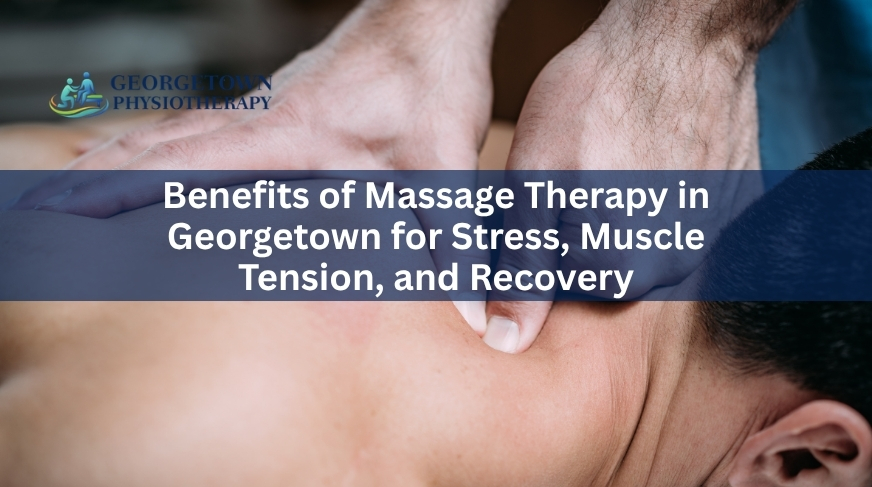
Benefits of Massage Therapy in Georgetown for Stress, Muscle Tension, and Recovery
Stress, long hours at a desk, physically demanding work, exercise, repetitive movements, and everyday activities can all contribute to muscle tension and physical discomfort. When tightness builds up around the neck, shoulders, back, or legs, it can affect how comfortably you work, sleep, exercise, and move throughout the day.
Massage therapy is often associated with relaxation, but its potential benefits extend beyond simply feeling calm after an appointment. Therapeutic massage may help manage muscle tension, improve comfort and mobility, support recovery, and complement active rehabilitation.
The appropriate type of massage depends on your symptoms, health history, physical activity, and treatment goals. For people dealing with persistent or recurring pain, massage is often most useful as part of a broader plan that may include exercise, physiotherapy, education, and lifestyle changes.
At Georgetown Physiotherapy & Rehabilitation Centre, massage therapy can be integrated with physiotherapy and other rehabilitation services to create a personalized approach to musculoskeletal health and recovery.
What Is Massage Therapy?
Massage therapy involves hands-on techniques applied to muscles and other soft tissues of the body.
Depending on your needs, a Registered Massage Therapist may use techniques such as:
- Swedish massage
- Therapeutic massage
- Deep tissue techniques
- Myofascial techniques
- Trigger point techniques
- Stretching
- Sports massage
The purpose of treatment varies from person to person. Some people seek massage primarily for relaxation, while others want help managing muscle tension or supporting recovery from physical activity.
A proper assessment helps determine which techniques and treatment intensity are appropriate.
What Are the Main Benefits of Massage Therapy?
Massage therapy may offer several benefits depending on the individual and the reason for treatment.
1. Helps Manage Muscle Tension
Muscle tension can develop after prolonged sitting, repetitive movements, physical work, exercise, or periods of stress.
Common areas include:
- Neck
- Shoulders
- Upper back
- Lower back
- Hips
- Legs
Therapeutic massage may help people feel less tense and more comfortable by working with tight or sensitive soft tissues.
However, massage should not be viewed as a permanent solution to every source of muscle tension. If weakness, poor movement habits, workload, or another underlying issue contributes to recurring tightness, those factors may also need attention.
2. Supports Relaxation and Stress Management
Stress can affect the body as well as the mind.
People under prolonged stress may unconsciously tighten muscles around the:
- Neck
- Jaw
- Shoulders
- Upper back
Massage therapy can provide a period of relaxation and may help reduce the physical sensation of tension.
For better long-term stress management, massage can be combined with:
- Regular physical activity
- Adequate sleep
- Relaxation techniques
- Healthy work habits
- Appropriate exercise
- Time away from prolonged screen use
Massage is therefore best considered one component of a broader wellness strategy.
3. May Improve Short-Term Comfort and Mobility
Tight muscles and uncomfortable soft tissues can sometimes make movement feel restricted.
Following treatment, some people experience improved comfort while performing activities such as:
- Turning the neck
- Reaching overhead
- Bending
- Walking
- Exercising
- Sitting comfortably
Massage may complement mobility exercises by making movement more comfortable.
If restricted movement is caused by a joint, neurological, or other underlying condition, additional assessment may be required.
4. Supports Exercise Recovery
Active people place repeated demands on their muscles.
Training, running, cycling, weightlifting, recreational sports, and physically demanding work can all create temporary muscle soreness and fatigue.
Massage may be used as part of a broader recovery routine alongside:
- Adequate rest
- Hydration
- Nutrition
- Appropriate training loads
- Mobility work
- Strength training
- Sleep
The purpose is not to replace proper recovery habits but to complement them.
5. Complements Physiotherapy
Massage therapy and physiotherapy have different primary roles but can work well together.
Massage therapy can focus on soft tissues, relaxation, and managing muscle tension.
Physiotherapy can focus more broadly on:
- Strength
- Mobility
- Movement
- Balance
- Functional rehabilitation
- Injury recovery
- Exercise progression
For example, someone with recurring shoulder tension may benefit from massage for short-term muscle comfort while physiotherapy addresses shoulder strength, movement patterns, workstation habits, and exercise.
This combination can create a more complete rehabilitation strategy.
Massage Therapy for Office Workers
Desk-based work can contribute to physical discomfort, particularly when people remain in one position for long periods.
Office workers may experience:
- Neck tension
- Shoulder tightness
- Upper-back discomfort
- Lower-back stiffness
- Muscle fatigue
Massage may help manage muscle tension, but workstation habits are equally important.
Consider:
- Taking regular movement breaks
- Changing positions throughout the day
- Adjusting monitor height
- Keeping frequently used items within comfortable reach
- Walking during breaks
- Performing prescribed mobility exercises
If neck or back symptoms continue despite these changes, a physiotherapy assessment may help identify contributing factors.
Massage Therapy for Physically Demanding Jobs
Construction workers, tradespeople, warehouse employees, healthcare workers, and other physically active professionals may place considerable demands on their muscles every day.
Repeated:
- Lifting
- Carrying
- Pushing
- Pulling
- Bending
- Reaching
can contribute to muscle fatigue and tension.
Massage may provide symptomatic relief, but injury prevention also requires adequate strength, conditioning, safe work practices, recovery, and appropriate workload management.
For an actual workplace injury, physiotherapy assessment may be particularly valuable for determining functional limitations and rehabilitation needs.
Massage Therapy for Active Adults and Athletes
Athletes may use massage as part of their broader recovery and performance routine.
Depending on the sport, massage may be incorporated around training to help manage:
- Muscle tightness
- Exercise-related soreness
- Perceived fatigue
- Reduced comfort
Sports massage should complement—not replace—proper training progression, warm-ups, strength work, mobility, nutrition, hydration, and rest.
A persistent injury should be professionally assessed rather than repeatedly treated with massage alone.
What Happens During a Massage Therapy Appointment?
A massage therapy appointment generally begins with a discussion about your health, symptoms, activity level, and treatment goals.
Your therapist may ask about:
- Current discomfort
- Previous injuries
- Medical history
- Physical activity
- Work demands
- Areas of tension
- Treatment preferences
The therapist can then select appropriate techniques and pressure.
Communication is important throughout treatment. If pressure is uncomfortable or symptoms change, tell your therapist so the treatment can be modified.
How Often Should You Get Massage Therapy?
There is no universal schedule that works for everyone.
Frequency depends on:
- Reason for treatment
- Severity of symptoms
- Physical activity
- Work demands
- Recovery goals
- Response to treatment
- Overall health
Someone seeking occasional relaxation may require a different schedule from an athlete recovering from heavy training or a patient participating in rehabilitation.
Your therapist can help determine a reasonable treatment frequency based on your individual needs.
Massage Therapy vs Physiotherapy: Which One Should You Choose?
| Massage Therapy | Physiotherapy |
|---|---|
| Focuses heavily on soft tissues | Focuses on movement and function |
| Can help manage muscle tension | Helps address strength and mobility deficits |
| Often used for relaxation and comfort | Commonly used for injury rehabilitation |
| May support exercise recovery | Provides progressive exercise programmes |
| Hands-on treatment is central | Exercise and education are often central |
| Useful as part of wellness and recovery | Useful for restoring functional capacity |
The two services aren’t necessarily alternatives.
For many people, combining massage therapy with physiotherapy can address both muscle tension and the movement or strength factors contributing to recurring problems.
Everyday Habits That Make Recovery More Sustainable
Massage can be useful, but long-term physical health depends on what happens between appointments.
Stay Active
Regular movement helps maintain strength, mobility, and physical capacity.
Take Movement Breaks
If you sit for long periods, change positions regularly and include short walks or mobility breaks.
Strengthen Your Body
Progressive strength training can help your body tolerate work, exercise, and everyday physical demands.
Prioritize Sleep
Adequate sleep supports physical and mental recovery.
Manage Workload
Suddenly increasing exercise volume or physical workload can increase the risk of pain and injury.
Follow Your Rehabilitation Programme
If you are receiving physiotherapy, complete the exercises recommended for your condition.
Common Mistakes to Avoid
Using Massage as the Only Treatment
If pain keeps returning, there may be an underlying movement, strength, workload, or medical issue that needs assessment.
Choosing the Deepest Pressure
More pressure isn’t necessarily better. Treatment should match your condition and tolerance.
Ignoring Persistent Pain
Recurring or worsening pain should be assessed rather than repeatedly masked with temporary treatments.
Exercising Too Hard After Treatment
Give your body appropriate recovery time, particularly after a more intensive treatment session.
Expecting One Session to Fix a Chronic Problem
Long-standing conditions often require a broader management strategy involving exercise, education, activity modification, and lifestyle changes.
When Should You See a Physiotherapist Instead?
Massage may be appropriate for muscle tension, relaxation, or recovery, but physiotherapy assessment is particularly useful when you have:
- Persistent pain
- Significant weakness
- Reduced range of motion
- Recurrent injuries
- Difficulty walking
- Difficulty performing work tasks
- Pain after an accident
- Sports-related injury
- Ongoing neck or back pain
- Symptoms affecting daily activities
Physiotherapy can assess movement and function and determine whether rehabilitation is appropriate.
When Should You Seek Medical Attention?
Some symptoms should not be managed with massage alone.
Seek appropriate medical assessment for:
- Severe or unexplained pain
- Significant trauma
- Sudden loss of strength
- New numbness or neurological symptoms
- Fever associated with significant pain
- Unexplained swelling
- Chest pain or breathing difficulty
- Symptoms that are rapidly worsening
Massage therapy is not a substitute for medical evaluation when potentially serious symptoms are present.
Frequently Asked Questions
Can massage therapy help with stress?
Massage may promote relaxation and help reduce the physical sensation of stress-related muscle tension. Long-term stress management should also include healthy sleep, regular activity, and other appropriate strategies.
Can massage therapy reduce muscle tension?
Yes, massage may help people feel less tense and more comfortable. However, recurring muscle tension may have underlying contributors that require exercise, ergonomic changes, or physiotherapy assessment.
Is massage therapy good for recovery after exercise?
Massage may be used as one component of an exercise recovery routine. Adequate sleep, nutrition, hydration, appropriate training progression, and rest remain important.
Is massage therapy better than physiotherapy?
Neither is universally “better.” They serve different purposes. Massage focuses substantially on soft tissue treatment and relaxation, while physiotherapy focuses more broadly on movement, strength, function, and rehabilitation.
How long does the effect of massage last?
The duration of benefit varies considerably. Some people experience short-term relief, while others may experience longer-lasting improvements when massage is combined with exercise and changes to contributing factors.
Can massage therapy help back pain?
Massage may help some people manage discomfort associated with muscle tension and certain types of back pain. For persistent or function-limiting back pain, assessment and active rehabilitation may be more appropriate than massage alone.
Is massage therapy suitable after an injury?
It can be appropriate in selected circumstances, but timing and technique should depend on the type and stage of the injury. A professional assessment can help determine whether massage is appropriate.
Why Choose Georgetown Physiotherapy & Rehabilitation Centre?
At Georgetown Physiotherapy & Rehabilitation Centre, massage therapy is part of a broader approach to physical health and rehabilitation.
Our team can integrate massage therapy with:
- Physiotherapy
- Therapeutic Exercise
- Manual Therapy
- Chiropractic Care
- Laser Therapy
- Shockwave Therapy
- Functional Rehabilitation
- Mobility Training
- Strength Training
- Home Exercise Programmes
This multidisciplinary approach allows treatment to address more than temporary discomfort.
Whether you’re dealing with work-related muscle tension, exercise-related soreness, recurring stiffness, or stress-related tension, your care can be tailored to your individual needs and goals.
Georgetown Physiotherapy & Rehabilitation Centre
Address: 333 Mountainview Rd S, Unit #2, Georgetown, ON L7G 5S5, Canada
Phone: +1 905-702-6633
Email: info@georgetownphysiotherapy.ca
Website: https://georgetownphysiotherapy.ca/
Feel Better, Move Better, Recover Better
Massage therapy can be more than an occasional luxury. For appropriately selected patients, it can be a useful component of a broader strategy for managing muscle tension, supporting relaxation, and complementing physical rehabilitation.
The most sustainable results come from combining appropriate hands-on care with movement, strength, healthy recovery habits, and personalized treatment.
If you’re searching for massage therapy in Georgetown, contact Georgetown Physiotherapy & Rehabilitation Centre to discuss your needs and arrange an assessment.
Your recovery shouldn’t stop when the appointment ends. Build habits that help your body stay strong, mobile, and ready for everyday life.