


 Call For Appointment
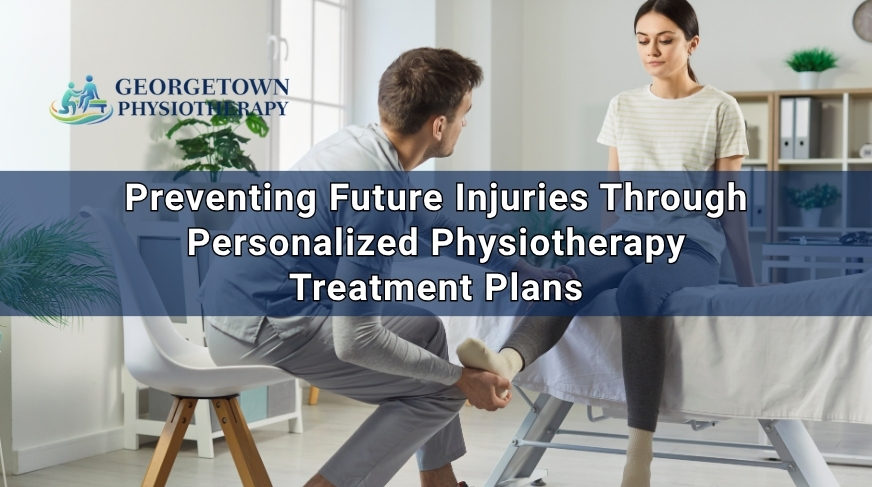
Preventing Future Injuries Through Personalized Physiotherapy Treatment Plans
A person may feel better while still having reduced strength, limited mobility, poor balance, reduced endurance, or movement patterns that place additional demands on certain muscles and joints. Returning immediately to the same activities without addressing these factors may increase the likelihood of another problem.
This is why personalized physiotherapy treatment plans can play an important role in injury prevention and long-term physical health.
Instead of providing everyone with the same exercises, an individualized physiotherapy programme considers your injury history, current physical abilities, occupation, lifestyle, activity level, movement patterns, and personal goals.
The World Health Organization recognizes rehabilitation as an essential health service that can help people improve functioning, participate in work and everyday activities, and manage the effects of injuries and musculoskeletal conditions.
At Georgetown Physiotherapy & Rehabilitation Centre, individualized rehabilitation focuses on helping patients restore physical capacity, improve movement, build strength, and develop sustainable strategies for staying active.
Yes, physiotherapy can contribute to injury prevention by identifying modifiable movement and physical-capacity limitations and addressing them through individualized exercise, mobility training, education, functional rehabilitation, and activity progression.
However, physiotherapy cannot guarantee that an injury will never occur. Injury risk is influenced by many factors, including activity levels, workload, previous injuries, environment, technique, recovery, and overall health.
The goal is to make your body better prepared for the demands you place on it.
Why Do Injuries Keep Coming Back?
Recurring injuries can happen for many reasons.
For example, someone recovering from knee pain may stop experiencing symptoms but still have weakness in the muscles surrounding the hip and knee.
Similarly, someone recovering from back pain may return to work before rebuilding enough strength and endurance for repeated lifting.
Potential contributing factors include:
- Muscle weakness
- Reduced flexibility
- Limited joint mobility
- Poor balance
- Reduced endurance
- Sudden increases in activity
- Repetitive workloads
- Inadequate recovery
- Previous injury
- Movement adaptations
- Poor physical conditioning
This does not mean that every injury is caused by a physical “imbalance.” Injury is usually multifactorial.
A personalized assessment helps determine which factors are actually relevant to an individual rather than assuming the same cause applies to everyone.
What Is a Personalized Physiotherapy Treatment Plan?
A personalized physiotherapy treatment plan is an individualized rehabilitation programme developed after assessing your condition, movement, physical capacity, and goals.
Instead of:
“Here are five exercises everyone should do.”
the approach becomes:
“What does this person need to safely perform the activities that matter to them?”
Your programme may consider:
- Current symptoms
- Previous injuries
- Age
- Physical activity
- Occupation
- Sports participation
- Strength
- Mobility
- Balance
- Endurance
- Functional limitations
- Personal goals
This person-centred approach is consistent with the broader rehabilitation model described by WHO, which emphasizes interventions targeted to individual goals, preferences, and functional needs.
Step 1: Identify Your Current Physical Baseline
Injury prevention starts with understanding where you are now.
A physiotherapist may assess:
Strength
Can your muscles generate enough force for your daily activities or sport?
Mobility
Can your joints move through the range required for normal activities?
Balance
Can you maintain control during static and dynamic movements?
Endurance
Can your body tolerate your normal work or exercise demands?
Functional Movement
How does your body perform movements such as:
- Squatting
- Walking
- Reaching
- Lifting
- Climbing stairs
- Pushing
- Pulling
- Running
The assessment is then used to determine where rehabilitation should focus.
Step 2: Restore Strength After Injury
Weakness following an injury is common, particularly when activity has been reduced.
For example:
Knee injury → less activity → reduced leg strength → reduced physical capacity
A personalized strengthening programme can progressively rebuild capacity.
Depending on your needs, exercises may target:
- Core muscles
- Back muscles
- Glutes
- Hips
- Quadriceps
- Hamstrings
- Calves
- Shoulders
- Rotator cuff
- Upper-back muscles
The important word is progressive.
Exercises should become appropriately more challenging as your physical capacity improves.
Step 3: Improve Mobility
Limited mobility can affect how the body performs everyday tasks.
Depending on the individual, physiotherapy may address mobility around the:
- Spine
- Hips
- Shoulders
- Knees
- Ankles
Mobility exercises may include:
- Active range-of-motion exercises
- Stretching
- Joint mobilization
- Functional movement exercises
The objective isn’t to achieve extreme flexibility.
It is to develop the mobility required for your specific activities.
Step 4: Build Better Movement Capacity
Movement quality is important, but there is no single “perfect” way to move.
A movement that is appropriate for one person may not be appropriate for another.
Your physiotherapist may examine how you perform specific tasks relevant to your lifestyle.
For example:
Office Worker
Focus may include:
- Sitting tolerance
- Neck mobility
- Shoulder strength
- Upper-back mobility
- Regular movement habits
Construction Worker
Rehabilitation may emphasize:
- Lifting
- Carrying
- Bending
- Reaching
- Work endurance
Runner
The programme may focus on:
- Lower-limb strength
- Running tolerance
- Balance
- Progressive loading
Older Adult
Treatment may emphasize:
- Balance
- Strength
- Walking
- Functional independence
- Fall-risk reduction
The rehabilitation strategy should match the person’s actual environment and goals.
Step 5: Gradually Increase Physical Capacity
One of the most important injury-prevention principles is progressive loading.
Your body adapts to physical demands over time.
Problems may occur when activity increases dramatically without enough preparation.
For example:
Low activity → sudden intense exercise → excessive physical demand
A more controlled progression may look like:
Low activity → manageable exercise → increased volume → increased intensity → normal activity
The exact progression depends on your condition.
A physiotherapist can help determine when to increase:
- Resistance
- Repetitions
- Duration
- Speed
- Distance
- Frequency
- Complexity
Step 6: Prepare for Your Actual Lifestyle
A rehabilitation programme should not stop at basic exercises.
This is where functional rehabilitation becomes important.
The objective is to bridge the gap between:
“I can do this exercise in the clinic.”
and
“I can safely perform this activity in real life.”
WHO describes rehabilitation as helping people participate in work, recreation, family life, and other meaningful activities, rather than focusing only on symptoms.
Personalized Physiotherapy for Sports Injury Prevention
Athletes often want to return to their sport as quickly as possible.
However, returning to sport should involve more than simply asking whether the pain has disappeared.
Depending on the sport and injury, rehabilitation may address:
- Strength
- Power
- Balance
- Coordination
- Agility
- Endurance
- Reaction
- Sport-specific movements
A runner, hockey player, golfer, tennis player, and recreational gym user all place different demands on their bodies.
A personalized programme should reflect those demands.
Personalized Physiotherapy for Workplace Injury Prevention
Workplace injury prevention is another important application.
Different occupations require different physical capacities.
A warehouse worker may repeatedly lift and carry.
A construction worker may climb, kneel, bend, and work overhead.
A healthcare worker may assist with transfers and prolonged standing.
An office worker may spend hours at a computer.
Physiotherapy can help identify physical limitations and develop conditioning strategies appropriate to the person’s work requirements.
For eligible workplace injuries in Ontario, rehabilitation may also form part of a WSIB-supported recovery pathway.
Personalized Physiotherapy for Older Adults
Injury prevention becomes particularly important as physical capacity changes with age.
A personalized programme may focus on:
- Strength
- Balance
- Walking
- Mobility
- Coordination
- Functional independence
The goal isn’t simply to prevent injury.
It is also to help people continue performing everyday activities with confidence.
WHO identifies rehabilitation as an important component of maintaining functioning and independence across the lifespan.
Everyday Habits That Support Injury Prevention
Your physiotherapy programme works best when supported by healthy daily habits.
Stay Physically Active
Regular activity helps maintain strength, endurance, and mobility.
Warm Up Before Demanding Exercise
A gradual transition into activity can prepare you for higher physical demands.
Increase Training Gradually
Avoid sudden jumps in exercise volume or intensity.
Take Recovery Seriously
Sleep and rest are important parts of physical recovery.
Maintain Strength
Strength training helps your body tolerate everyday and recreational demands.
Take Movement Breaks
If you sit for long periods, regularly change position and move.
Follow Your Home Programme
Consistency with prescribed exercises is an important part of rehabilitation.
Common Mistakes That Increase Injury Risk
Returning to Activity Because Pain Has Disappeared
Pain improvement is encouraging, but strength and physical capacity may still need rebuilding.
Doing Too Much Too Soon
A sudden increase in exercise or workload can exceed your current capacity.
Avoiding Activity Completely
Long-term avoidance can reduce strength and conditioning.
Following Generic Online Exercises
A programme designed for someone else’s injury may not match your condition.
Ignoring Previous Injuries
Previous injuries can provide useful information when developing a future prevention strategy.
Treating Prevention as a One-Time Event
Injury prevention isn’t something you “complete.”
It is an ongoing process of maintaining physical capacity and adapting to changing demands.
When Should You Consider Preventive Physiotherapy?
You don’t necessarily need to wait until you’re injured.
An assessment may be useful if you:
- Frequently experience the same injury
- Are returning to sport
- Are starting a new exercise programme
- Have recently recovered from an injury
- Are preparing for physically demanding work
- Notice recurring stiffness
- Feel weaker than before
- Are experiencing reduced mobility
- Want to improve physical capacity
Preventive physiotherapy should still be individualized. Not everyone needs the same assessment or treatment.
Frequently Asked Questions
Can physiotherapy prevent injuries?
Physiotherapy can address modifiable physical factors that may contribute to injury risk, such as weakness, reduced mobility, poor physical conditioning, or reduced functional capacity. It cannot guarantee that future injuries will not occur.
Do I need physiotherapy if I don’t have pain?
Not necessarily. Preventive physiotherapy may be useful for certain people with previous injuries, high physical demands, sports goals, or specific functional concerns, but healthy individuals may simply benefit from regular physical activity and appropriate exercise.
How often should I do injury-prevention exercises?
There is no universal schedule. Frequency depends on the exercises, your goals, current fitness, recovery, and physical demands.
Can physiotherapy help prevent sports injuries?
A personalized programme may help athletes improve relevant strength, balance, mobility, conditioning, and sport-specific physical capacity. The exact strategy depends on the athlete and sport.
Can physiotherapy help prevent workplace injuries?
It can help identify physical limitations and develop conditioning, movement, and ergonomic strategies appropriate to workplace demands. It does not replace workplace safety procedures or employer responsibilities.
Should I continue physiotherapy after my pain is gone?
It depends on the injury and treatment plan. Some people benefit from continuing progressive rehabilitation after symptoms improve to restore strength, function, and physical capacity.
Why Choose Georgetown Physiotherapy & Rehabilitation Centre?
At Georgetown Physiotherapy & Rehabilitation Centre, rehabilitation is designed around the individual rather than a generic exercise sheet.
Your programme may include:
- Physiotherapy
- Therapeutic Exercise
- Strength Training
- Mobility Training
- Functional Rehabilitation
- Manual Therapy
- Massage Therapy
- Chiropractic Care
- Laser Therapy
- Shockwave Therapy
- Home Exercise Programmes
- Injury Prevention Education
The goal is to help you build the physical capacity needed for your actual lifestyle—whether that means returning to work, getting back to sport, exercising confidently, or maintaining independence.
Georgetown Physiotherapy & Rehabilitation Centre
Address: 333 Mountainview Rd S, Unit #2, Georgetown, ON L7G 5S5, Canada
Phone: +1 905-702-6633
Email: info@georgetownphysiotherapy.ca
Website: https://georgetownphysiotherapy.ca/
Build a Body That Is Ready for What Comes Next
Injury prevention isn’t about avoiding movement or trying to eliminate every possible risk.
It’s about building the strength, mobility, endurance, balance, and confidence needed to handle the demands of your life.
A personalized physiotherapy treatment plan can help identify where your physical capacity needs improvement and provide a structured path for progressing safely.
If you’re looking for personalized physiotherapy in Georgetown, contact Georgetown Physiotherapy & Rehabilitation Centre for an individualized assessment.
Recover stronger. Move with confidence. Prepare your body for tomorrow’s demands.