


 Call For Appointment
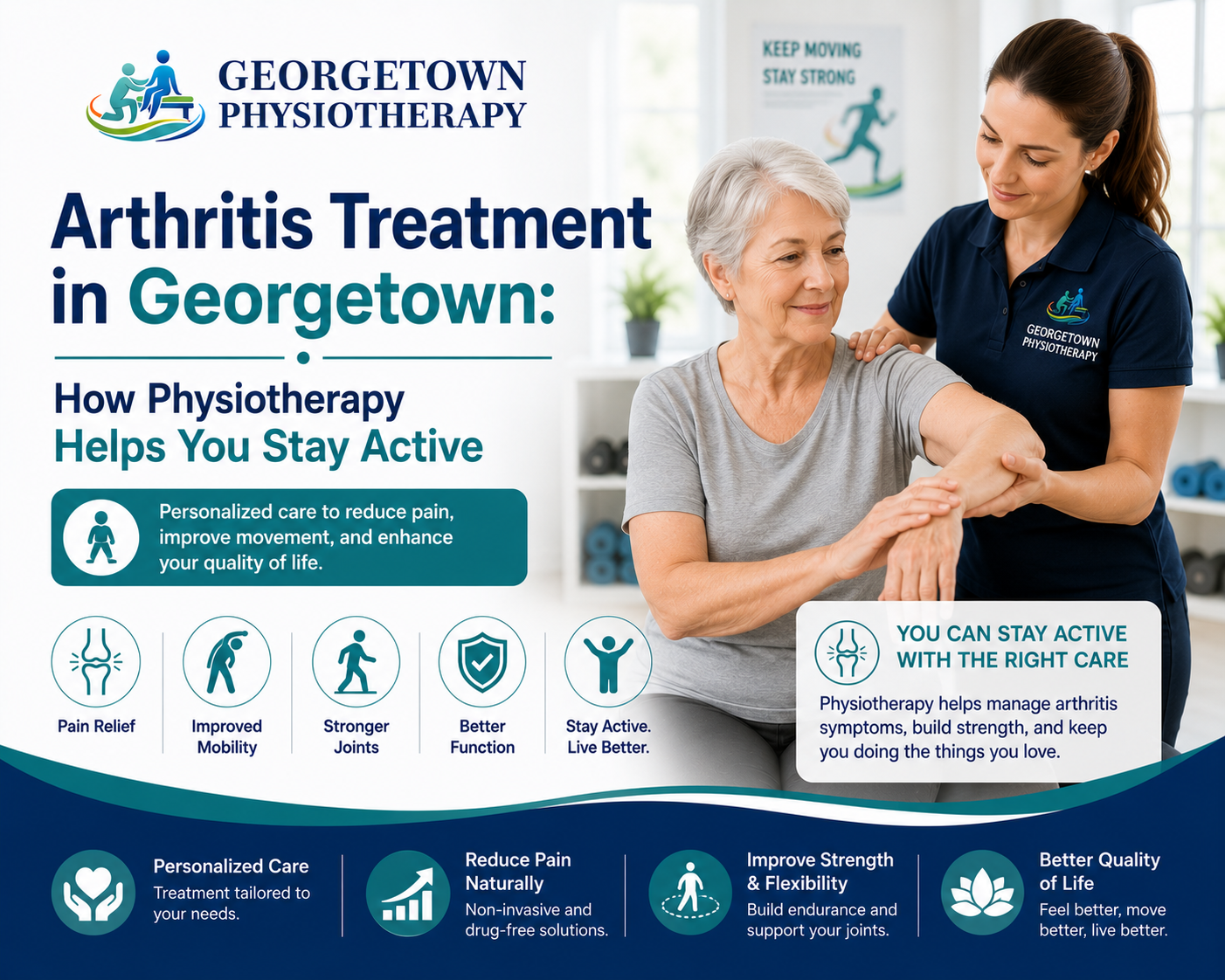
Arthritis Treatment in Georgetown: How Physiotherapy Helps You Stay Active
Arthritis is one of the leading causes of joint pain and reduced mobility, affecting people of all ages, although it becomes more common as we get older. Many Georgetown residents living with arthritis notice that everyday activities such as walking, climbing stairs, gardening, exercising, or even getting out of bed become increasingly difficult because of pain and stiffness.
Although arthritis is a long-term condition, it does not have to prevent you from living an active and independent life. With the right treatment plan, many people successfully manage their symptoms, improve joint function, and continue enjoying the activities they love.
If you’ve been searching for “arthritis treatment near me in Georgetown,” physiotherapy is one of the most effective non-surgical treatment options available. At Georgetown Physiotherapy & Rehabilitation Centre, our personalized rehabilitation programs focus on reducing pain, restoring mobility, strengthening muscles, and helping patients maintain their independence.
Understanding Arthritis
Arthritis is not a single disease. It is a group of conditions that affect the joints, causing inflammation, stiffness, swelling, and pain.
Over time, arthritis may affect the cartilage, bones, ligaments, and surrounding muscles, making movement more difficult.
The joints most commonly affected include:
Without proper management, arthritis can gradually interfere with daily activities and overall quality of life.
Common Types of Arthritis
Osteoarthritis
Osteoarthritis is the most common type of arthritis. It develops gradually as the cartilage that cushions the joints wears down over time.
Common symptoms include:
- Joint pain
- Morning stiffness
- Swelling
- Reduced flexibility
- Difficulty moving
Weight-bearing joints such as the knees and hips are especially vulnerable.
Rheumatoid Arthritis
Rheumatoid arthritis is an autoimmune condition in which the immune system mistakenly attacks healthy joint tissue.
People may experience:
- Swollen joints
- Warmth around the joints
- Fatigue
- Pain on both sides of the body
- Long-lasting morning stiffness
Medical management is important, and physiotherapy can help maintain mobility and physical function.
Signs You Should Seek Treatment
Many people ignore early arthritis symptoms, assuming they are simply part of aging.
You should consider professional assessment if you notice:
- Joint pain that lasts for several weeks
- Stiffness after resting
- Difficulty walking
- Reduced flexibility
- Swollen joints
- Pain that limits everyday activities
- Trouble climbing stairs
- Difficulty getting up from a chair
Early intervention often helps preserve movement and improve long-term function.
How Physiotherapy Helps Arthritis
Physiotherapy focuses on improving how your body moves rather than simply masking pain.
At Georgetown Physiotherapy & Rehabilitation Centre, treatment begins with a comprehensive assessment of your:
- Joint mobility
- Muscle strength
- Balance
- Walking pattern
- Flexibility
- Daily activities
- Personal goals
Based on your assessment, your physiotherapist develops an individualized treatment plan.
Improving Joint Mobility
One of the biggest challenges for people with arthritis is joint stiffness.
Gentle mobility exercises help improve range of motion, making daily movements easier and more comfortable.
Improved mobility can help with activities such as:
- Walking
- Reaching overhead
- Getting dressed
- Climbing stairs
- Household chores
Strengthening the Muscles Around Your Joints
Strong muscles help support and stabilize affected joints.
A physiotherapy program may include exercises that strengthen:
- Quadriceps
- Hamstrings
- Hip muscles
- Core muscles
- Shoulder muscles
Improved strength helps reduce stress on painful joints and supports better movement.
Managing Pain Without Surgery
Many people assume surgery or medication is the only solution for arthritis pain.
In reality, physiotherapy offers a conservative treatment option that may help:
- Reduce joint stiffness
- Improve flexibility
- Increase physical function
- Encourage safe movement
- Improve confidence during daily activities
Treatment plans are tailored to each individual’s condition and tolerance.
Improving Balance and Preventing Falls
Arthritis can affect balance because pain and weakness often change the way people walk.
Physiotherapy may include:
- Balance exercises
- Walking practice
- Functional training
- Stability exercises
These treatments help reduce fall risk and improve confidence.
Education for Long-Term Success
Physiotherapy is not only about clinic visits. Education is an important part of long-term arthritis management.
Your physiotherapist may provide guidance on:
- Safe exercise techniques
- Joint protection strategies
- Home exercise programs
- Activity pacing
- Lifestyle modifications
Learning how to manage arthritis at home can help maintain progress between appointments.
Additional Treatments That May Complement Physiotherapy
Massage Therapy
Massage therapy may help:
- Reduce muscle tension
- Improve circulation
- Promote relaxation
- Improve flexibility
Chiropractic Care
For some patients, chiropractic care may help improve joint mobility and movement in areas affected by stiffness.
Laser Therapy
Laser therapy is a non-invasive treatment that may help:
- Reduce inflammation
- Encourage tissue healing
- Improve circulation
- Manage discomfort
Depending on your condition, these therapies may be incorporated into your rehabilitation plan.
Lifestyle Tips for Managing Arthritis
Along with professional treatment, healthy habits can make a meaningful difference.
Keep Moving
Gentle, regular activity helps maintain joint flexibility and muscle strength.
Maintain a Healthy Weight
Reducing excess weight can decrease stress on the knees, hips, and other weight-bearing joints.
Exercise Consistently
Low-impact activities such as walking, swimming, or cycling can support joint health.
Avoid Long Periods of Inactivity
Changing position frequently and taking short movement breaks can help reduce stiffness.
Follow Your Home Exercise Program
Completing the exercises recommended by your physiotherapist supports continued improvement.
Why Choose Georgetown Physiotherapy & Rehabilitation Centre?
People looking for arthritis treatment near me in Georgetown choose Georgetown Physiotherapy & Rehabilitation Centre because of our personalized and patient-focused approach.
Our services include:
- Physiotherapy
- Chiropractic Care
- Massage Therapy
- Laser Therapy
- Post-Surgical Rehabilitation
- WSIB Physiotherapy
- MVA Injury Care
We focus on helping patients:
- Reduce pain
- Improve mobility
- Build strength
- Increase independence
- Prevent future limitations
- Return to daily activities with confidence
Every rehabilitation plan is tailored to the patient’s symptoms, goals, and lifestyle.
Stay Active Despite Arthritis
Arthritis may be a lifelong condition, but it doesn’t have to define your life. With the right rehabilitation program, many people successfully manage pain, improve joint function, and continue enjoying work, hobbies, and family activities.
If you’re searching for arthritis treatment near me in Georgetown, Georgetown Physiotherapy & Rehabilitation Centre offers compassionate, personalized care designed to help you move more comfortably and maintain an active lifestyle.
Contact Georgetown Physiotherapy & Rehabilitation Centre
Address:
333 Mountainview Rd S, Unit #2
Georgetown, ON L7G 5S5, Canada
Phone: +1 905-702-6633