



 Call For Appointment
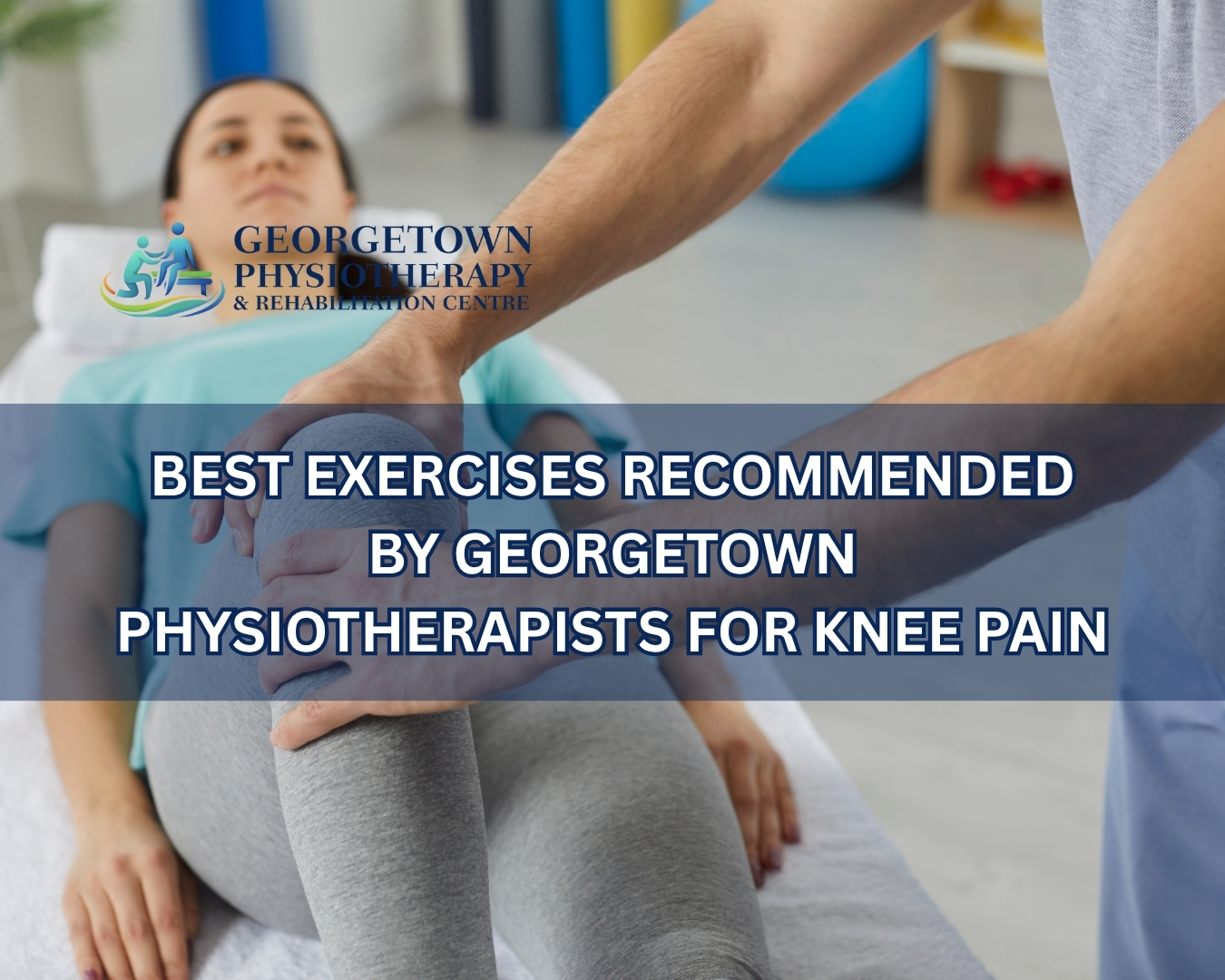
Best Exercises Recommended by Georgetown Physiotherapists for Knee Pain
Knee pain is one of the most common musculoskeletal complaints affecting people of all ages. Whether it is caused by arthritis, a sports injury, overuse, poor biomechanics, or age-related wear and tear, knee pain can significantly impact your ability to walk, climb stairs, exercise, work, and enjoy everyday activities.
Many people assume that rest is the best solution for knee pain. While temporary rest may be helpful during acute injuries, prolonged inactivity can often make the problem worse. Weak muscles, stiff joints, and reduced mobility can increase stress on the knee and contribute to ongoing discomfort.
At Georgetown Physiotherapy & Rehabilitation Centre, we frequently recommend specific therapeutic exercises to help patients reduce knee pain, improve mobility, strengthen supporting muscles, and prevent future injuries. The right exercises can play a crucial role in both recovery and long-term knee health.
Understanding Knee Pain
The knee is one of the largest and most complex joints in the body. It absorbs significant forces during everyday activities such as walking, running, squatting, and climbing stairs.
Several conditions can contribute to knee pain, including:
- Osteoarthritis
- Patellofemoral pain syndrome
- Ligament injuries
- Meniscus injuries
- Tendonitis
- Muscle imbalances
- Sports injuries
- Overuse injuries
Regardless of the cause, strengthening the muscles around the knee and improving joint mobility are often key components of successful rehabilitation.
Why Exercise Is Important for Knee Pain
Many patients worry that exercising will worsen their knee pain. However, properly selected exercises often help reduce discomfort rather than increase it.
Benefits of therapeutic exercise include:
- Improved joint stability
- Increased muscle strength
- Better flexibility
- Enhanced mobility
- Reduced stiffness
- Improved balance
- Lower injury risk
- Better overall function
Strong muscles help absorb forces that would otherwise place excessive stress on the knee joint.
Before Starting Any Exercise Program
Before beginning knee exercises, it is important to:
- Obtain a professional assessment if pain is severe or persistent
- Avoid exercises that cause sharp pain
- Progress gradually
- Focus on proper form
- Warm up before exercising
A physiotherapist can determine which exercises are most appropriate based on your specific condition and goals.
1. Quadriceps Sets
The quadriceps muscles play an important role in knee stability and movement.
How to Perform:
- Sit or lie down with your leg straight.
- Tighten the muscles on the front of your thigh.
- Press the back of your knee gently toward the floor.
- Hold for 5 to 10 seconds.
- Relax and repeat.
Recommended Repetitions:
- 10 to 15 repetitions
- 2 to 3 sets daily
Benefits:
- Improves quadriceps strength
- Supports knee stability
- Reduces joint stress
This exercise is often recommended during early-stage rehabilitation.
2. Straight Leg Raises
Straight leg raises strengthen the quadriceps without placing excessive pressure on the knee joint.
How to Perform:
- Lie on your back.
- Bend one knee while keeping the other leg straight.
- Tighten the thigh muscles of the straight leg.
- Slowly lift the leg approximately 12 inches.
- Hold briefly.
- Lower slowly.
Recommended Repetitions:
- 10 to 15 repetitions
- 2 to 3 sets
Benefits:
- Builds quadriceps strength
- Improves knee support
- Enhances lower-limb function
3. Heel Slides
Heel slides help improve knee flexibility and range of motion.
How to Perform:
- Lie on your back.
- Slowly slide your heel toward your buttocks.
- Bend the knee as comfortably as possible.
- Hold briefly.
- Return to the starting position.
Recommended Repetitions:
- 10 to 15 repetitions
Benefits:
- Improves mobility
- Reduces stiffness
- Encourages joint movement
This exercise is commonly used after knee injuries and surgery.
4. Hamstring Stretches
Tight hamstrings can increase stress on the knee joint.
How to Perform:
- Sit with one leg extended.
- Keep your back straight.
- Lean forward gently from the hips.
- Hold the stretch.
Hold Time:
- 20 to 30 seconds
- Repeat 3 times
Benefits:
- Improves flexibility
- Reduces muscle tension
- Supports healthy movement patterns
5. Calf Raises
Strong calf muscles contribute to overall lower-body stability.
How to Perform:
- Stand near a wall or chair for support.
- Slowly rise onto your toes.
- Hold briefly.
- Lower slowly.
Recommended Repetitions:
- 10 to 15 repetitions
- 2 to 3 sets
Benefits:
- Improves balance
- Strengthens lower-leg muscles
- Supports knee function
6. Mini Squats
Mini squats strengthen multiple muscle groups that support the knee.
How to Perform:
- Stand with feet shoulder-width apart.
- Slowly bend your knees slightly.
- Lower only a short distance.
- Return to standing.
Recommended Repetitions:
- 10 to 15 repetitions
Benefits:
- Strengthens quadriceps and glutes
- Improves functional movement
- Enhances knee stability
Avoid deep squats if they aggravate symptoms.
7. Step-Ups
Step-ups help improve strength and coordination for daily activities.
How to Perform:
- Use a low step.
- Step up with one foot.
- Bring the opposite foot up.
- Step down carefully.
Recommended Repetitions:
- 10 repetitions per leg
Benefits:
- Improves leg strength
- Supports stair-climbing ability
- Enhances balance
8. Bridges
Bridges strengthen the gluteal muscles and core, both of which help reduce stress on the knees.
How to Perform:
- Lie on your back with knees bent.
- Tighten your abdominal muscles.
- Lift your hips toward the ceiling.
- Hold briefly.
- Lower slowly.
Recommended Repetitions:
- 10 to 15 repetitions
Benefits:
- Strengthens hips and core
- Improves lower-body stability
- Supports proper knee alignment
9. Clamshell Exercises
Weak hip muscles can contribute to poor knee mechanics.
How to Perform:
- Lie on your side with knees bent.
- Keep feet together.
- Lift the top knee while keeping hips stable.
- Lower slowly.
Recommended Repetitions:
- 10 to 15 repetitions
Benefits:
- Strengthens hip stabilizers
- Improves knee alignment
- Reduces excessive joint stress
10. Balance Exercises
Balance training is particularly important for older adults and individuals recovering from injuries.
Simple Single-Leg Balance
- Stand near a stable surface.
- Lift one foot slightly off the ground.
- Maintain balance.
Hold Time:
- 20 to 30 seconds
- Repeat 3 times
Benefits:
- Improves stability
- Reduces fall risk
- Enhances joint control
Exercises to Avoid When Experiencing Knee Pain
Not all exercises are appropriate for every condition.
Depending on your symptoms, you may need to limit:
- Deep squats
- Jumping exercises
- High-impact running
- Lunges that cause pain
- Sudden twisting movements
A physiotherapist can help determine which activities are safe and appropriate.
Additional Treatments That Complement Exercise
Exercise often produces the best results when combined with professional rehabilitation services.
Physiotherapy
A personalized physiotherapy program addresses the underlying cause of knee pain while providing targeted exercises and hands-on treatment.
Massage Therapy
Massage therapy can help reduce muscle tension and improve circulation around the knee.
Laser Therapy
Laser therapy may help reduce inflammation and promote tissue healing.
Chiropractic Care
Chiropractic treatment may assist with joint mobility and overall movement function when appropriate.
Tips for Managing Knee Pain Successfully
Stay Consistent
Performing exercises regularly is often more effective than occasional intense workouts.
Focus on Technique
Proper form helps maximize benefits while reducing injury risk.
Maintain a Healthy Weight
Reducing excess body weight decreases stress on the knee joints.
Stay Active
Regular movement helps prevent stiffness and supports long-term joint health.
Seek Professional Guidance
Persistent pain should always be evaluated by a qualified healthcare professional.
When to See a Physiotherapist
Consider scheduling an assessment if:
- Pain lasts more than a few weeks
- Swelling persists
- Mobility becomes limited
- Walking becomes difficult
- Pain interferes with daily activities
- Symptoms continue to worsen
Early treatment often leads to better outcomes and faster recovery.
Why Choose Georgetown Physiotherapy & Rehabilitation Centre?
At Georgetown Physiotherapy & Rehabilitation Centre, we help patients overcome knee pain through personalized rehabilitation programs designed to restore strength, mobility, and confidence.
Our services include:
- Physiotherapy
- Knee Rehabilitation
- Laser Therapy
- Massage Therapy
- Chiropractic Care
- Personalized Exercise Programs
Every treatment plan is tailored to the patient’s condition, lifestyle, and recovery goals.
Start Moving With Less Knee Pain
Knee pain should not prevent you from living an active and healthy life. The right exercises can strengthen supporting muscles, improve mobility, reduce discomfort, and help prevent future injuries.
Whether your knee pain is caused by arthritis, an injury, or everyday wear and tear, professional guidance can make a significant difference in your recovery.
Contact us today to learn more about knee pain treatment and physiotherapy services in Georgetown.
Georgetown Physiotherapy & Rehabilitation Centre
333 Mountainview Rd S, Unit #2
Georgetown, ON L7G 5S5, Canada
Phone: +1 905-702-6633
Website: https://georgetownphysiotherapy.ca/
Email: info@georgetownphysiotherapy.ca