



 Call For Appointment
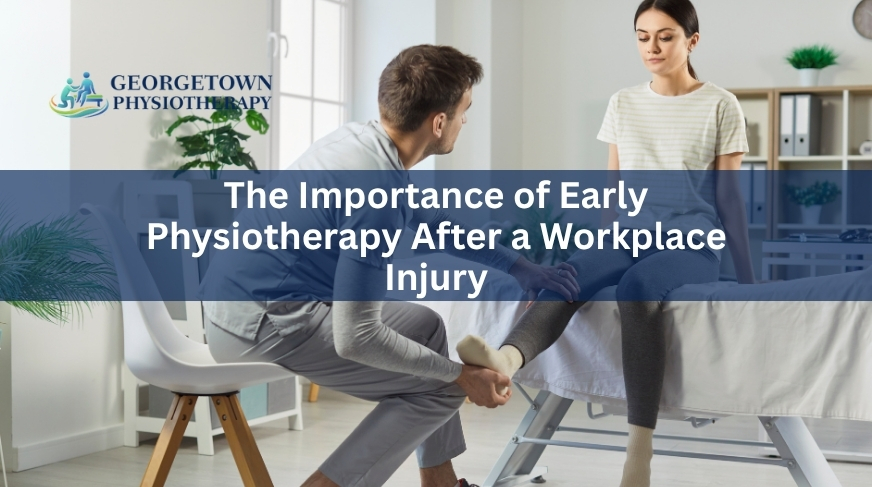
The Importance of Early Physiotherapy After a Workplace Injury
A workplace injury can happen in seconds but affect your work and daily life for weeks or months.
A sudden lift can strain the lower back. A fall can injure the knee or shoulder. Repetitive work can gradually cause neck, wrist, or shoulder symptoms. Even office workers can develop musculoskeletal problems from prolonged computer use and repetitive tasks.
After an injury, it’s common to think, “I’ll rest for a few days and see if it gets better.” Sometimes symptoms do improve with time. However, when pain, stiffness, weakness, or reduced mobility continues, delaying assessment may make it harder to identify the factors affecting recovery.
For appropriate workplace injuries, early physiotherapy can provide a structured approach to recovery by assessing how the injury affects movement and function, providing appropriate treatment, and progressively rebuilding physical capacity.
At Georgetown Physiotherapy & Rehabilitation Centre, individualized rehabilitation can help patients work toward improved function and a safe return to their everyday and workplace activities.
What Counts as a Workplace Injury?
Workplace injuries aren’t limited to major accidents.
They can include:
- Back strains from lifting
- Shoulder injuries
- Neck injuries
- Knee injuries
- Ankle sprains
- Muscle strains
- Tendon problems
- Repetitive strain injuries
- Slip-and-fall injuries
- Overuse injuries
A workplace injury may happen suddenly or develop gradually because of repetitive physical demands.
The appropriate treatment depends on the nature of the injury and the individual’s clinical presentation.
Why Early Assessment Matters
Early physiotherapy isn’t about rushing your body back to full activity.
Instead, it is about understanding the injury and establishing an appropriate recovery strategy.
An early assessment may help identify:
- Restricted movement
- Muscle weakness
- Reduced balance
- Functional limitations
- Pain-related movement changes
- Work-related physical demands
- Activities that may need temporary modification
This information can then be used to create a personalized rehabilitation programme.
1. Early Physiotherapy Can Help Restore Mobility
Pain often causes people to move differently.
You may avoid bending because your back hurts, stop lifting your arm because your shoulder is painful, or reduce walking because of a knee injury.
Reduced movement can contribute to stiffness and loss of physical capacity.
Depending on the injury, physiotherapy may use:
- Mobility exercises
- Stretching
- Joint mobilization
- Movement retraining
- Functional exercises
The goal is to gradually restore comfortable and useful movement.
2. It Can Help Rebuild Strength
Following an injury, muscles may become weaker because activity has been reduced.
For example, someone recovering from a knee injury may avoid putting weight through the affected leg. Someone with a shoulder injury may stop using the arm normally.
A physiotherapist can progressively introduce strengthening exercises for areas such as:
- Core
- Back
- Shoulders
- Hips
- Knees
- Legs
The programme should be progressed according to symptoms, recovery, and functional demands.
3. It Can Support Pain Management
Physiotherapy can use a combination of active and hands-on approaches to help manage symptoms.
Depending on the injury, treatment may include:
- Therapeutic exercise
- Manual therapy
- Soft-tissue techniques
- Movement education
- Activity modification
- Functional rehabilitation
- Laser therapy where clinically appropriate
The objective isn’t simply to temporarily reduce pain.
A stronger rehabilitation strategy also addresses the factors affecting movement and function.
4. It Helps You Understand Your Injury
Pain can be frightening, particularly when you’re unsure whether movement is helping or harming you.
A physiotherapist can explain:
- What may be contributing to your symptoms
- Which activities may need modification
- What movements are appropriate
- How rehabilitation should progress
- What warning signs require further assessment
Understanding your condition can make it easier to participate confidently in recovery.
5. It Can Support a Safe Return to Work
One of the most important goals following a workplace injury is getting back to work safely.
Returning too early may place demands on an injured body that it isn’t ready to handle.
Waiting unnecessarily long can also contribute to deconditioning and loss of confidence.
A rehabilitation programme can progressively rebuild the abilities required for your job.
Depending on the occupation, this may involve:
- Lifting
- Carrying
- Pushing
- Pulling
- Bending
- Reaching
- Climbing
- Walking
- Prolonged standing
- Prolonged sitting
The objective is functional capacity, not simply the absence of pain.
Understanding WSIB Physiotherapy
If your workplace injury is related to employment in Ontario, you may have a WSIB claim depending on the circumstances.
The Workplace Safety and Insurance Board (WSIB) provides benefits and healthcare support for eligible workplace injuries and illnesses.
For eligible musculoskeletal injuries, WSIB has a Musculoskeletal Program of Care that provides a structured rehabilitation pathway.
Treatment can involve assessment, education, exercise, functional rehabilitation, and return-to-work planning.
WSIB determines eligibility and coverage based on the individual claim. Patients should follow current WSIB processes and requirements rather than assuming every workplace injury is automatically covered.
What Happens During a Physiotherapy Assessment?
Your first appointment typically begins with a detailed discussion about your injury.
Your physiotherapist may ask:
- When did the injury happen?
- How did it occur?
- What symptoms are you experiencing?
- What activities make it worse?
- What activities make it better?
- What are your job duties?
- Have you had previous injuries?
- What activities do you need to return to?
The physical assessment may examine:
- Range of motion
- Muscle strength
- Balance
- Functional movement
- Walking pattern
- Joint mobility
- Neurological signs when appropriate
The findings help establish an individualized treatment plan.
Early Rehabilitation Doesn’t Mean “Do Everything Immediately”
One common misunderstanding is that early physiotherapy means immediately exercising through severe pain.
That’s not the goal.
Effective rehabilitation is progressive.
Your initial programme may focus on:
Symptom management → comfortable movement → basic strength → functional capacity → work-specific activities → normal duties
The speed of progression depends on your injury and response to treatment.
Workplace Injury Recovery for Different Jobs
Office Workers
Desk-based employees may experience:
- Neck pain
- Shoulder pain
- Upper-back discomfort
- Lower-back pain
- Repetitive strain
Treatment may include ergonomic education, movement breaks, mobility exercises, and strengthening.
Construction and Trades
Physical workers may require progressive rehabilitation for:
- Lifting
- Carrying
- Bending
- Reaching
- Climbing
Work-specific conditioning can help rebuild the capacity required for physically demanding tasks.
Healthcare Workers
Nurses, caregivers, and other healthcare workers may repeatedly lift, transfer, push, pull, or reposition patients.
Rehabilitation may need to consider these specific physical demands.
Warehouse Workers
Repetitive lifting, carrying, pushing, pulling, and prolonged standing can place significant demands on the musculoskeletal system.
A return-to-work programme can gradually rebuild those capabilities.
Everyday Habits That Support Recovery
Physiotherapy appointments are only one part of rehabilitation.
Follow Your Home Exercise Programme
Prescribed exercises help continue your rehabilitation between appointments.
Stay Active Within Your Recommended Limits
Appropriate movement can help maintain physical capacity.
Follow Work Restrictions
If temporary modifications have been recommended, follow them rather than testing your limits prematurely.
Take Recovery Seriously
Adequate sleep, nutrition, hydration, and stress management can support your overall recovery.
Communicate Changes
Tell your healthcare provider if symptoms significantly improve, worsen, or change.
Common Mistakes After a Workplace Injury
Waiting for Pain to Completely Disappear
Pain may improve before strength and function are fully restored.
Returning to Heavy Duties Too Quickly
Your body may need time to rebuild the capacity required for your job.
Avoiding All Movement
Complete inactivity can contribute to stiffness and deconditioning.
Ignoring Recurrent Symptoms
Repeated pain during the same work activity may indicate that the underlying physical demands haven’t been adequately addressed.
Following Generic Exercises
A workplace injury should be assessed individually. A generic online exercise programme may not match your injury or job demands.
Can Early Physiotherapy Prevent Future Injuries?
Physiotherapy cannot guarantee that another workplace injury will never happen.
However, rehabilitation can address modifiable factors such as:
- Muscle weakness
- Reduced mobility
- Poor movement strategies
- Reduced physical capacity
- Poor work tolerance
- Lack of conditioning
A personalized prevention programme may also include education about workload management and safer movement strategies.
When Should You Seek Urgent Medical Care?
Most workplace musculoskeletal injuries can be assessed routinely, but certain symptoms require urgent medical attention.
Seek prompt medical assessment if you experience:
- Severe or rapidly worsening weakness
- New loss of bladder or bowel control
- Numbness around the groin or saddle region
- Major trauma
- Severe unexplained pain
- Chest pain or breathing difficulties
- Other concerning neurological or systemic symptoms
These symptoms should not be managed through routine physiotherapy alone.
Frequently Asked Questions
How soon should I start physiotherapy after a workplace injury?
The appropriate timing depends on the injury and clinical circumstances. Early assessment can be useful when pain, stiffness, weakness, or functional limitations are present, but treatment should be appropriately matched to the injury.
Can physiotherapy help with a WSIB claim?
For eligible workplace injuries, physiotherapy may form part of WSIB-supported healthcare and rehabilitation. Coverage and processes depend on the individual claim.
Can I work while receiving physiotherapy?
Many injured workers continue working with appropriate modified or suitable duties while receiving rehabilitation. Your healthcare team can help determine appropriate functional restrictions based on your condition.
Does early physiotherapy mean my injury will heal faster?
Not necessarily. Recovery varies considerably between injuries and individuals. Early assessment can help establish appropriate treatment and activity progression, but no responsible clinician can guarantee a specific recovery time.
What workplace injuries can physiotherapy treat?
Physiotherapy commonly manages musculoskeletal problems involving the back, neck, shoulder, knee, ankle, muscles, tendons, and other movement-related structures. The treatment approach depends on the specific diagnosis.
What if my workplace injury is getting worse?
Contact your healthcare provider for reassessment. If you develop severe neurological symptoms, major trauma, or other emergency warning signs, seek urgent medical care.
Why Choose Georgetown Physiotherapy & Rehabilitation Centre?
At Georgetown Physiotherapy & Rehabilitation Centre, we understand that workplace injury rehabilitation has one important objective: helping you safely regain the physical capacity needed for your work and everyday life.
Our individualized rehabilitation programmes may include:
- Physiotherapy
- Therapeutic Exercise
- Manual Therapy
- Functional Rehabilitation
- Massage Therapy
- Chiropractic Care
- Laser Therapy
- Shockwave Therapy
- Strength Training
- Mobility Training
- Home Exercise Programmes
- Workplace Injury Rehabilitation
Your treatment plan is developed around your injury, physical abilities, job requirements, and recovery goals.
Georgetown Physiotherapy & Rehabilitation Centre
Address: 333 Mountainview Rd S, Unit #2, Georgetown, ON L7G 5S5, Canada
Phone: +1 905-702-6633
Email: info@georgetownphysiotherapy.ca
Website: https://georgetownphysiotherapy.ca/
Don’t Let a Workplace Injury Become a Long-Term Limitation
A workplace injury can temporarily change how you work, move, and live—but recovery should have a clear direction.
Early assessment, personalized physiotherapy, appropriate exercise, education, and progressive return-to-work planning can help you rebuild mobility, strength, confidence, and functional capacity.
If you’re searching for workplace injury physiotherapy in Georgetown, contact Georgetown Physiotherapy & Rehabilitation Centre for an individualized assessment.
Start with the right assessment. Build your strength progressively. Return to work with confidence.