



 Call For Appointment
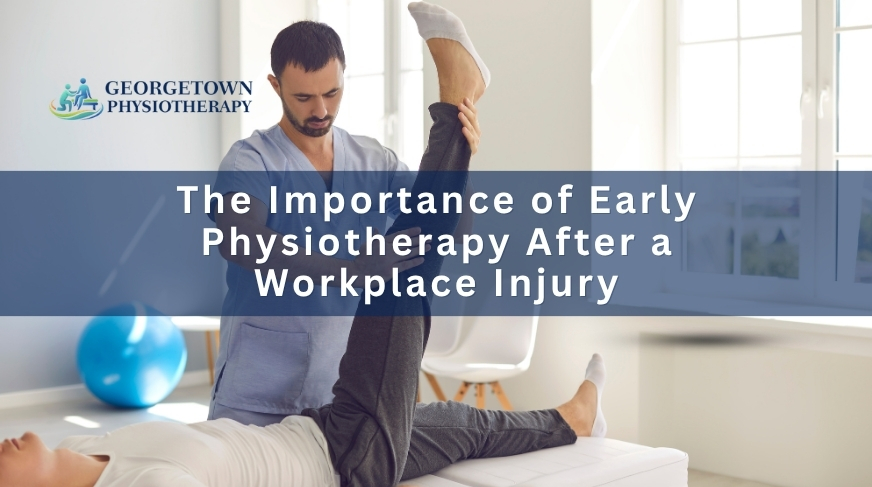
The Importance of Early Physiotherapy After a Workplace Injury
A workplace injury can happen unexpectedly. A heavy box may be lifted incorrectly, a worker may slip and fall, or repetitive movements may gradually cause pain in the neck, shoulder, back, wrist, or knee.
Whatever the cause, an injury can affect much more than your physical comfort. It can make it difficult to perform your normal job duties, participate in family activities, exercise, drive, sleep, or complete everyday tasks.
One of the most important questions after an injury is:
“When should I start rehabilitation?”
The answer depends on the injury, severity, symptoms, and individual circumstances. However, early professional assessment can help identify limitations and establish an appropriate rehabilitation pathway rather than relying entirely on rest and waiting.
Physiotherapy may help appropriate patients manage symptoms, restore mobility, rebuild strength, improve functional capacity, and gradually return to work and everyday activities.
For workers in Georgetown and surrounding communities, Georgetown Physiotherapy & Rehabilitation Centre provides individualized rehabilitation for musculoskeletal and workplace-related injuries.
Quick Answer: Why Is Early Physiotherapy Important After a Workplace Injury?
Early physiotherapy can help assess how an injury affects movement and function, provide appropriate symptom-management strategies, restore mobility and strength, and progressively prepare the worker for normal activities and job demands.
Early physiotherapy does not mean immediately returning to heavy work or exercising through significant pain. Rehabilitation should be progressive and based on the individual’s injury, clinical findings, and functional requirements.
For eligible Ontario workplace injuries, physiotherapy may also be part of a WSIB-supported rehabilitation pathway.
What Is a Workplace Injury?
A workplace injury is not necessarily a dramatic accident.
Work-related injuries can occur suddenly or develop over time.
Examples include:
- Back strains from lifting
- Shoulder injuries
- Neck pain
- Knee injuries
- Ankle sprains
- Muscle strains
- Tendon problems
- Repetitive strain injuries
- Slip-and-fall injuries
- Overuse injuries
The physical demands associated with an occupation can influence the type of injury a worker experiences.
A construction worker, office employee, warehouse worker, healthcare professional, and delivery driver may all face completely different physical demands.
This is why workplace injury rehabilitation should be individualized.
Why Should You Get an Injury Assessed Early?
After a workplace injury, some people decide to wait several days or weeks to see whether the problem disappears.
Sometimes symptoms do improve.
But persistent pain, stiffness, weakness, numbness, or reduced function deserves appropriate assessment.
An early physiotherapy assessment can help establish:
- What movements are limited
- Which activities aggravate symptoms
- Whether strength has decreased
- How the injury affects work
- What activities may need temporary modification
- What exercises may be appropriate
- Whether additional medical assessment may be necessary
The goal is to understand the problem rather than simply react to pain.
1. Early Physiotherapy Can Help Restore Mobility
Pain often changes how people move.
Over time, reduced movement can contribute to stiffness and reduced physical capacity.
Depending on the injury, physiotherapy may use:
- Active mobility exercises
- Stretching
- Joint mobilization
- Movement retraining
- Functional exercises
The aim is to gradually restore the movement required for everyday and workplace activities.
2. Physiotherapy Can Help Rebuild Strength
Strength can decline when activity is reduced after an injury.
For example, a worker with knee pain may stop using the affected leg normally. A person with shoulder pain may avoid lifting or reaching.
A personalized strengthening programme can progressively target areas such as:
- Core
- Back
- Shoulders
- Hips
- Knees
- Legs
- Upper back
The programme should be adjusted according to the injury and progressively advanced as physical capacity improves.
3. It Can Support Pain Management
Pain management is often one of the first priorities after an injury.
Depending on the individual’s condition, physiotherapy may incorporate:
- Therapeutic exercise
- Manual therapy
- Soft-tissue techniques
- Movement education
- Activity modification
- Functional rehabilitation
- Laser therapy when clinically appropriate
The goal should not simply be short-term symptom relief.
A comprehensive rehabilitation plan also works toward improving movement and physical capacity.
4. It Helps You Understand What You Can Safely Do
After an injury, workers may become uncertain about movement.
You might wonder:
- Should I rest?
- Can I walk?
- Can I exercise?
- Can I lift anything?
- Should I go back to work?
- Which movements should I avoid?
A physiotherapy assessment can help provide individualized guidance.
This can reduce unnecessary fear of movement while also preventing premature return to demanding activities.
5. It Can Support a Gradual Return to Work
For many workers, returning to work is a major rehabilitation goal.
But returning to work doesn’t necessarily mean immediately resuming every previous duty.
A worker may initially require modified activities depending on the injury.
A return-to-work programme may gradually rebuild tolerance for:
- Lifting
- Carrying
- Pushing
- Pulling
- Bending
- Reaching
- Walking
- Climbing
- Prolonged standing
- Prolonged sitting
The objective is to restore the capacity needed for the actual job.
What Is a Safe Return to Work?
A safe return to work should consider whether the worker can reasonably tolerate the physical demands of their role.
For example:
Office Worker
Relevant abilities may include:
- Sitting tolerance
- Computer use
- Neck movement
- Shoulder movement
- Regular position changes
Warehouse Worker
Relevant abilities may include:
- Repeated lifting
- Carrying
- Pushing
- Pulling
- Standing
Construction Worker
Relevant abilities may include:
- Bending
- Kneeling
- Climbing
- Lifting
- Carrying
- Working overhead
Healthcare Worker
Relevant abilities may include:
- Standing
- Walking
- Patient transfers
- Pushing equipment
- Repeated bending
Rehabilitation should eventually reflect these real-world requirements.
Understanding WSIB Physiotherapy in Ontario
For eligible workplace injuries in Ontario, the Workplace Safety and Insurance Board (WSIB) may provide healthcare and rehabilitation benefits according to the circumstances of the claim.
WSIB has programs designed to support rehabilitation for certain workplace injuries, including its Musculoskeletal Program of Care.
However, workers should not assume that every workplace injury automatically qualifies for WSIB coverage.
Eligibility, authorization, reporting requirements, and treatment pathways depend on the individual claim and applicable WSIB policies.
For official information about workplace injury benefits and healthcare processes, workers should consult WSIB.
What Happens During a Workplace Injury Physiotherapy Assessment?
Your first assessment may begin with a detailed discussion about the injury.
Your physiotherapist may ask:
- How did the injury happen?
- When did symptoms begin?
- Where is the pain?
- Does pain travel anywhere?
- What activities make symptoms worse?
- What activities improve symptoms?
- What are your normal job duties?
- Have you had previous injuries?
- What activities do you need to return to?
A physical assessment may then examine:
- Range of motion
- Strength
- Balance
- Functional movement
- Joint mobility
- Walking
- Work-related movements
- Neurological signs when appropriate
The findings help create an individualized rehabilitation plan.
Early Rehabilitation Does Not Mean “Push Through the Pain”
One of the biggest misconceptions about early physiotherapy is that treatment means immediately exercising or returning to work.
It doesn’t.
A well-designed rehabilitation programme is usually progressive.
The pathway may look something like:
Assessment → symptom management → comfortable movement → basic strengthening → functional training → work-specific conditioning → return to normal duties
The speed of progression depends on the injury and individual response.
Workplace Injury Recovery for Different Types of Jobs
Desk-Based Employees
Long periods of sitting and computer work may contribute to neck, shoulder, and back symptoms.
Rehabilitation may include:
- Mobility exercises
- Strengthening
- Ergonomic education
- Movement breaks
- Sitting-tolerance strategies
Physically Demanding Workers
Workers who lift, carry, push, pull, or work overhead may require progressive strength and conditioning.
Healthcare Professionals
Patient handling and prolonged standing can create substantial physical demands.
Rehabilitation may need to include job-specific functional activities.
Warehouse and Distribution Workers
Repeated lifting, carrying, bending, and pushing require appropriate physical conditioning before full duties are resumed.
How Physiotherapy Can Help Reduce Future Problems
Recovery shouldn’t stop simply because pain has improved.
A worker may feel better but still have:
- Reduced strength
- Limited mobility
- Reduced endurance
- Poor physical conditioning
- Reduced work tolerance
A personalized programme can continue progressing physical capacity after symptoms improve.
This can be particularly useful for workers returning to physically demanding occupations.
Physiotherapy cannot guarantee that another workplace injury will never occur, but improving relevant physical capacity may help a person better tolerate the demands of their work.
Everyday Habits That Support Workplace Injury Recovery
Follow Your Home Exercise Programme
Prescribed exercises continue your rehabilitation between appointments.
Stay Active Within Recommended Limits
Appropriate movement can help maintain physical capacity.
Follow Temporary Work Restrictions
If restrictions have been recommended, don’t test your limits prematurely.
Take Regular Movement Breaks
This is particularly important for workers who sit for prolonged periods.
Prioritize Sleep and Recovery
Adequate rest supports overall physical recovery.
Communicate Changes
Tell your healthcare provider if symptoms significantly improve, worsen, or change.
Common Mistakes After a Workplace Injury
Waiting Too Long
Persistent symptoms shouldn’t simply be ignored.
Complete Inactivity
Avoiding all movement for an extended period can reduce strength and conditioning.
Returning to Heavy Work Too Quickly
Pain improvement doesn’t necessarily mean you’re ready for full physical demands.
Ignoring Weakness
Weakness can remain after pain improves and may affect work capacity.
Following Generic Online Exercises
An exercise that is appropriate for one injury may not be suitable for another.
Treating Pain as the Only Measure of Recovery
Functional capacity, strength, mobility, and work tolerance also matter.
When Should You Seek Urgent Medical Attention?
Most workplace musculoskeletal injuries can be assessed routinely.
However, urgent medical assessment is appropriate when concerning symptoms occur, including:
- Severe or rapidly worsening weakness
- New loss of bladder or bowel control
- Numbness around the groin or saddle region
- Major trauma
- Severe unexplained pain
- Chest pain
- Difficulty breathing
- Other significant neurological or systemic symptoms
These symptoms should not be managed through routine physiotherapy alone.
Frequently Asked Questions
How soon should I start physiotherapy after a workplace injury?
The appropriate timing depends on the injury, symptoms, and clinical circumstances. Early assessment can be useful when pain, stiffness, weakness, or reduced function are present.
Can physiotherapy help with a WSIB workplace injury?
For eligible workplace injuries, physiotherapy may form part of WSIB-supported healthcare and rehabilitation. Coverage and authorization depend on the individual claim.
Can I work while receiving physiotherapy?
Some workers may continue working with appropriate modified or suitable duties while receiving rehabilitation. Work restrictions should be based on the individual’s functional abilities and healthcare guidance.
Does early physiotherapy guarantee faster recovery?
No. Recovery varies according to the injury, severity, health, physical demands, and response to treatment. Early assessment can help establish an appropriate rehabilitation pathway but cannot guarantee a specific recovery time.
What workplace injuries can physiotherapy treat?
Physiotherapy commonly manages musculoskeletal problems involving the back, neck, shoulder, knee, ankle, muscles, tendons, and other movement-related structures.
What if my workplace injury is getting worse?
Contact your healthcare provider for reassessment. If you experience severe neurological symptoms or another emergency warning sign, seek urgent medical attention.
Can physiotherapy prevent another workplace injury?
Physiotherapy can address modifiable factors such as strength, mobility, conditioning, and work-specific physical capacity. It cannot guarantee that future injuries will not occur.
Why Choose Georgetown Physiotherapy & Rehabilitation Centre?
At Georgetown Physiotherapy & Rehabilitation Centre, workplace injury rehabilitation is designed around the individual worker.
Treatment may include:
- Physiotherapy
- Therapeutic Exercise
- Functional Rehabilitation
- Strength Training
- Mobility Training
- Manual Therapy
- Massage Therapy
- Chiropractic Care
- Laser Therapy
- Shockwave Therapy
- Work-Specific Conditioning
- Home Exercise Programmes
- Return-to-Work Rehabilitation
The objective is to help you progressively restore the physical abilities needed for work and everyday life.
Georgetown Physiotherapy & Rehabilitation Centre
Address: 333 Mountainview Rd S, Unit #2, Georgetown, ON L7G 5S5, Canada
Phone: +1 905-702-6633
Email: info@georgetownphysiotherapy.ca
Website: https://georgetownphysiotherapy.ca/
Start Your Workplace Injury Recovery With the Right Plan
A workplace injury can affect your income, responsibilities, physical independence, and quality of life. Waiting and hoping that symptoms disappear isn’t always the best approach when pain or functional limitations persist.
An appropriate physiotherapy assessment can help determine what is limiting your movement, what activities need modification, and how rehabilitation can progressively rebuild strength and function.
If you’re searching for workplace injury physiotherapy in Georgetown, contact Georgetown Physiotherapy & Rehabilitation Centre to discuss your rehabilitation needs.
Assess the problem. Rebuild your capacity. Return to work with confidence.