


 Call For Appointment
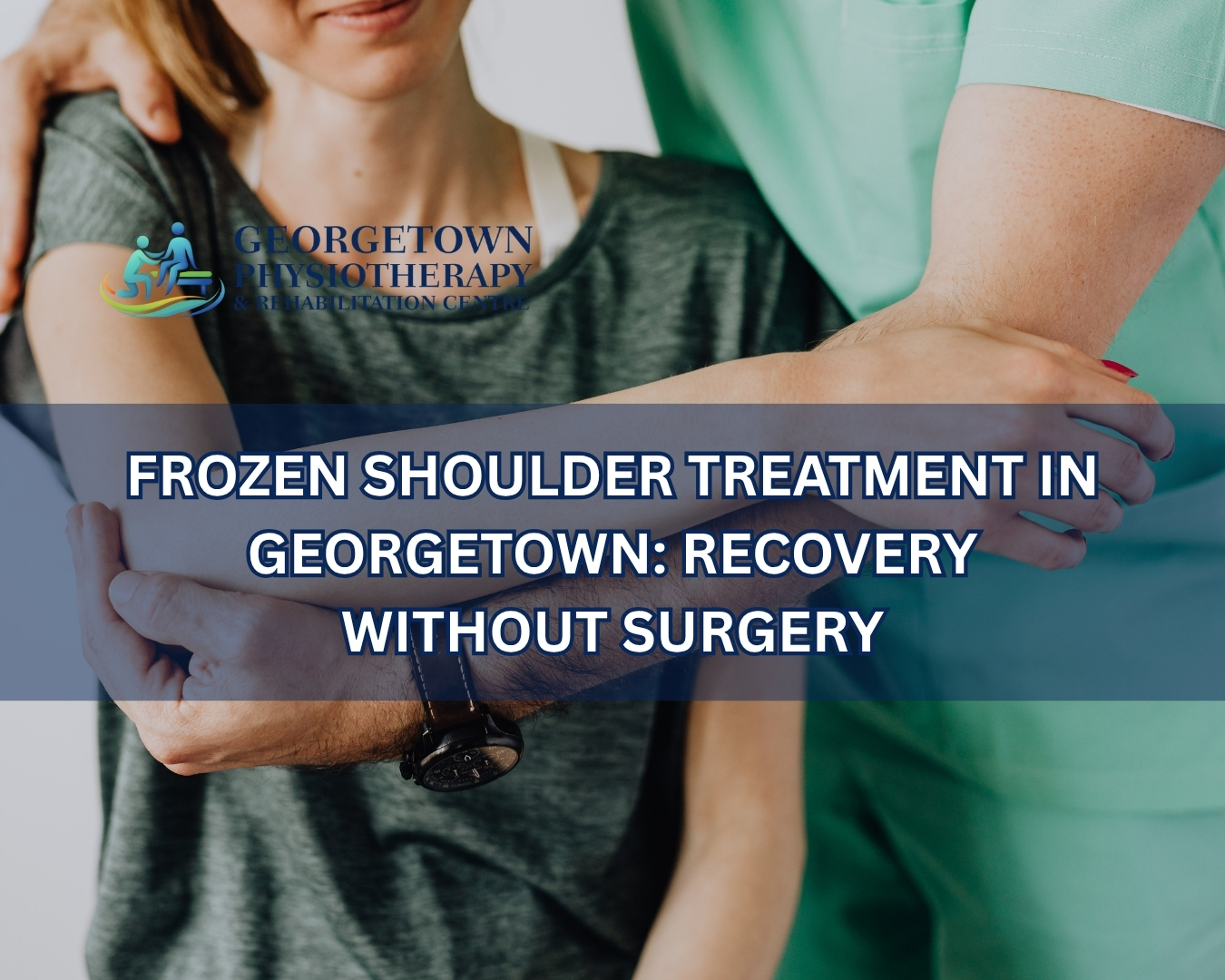
Frozen Shoulder Treatment in Georgetown: Recovery Without Surgery
Experiencing shoulder pain and stiffness can make even the simplest daily activities feel challenging. Tasks such as reaching for a shelf, putting on a jacket, fastening a seatbelt, or sleeping comfortably can become difficult when shoulder movement is restricted. One common condition responsible for these symptoms is frozen shoulder, also known as adhesive capsulitis.
Frozen shoulder is a condition that develops gradually and can significantly affect a person’s quality of life. Many individuals worry that surgery may be necessary to regain movement and relieve pain. Fortunately, most cases of frozen shoulder can be successfully treated through non-surgical approaches, including physiotherapy and rehabilitation.
At Georgetown Physiotherapy & Rehabilitation Centre, we provide personalized frozen shoulder treatment in Georgetown designed to reduce pain, improve mobility, and help patients return to their normal activities without surgery whenever possible.
What Is Frozen Shoulder?
Frozen shoulder, or adhesive capsulitis, is a condition characterized by pain, stiffness, and progressive loss of shoulder movement. It occurs when the connective tissue surrounding the shoulder joint becomes inflamed and thickened, restricting the joint’s ability to move freely.
Unlike many shoulder injuries that occur suddenly, frozen shoulder usually develops gradually over time. Symptoms often worsen slowly before eventually improving with appropriate treatment and rehabilitation.
The condition typically affects one shoulder, although in some cases it may develop in the opposite shoulder later on.
Understanding the Stages of Frozen Shoulder
Frozen shoulder generally progresses through three stages.
Stage 1: Freezing Stage
During the freezing stage, pain gradually increases while shoulder movement becomes more restricted.
Common symptoms include:
- Persistent shoulder pain
- Pain during movement
- Difficulty sleeping on the affected side
- Gradual loss of range of motion
This stage may last several weeks to several months.
Stage 2: Frozen Stage
Pain may begin to decrease during this phase, but stiffness often becomes more severe.
Patients commonly experience:
- Significant movement limitations
- Difficulty performing daily tasks
- Reduced ability to reach overhead
- Restricted shoulder rotation
The frozen stage can last for several months.
Stage 3: Thawing Stage
During the thawing stage, shoulder mobility gradually improves.
Symptoms may include:
- Reduced stiffness
- Improved function
- Increased range of motion
- Gradual return to normal activities
Recovery can take time, but most patients experience meaningful improvement with appropriate treatment.
Common Causes and Risk Factors
The exact cause of frozen shoulder is not always clear, but several factors may increase the likelihood of developing the condition.
Prolonged Shoulder Immobilization
Shoulder movement restrictions following an injury, fracture, or surgery can increase the risk of frozen shoulder.
Diabetes
Individuals with diabetes have a significantly higher risk of developing adhesive capsulitis.
Age
Frozen shoulder is most common among adults between the ages of 40 and 60.
Previous Shoulder Injuries
Rotator cuff injuries and other shoulder conditions may contribute to the development of frozen shoulder.
Medical Conditions
Certain health conditions may increase risk, including:
- Thyroid disorders
- Cardiovascular disease
- Parkinson’s disease
- Stroke-related mobility limitations
Symptoms You Should Not Ignore
Frozen shoulder often develops slowly, making it easy to overlook early symptoms.
Warning signs may include:
Shoulder Pain
Pain often begins gradually and may worsen with movement.
Stiffness
A progressive loss of flexibility is one of the most recognizable signs of frozen shoulder.
Difficulty Reaching Overhead
Many patients struggle to lift their arm above shoulder level.
Limited Rotation
Simple tasks such as fastening a bra, reaching behind the back, or putting on clothing may become difficult.
Sleep Disturbances
Shoulder pain frequently interferes with sleep, particularly when lying on the affected side.
Early treatment may help reduce symptoms and improve recovery outcomes.
How Frozen Shoulder Affects Daily Life
The loss of shoulder mobility can affect many aspects of daily living.
Patients often report difficulty with:
- Dressing
- Grooming
- Driving
- Household chores
- Exercise
- Work-related activities
Over time, compensation patterns may develop as individuals rely more heavily on the unaffected side, potentially leading to additional discomfort in the neck, back, or opposite shoulder.
Can Frozen Shoulder Heal Without Surgery?
One of the most common questions patients ask is whether surgery is necessary.
The encouraging news is that many cases of frozen shoulder respond well to conservative treatment.
Non-surgical rehabilitation often helps:
- Reduce pain
- Improve mobility
- Restore function
- Support natural recovery
While recovery may take time, physiotherapy is widely considered one of the most effective treatment options for managing frozen shoulder and improving shoulder movement.
How Physiotherapy Helps Frozen Shoulder Recovery
At Georgetown Physiotherapy & Rehabilitation Centre, physiotherapy plays a central role in frozen shoulder treatment.
Every rehabilitation program begins with a comprehensive assessment to determine the severity of symptoms and movement restrictions.
Pain Management
Reducing pain helps patients participate more comfortably in rehabilitation exercises.
Treatment strategies may include:
- Gentle mobilization techniques
- Therapeutic exercises
- Stretching programs
- Manual therapy
Improving Range of Motion
Restoring shoulder mobility is one of the primary goals of treatment.
Targeted exercises help improve movement in:
- Forward reaching
- Side reaching
- Overhead activities
- Internal and external rotation
Stretching Tight Structures
Controlled stretching helps address stiffness within the shoulder capsule and surrounding tissues.
Strengthening the Shoulder
As mobility improves, strengthening exercises help restore shoulder stability and function.
Rehabilitation programs are progressed gradually to avoid aggravating symptoms.
Common Physiotherapy Exercises for Frozen Shoulder
Exercise programs are individualized, but may include:
Pendulum Exercises
Gentle swinging movements help maintain mobility while minimizing discomfort.
Wall Crawls
Patients slowly “walk” their fingers up a wall to improve overhead range of motion.
Towel Stretch
This exercise helps improve internal shoulder rotation.
Cross-Body Stretch
A gentle stretch used to improve shoulder flexibility.
A physiotherapist will determine which exercises are appropriate based on the stage of recovery.
Additional Treatments That Support Recovery
A multidisciplinary approach often provides the best results.
Laser Therapy
Laser therapy is a non-invasive treatment that may help reduce inflammation and support tissue healing.
Potential benefits include:
- Pain reduction
- Improved circulation
- Enhanced healing response
- Reduced tissue irritation
Massage Therapy
Massage therapy can help address muscle tension that develops as patients compensate for shoulder stiffness.
Benefits may include:
- Improved circulation
- Reduced muscle tightness
- Enhanced comfort
- Better movement quality
Chiropractic Care
Chiropractic treatment may help improve mobility in surrounding joints and address secondary issues affecting the neck and upper back.
When integrated appropriately, chiropractic care can complement physiotherapy rehabilitation.
What to Expect During Recovery
Recovery from frozen shoulder requires patience and consistency.
Factors influencing recovery include:
- Severity of stiffness
- Duration of symptoms
- Overall health
- Treatment participation
- Home exercise compliance
Many patients notice gradual improvements over several months, although complete recovery may take longer in some cases.
The key is remaining consistent with rehabilitation and following professional guidance.
Tips for Managing Frozen Shoulder at Home
Stay Consistent With Exercises
Regular exercise is often one of the most important components of recovery.
Avoid Complete Immobilization
Keeping the shoulder moving within comfortable limits helps prevent further stiffness.
Maintain Good Posture
Proper posture reduces unnecessary stress on the shoulder and surrounding muscles.
Follow Professional Advice
Progressing exercises too aggressively can increase irritation, while doing too little may slow recovery.
Working closely with a physiotherapist helps ensure safe and effective rehabilitation.
When to Seek Professional Treatment
You should consider professional evaluation if:
- Shoulder pain persists for several weeks
- Range of motion continues to decrease
- Daily activities become difficult
- Sleep is regularly disrupted by shoulder pain
- Home remedies fail to provide relief
Early intervention often improves outcomes and helps prevent worsening stiffness.
Why Choose Georgetown Physiotherapy & Rehabilitation Centre?
At Georgetown Physiotherapy & Rehabilitation Centre, we provide personalized frozen shoulder treatment programs designed to restore movement and improve quality of life.
Our comprehensive services include:
Our approach focuses on:
Every treatment plan is tailored to the patient’s unique condition, goals, and recovery timeline.
Begin Your Recovery Today
Frozen shoulder can be frustrating and limiting, but surgery is not always necessary. With the right treatment plan, many patients achieve significant improvements in pain, mobility, and function through non-surgical rehabilitation.
If you are experiencing shoulder stiffness, restricted movement, or persistent pain, early treatment can help support a smoother recovery process.
Contact our team today to learn more about frozen shoulder treatment in Georgetown and take the first step toward recovery without surgery.
Georgetown Physiotherapy & Rehabilitation Centre
333 Mountainview Rd S, Unit #2
Georgetown, ON L7G 5S5, Canada
Phone: +1 905-702-6633
Website: https://georgetownphysiotherapy.ca/
Email: info@georgetownphysiotherapy.ca