



 Call For Appointment
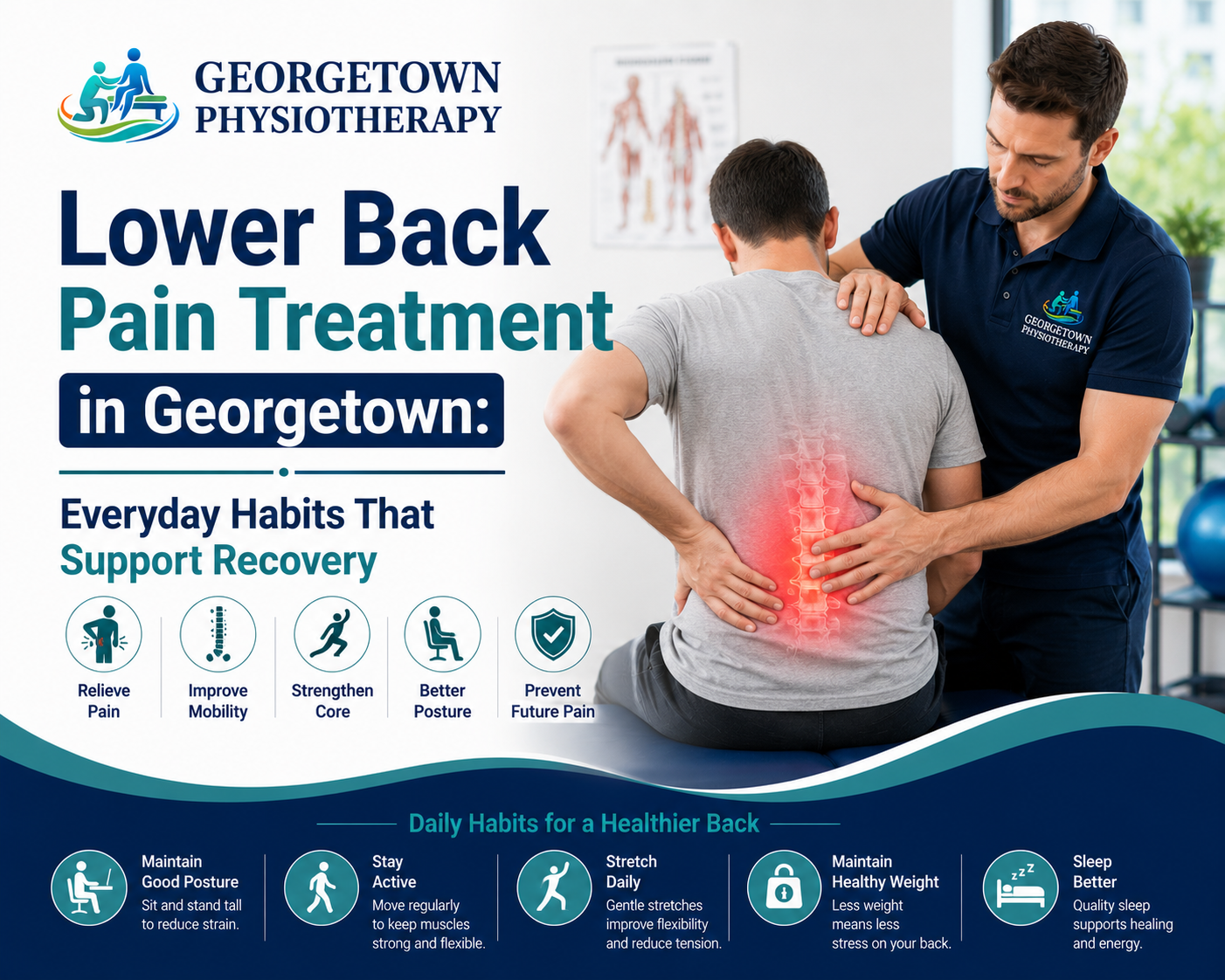
Lower Back Pain Treatment in Georgetown: Everyday Habits That Support Recovery
Lower back pain is one of the most common musculoskeletal conditions affecting people of all ages. Whether it develops from poor posture, heavy lifting, repetitive movements, sports injuries, prolonged sitting, or age-related changes, lower back pain can interfere with work, exercise, sleep, and everyday activities. While many people focus only on temporary pain relief, long-term recovery often depends on combining professional treatment with healthy daily habits.
At Georgetown Physiotherapy & Rehabilitation Centre, lower back pain treatment is designed to address the underlying cause of discomfort rather than simply masking symptoms. Through personalized rehabilitation programs that may include Physiotherapy, Laser Therapy, Massage Therapy, and Chiropractic Care, patients are supported throughout every stage of recovery.
If you’re experiencing persistent lower back pain, adopting simple everyday habits alongside professional care can make a significant difference in reducing pain, improving mobility, and preventing future injuries.
Understanding Lower Back Pain
The lower back, also called the lumbar spine, supports much of your body’s weight while allowing movement and flexibility. Because it is involved in nearly every daily activity—from walking and bending to lifting and sitting—it is particularly vulnerable to injury and strain.
Lower back pain may develop suddenly after an accident or heavy lifting, or it can appear gradually due to repetitive stress, poor posture, or muscle imbalances.
The discomfort may range from a mild ache to sharp, persistent pain that limits movement and affects quality of life.
Common Causes of Lower Back Pain
Several factors can contribute to lower back pain, including:
- Poor posture while sitting or standing
- Muscle strains and ligament sprains
- Herniated or bulging discs
- Sciatica
- Arthritis
- Degenerative disc disease
- Sports injuries
- Workplace injuries
- Motor vehicle accidents
- Weak core muscles
- Repetitive lifting or bending
- Prolonged sitting
Identifying the root cause is essential for developing an effective treatment plan.
Why Daily Habits Matter During Recovery
Professional rehabilitation plays an important role, but your everyday routine also influences how quickly you recover.
Healthy habits help:
- Reduce stress on the spine
- Improve flexibility
- Strengthen supporting muscles
- Reduce inflammation
- Improve posture
- Prevent recurring pain
- Support long-term spinal health
Small, consistent changes often produce lasting improvements over time.
Everyday Habits That Support Lower Back Pain Recovery
1. Maintain Good Posture
Poor posture places unnecessary stress on the muscles, joints, and discs of the lower back.
When sitting:
- Keep both feet flat on the floor.
- Sit with your back supported.
- Avoid slouching.
- Position your computer screen at eye level.
When standing:
- Keep your shoulders relaxed.
- Distribute your weight evenly.
- Avoid locking your knees.
Improving posture throughout the day helps reduce strain on the lumbar spine.
2. Avoid Sitting for Long Periods
Many office workers spend hours sitting without movement, increasing pressure on the lower back.
Try to:
- Stand every 30–60 minutes.
- Walk around the office.
- Stretch gently.
- Change positions frequently.
Regular movement improves circulation and helps prevent stiffness.
3. Stay Physically Active
Although rest may be necessary immediately after an injury, prolonged inactivity often delays recovery.
Low-impact activities such as:
- Walking
- Swimming
- Gentle cycling
- Stretching
can help maintain mobility while supporting healing.
Always follow the recommendations provided by your physiotherapist.
4. Strengthen Your Core
Your abdominal, pelvic, and lower back muscles work together to stabilize the spine.
A physiotherapist may recommend exercises that strengthen:
- Abdominal muscles
- Hip muscles
- Gluteal muscles
- Lower back muscles
A stronger core reduces stress placed on the lumbar spine during everyday activities.
5. Stretch Regularly
Tight muscles in the hips, hamstrings, and lower back often contribute to pain.
Regular stretching helps:
- Improve flexibility
- Increase mobility
- Reduce stiffness
- Improve posture
- Decrease muscle tension
Stretching should always be performed under professional guidance, especially during recovery.
6. Lift Objects Properly
Improper lifting remains one of the leading causes of lower back injuries.
When lifting:
- Bend your knees.
- Keep the object close to your body.
- Avoid twisting.
- Use your legs rather than your back.
Safe lifting techniques help protect the spine.
7. Maintain a Healthy Weight
Excess body weight places additional stress on the lower back.
Maintaining a healthy weight through balanced nutrition and regular activity can reduce strain on spinal structures while improving overall health.
8. Sleep in a Supportive Position
Your sleeping position can influence back pain.
Helpful tips include:
- Sleep on a supportive mattress.
- Place a pillow under your knees when sleeping on your back.
- Place a pillow between your knees when sleeping on your side.
- Avoid sleeping on your stomach if possible.
Proper sleeping posture supports spinal alignment throughout the night.
Professional Treatments That Support Recovery
Healthy habits are most effective when combined with evidence-based rehabilitation.
Physiotherapy
Physiotherapy forms the foundation of most lower back pain treatment plans.
Treatment may include:
- Personalized exercises
- Manual therapy
- Stretching
- Strengthening programs
- Balance training
- Functional movement retraining
- Education on posture and injury prevention
The goal is to restore mobility while addressing the underlying cause of pain.
Laser Therapy
Laser Therapy uses therapeutic light energy to stimulate tissue repair and reduce inflammation.
Potential benefits include:
- Reduced pain
- Faster healing
- Improved circulation
- Better tissue recovery
- Drug-free pain management
Laser Therapy is commonly incorporated into comprehensive rehabilitation plans.
Massage Therapy
Massage Therapy helps reduce muscle tension and improve circulation.
Benefits may include:
- Relaxed muscles
- Improved flexibility
- Reduced stiffness
- Better range of motion
- Improved comfort during rehabilitation
Massage Therapy complements physiotherapy by preparing muscles for movement and exercise.
Chiropractic Care
Chiropractic Care may help improve spinal alignment and joint mobility where appropriate.
Following a detailed assessment, chiropractic treatment may be recommended to support overall rehabilitation and improve movement.
Lower Back Pain After Workplace Injuries
Lower back pain is one of the most common workplace injuries.
Repetitive lifting, prolonged standing, awkward movements, and repetitive tasks frequently contribute to spinal strain.
Through WSIB Physiotherapy, patients receive personalized rehabilitation programs designed to restore function, reduce pain, and support a safe return to work.
Recovering After a Motor Vehicle Accident
Whiplash, lumbar strain, soft tissue injuries, and disc problems are common following motor vehicle accidents.
MVA Injury Care focuses on helping patients regain mobility, reduce pain, and return to daily activities through structured rehabilitation programs.
When Should You Seek Professional Treatment?
You should consult a physiotherapist if:
- Pain lasts longer than a few days.
- Pain spreads into your legs.
- Walking becomes difficult.
- You experience numbness or tingling.
- Daily activities become painful.
- Pain repeatedly returns.
- Home treatments are not providing relief.
Early intervention often leads to faster recovery and better long-term outcomes.
Why Choose Georgetown Physiotherapy & Rehabilitation Centre?
At Georgetown Physiotherapy & Rehabilitation Centre, every patient receives an individualized treatment plan based on a comprehensive assessment and evidence-based rehabilitation.
Services include:
The clinic focuses on helping patients reduce pain, improve strength, restore mobility, and return to their normal activities safely.
Patients from Georgetown, Acton, Glen Williams, Limehouse, Stewarttown, Norval, Halton Hills, and surrounding communities trust the clinic for compassionate care and personalized rehabilitation.
Preventing Future Episodes of Lower Back Pain
Recovery does not stop once the pain disappears.
Continuing with prescribed exercises, maintaining proper posture, staying active, and following healthy movement habits can significantly reduce the likelihood of recurring lower back pain.
Your physiotherapist will provide guidance on long-term strategies that support spinal health and help you stay active for years to come.
Conclusion
Lower back pain can interfere with every aspect of life, but lasting recovery is possible with the right combination of professional care and healthy daily habits. Maintaining good posture, staying active, strengthening your core, stretching regularly, and using proper lifting techniques can all contribute to better spinal health.
At Georgetown Physiotherapy & Rehabilitation Centre, personalized treatment plans combine Physiotherapy, Laser Therapy, Massage Therapy, Chiropractic Care, WSIB Physiotherapy, and MVA Injury Care to help patients recover safely without unnecessary surgery or long-term dependence on medication. If you’re experiencing lower back pain, seeking professional treatment early can help you return to work, sports, and everyday activities with greater confidence.
Contact Georgetown Physiotherapy & Rehabilitation Centre
Georgetown Physiotherapy & Rehabilitation Centre
Address: 333 Mountainview Rd S, Unit #2, Georgetown, ON L7G 5S5, Canada
Phone: +1 905-702-6633
Email: info@georgetownphysiotherapy.ca
Website: https://georgetownphysiotherapy.ca/