



 Call For Appointment
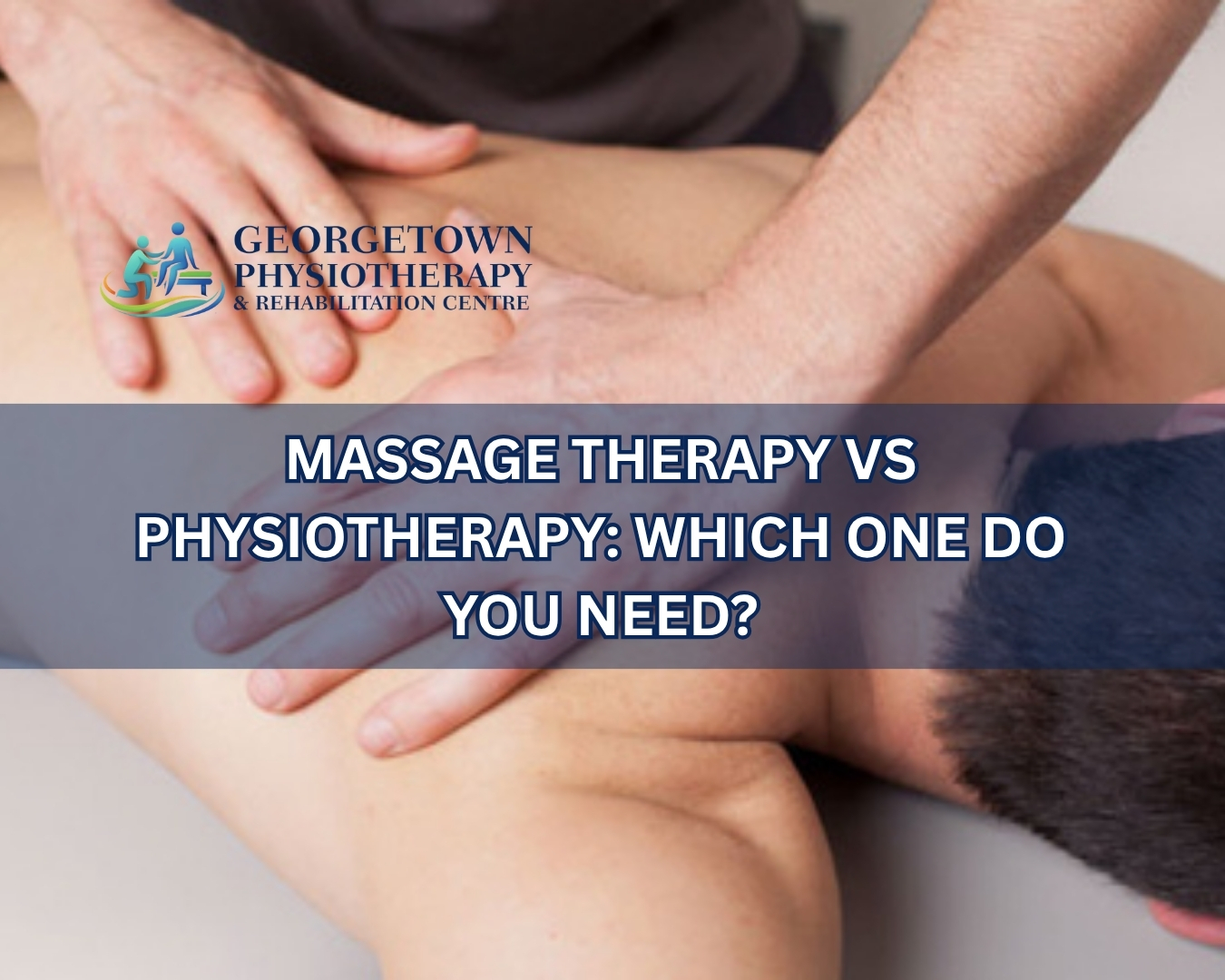
Massage Therapy vs Physiotherapy: Which One Do You Need?
When dealing with pain, muscle tension, stiffness, or injury recovery, many people are unsure whether they should choose massage therapy or physiotherapy. Both treatments are commonly recommended for pain management and rehabilitation, but they serve different purposes and focus on different aspects of recovery.
Many Georgetown residents search for solutions to neck pain, back discomfort, sports injuries, posture-related problems, muscle tightness, and mobility limitations. Understanding the difference between massage therapy and physiotherapy can help patients choose the most appropriate treatment for their specific needs.
In many cases, the best recovery results actually come from combining both therapies as part of a personalized rehabilitation plan.
At Georgetown Physiotherapy & Rehabilitation Centre, patients receive individualized treatment programs that may include physiotherapy, massage therapy, chiropractic care, and rehabilitation exercises depending on their condition and recovery goals.
What Is Physiotherapy?
Physiotherapy focuses on restoring movement, improving physical function, reducing pain, and helping patients recover from injuries or mobility problems.
Physiotherapists assess how muscles, joints, nerves, and movement patterns affect pain and physical performance. Treatment plans are designed to address the root cause of discomfort rather than only relieving symptoms temporarily.
Physiotherapy commonly includes:
- Rehabilitation exercises
- Mobility training
- Strengthening programs
- Stretching exercises
- Manual therapy
- Posture correction
- Balance training
- Functional movement rehabilitation
Physiotherapy is often recommended for both acute injuries and chronic physical conditions.
What Is Massage Therapy?
- Relieve muscle tightness
- Reduce stress
- Improve flexibility
- Improve circulation
- Reduce soreness
- Support recovery from physical strain
Massage therapy is often used as part of rehabilitation programs alongside physiotherapy.
Main Difference Between Physiotherapy and Massage Therapy
The biggest difference is that physiotherapy focuses on restoring movement and physical function, while massage therapy mainly focuses on muscle relaxation and soft tissue treatment.
Physiotherapy Focuses On:
- Injury rehabilitation
- Strength improvement
- Mobility restoration
- Functional recovery
- Posture correction
- Long-term movement improvement
Massage Therapy Focuses On:
- Muscle relaxation
- Stress relief
- Reducing muscle tension
- Improving circulation
- Relaxation and recovery support
Both treatments can be extremely beneficial depending on the patient’s condition.
When Physiotherapy May Be the Better Choice
Physiotherapy is often recommended when there is:
- Injury recovery
- Joint pain
- Reduced mobility
- Muscle weakness
- Balance problems
- Sports injuries
- Post-surgical rehabilitation
- Sciatica
- Chronic movement limitations
Physiotherapy Helps Address the Root Cause
For example, if someone has chronic shoulder pain caused by poor posture and muscle imbalance, physiotherapy helps strengthen weak muscles, improve movement mechanics, and correct posture habits.
Common Conditions Treated with Physiotherapy
Physiotherapy is commonly used for:
- Back pain
- Neck pain
- Sports injuries
- Knee pain
- Shoulder injuries
- Arthritis
- Sciatica
- Workplace injuries
- MVA injuries
- Postural problems
Research supports physiotherapy as an effective rehabilitation approach for many musculoskeletal conditions and mobility limitations.
When Massage Therapy May Be the Better Choice
Massage therapy is often recommended when muscle tension and stress are the main concerns.
Massage Therapy May Help With:
- Tight muscles
- Stress-related tension
- Muscle soreness
- Mild stiffness
- Relaxation support
- Recovery after exercise
Ideal for Muscle Recovery
Athletes and office workers often use massage therapy to reduce muscle fatigue and improve circulation after physical activity or prolonged sitting.
Massage therapy may also help individuals experiencing tension headaches, neck stiffness, and stress-related discomfort.
Can You Combine Physiotherapy and Massage Therapy?
Yes. In fact, combining both therapies often provides better rehabilitation results than using either treatment alone.
Why Combination Therapy Works Well
Physiotherapy helps improve strength, movement, posture, and physical function, while massage therapy helps relax muscles and reduce tension that may interfere with rehabilitation exercises.
Together, they may help:
- Improve mobility faster
- Reduce pain
- Improve flexibility
- Improve circulation
- Reduce muscle tightness
- Improve recovery outcomes
Many rehabilitation clinics use integrated treatment programs to support more complete recovery.
Physiotherapy for Sports Injuries
Athletes often require physiotherapy because sports injuries frequently involve movement dysfunction, instability, and muscle weakness.
Sports physiotherapy may include:
- Strength training
- Mobility exercises
- Balance training
- Injury prevention strategies
- Functional rehabilitation
Massage therapy is often added to reduce muscle soreness and improve recovery speed.
Massage Therapy for Office Workers
Office workers commonly experience muscle tension from prolonged sitting and poor posture.
Massage therapy may help:
- Reduce neck tension
- Relieve shoulder tightness
- Improve relaxation
- Reduce stress
- Improve circulation
However, if posture problems and mobility limitations are contributing to the pain, physiotherapy may still be necessary.
Physiotherapy for Chronic Pain
Chronic pain often requires long-term rehabilitation focused on improving movement and body mechanics.
Physiotherapy may help:
- Improve mobility
- Reduce joint stiffness
- Strengthen supporting muscles
- Improve posture
- Reduce nerve irritation
Massage therapy can support chronic pain recovery by relaxing tight muscles and reducing stress-related tension.
Chiropractic Care and Rehabilitation
Many Georgetown rehabilitation clinics also offer chiropractic care alongside physiotherapy and massage therapy.
Chiropractic care focuses on:
- Spinal alignment
- Joint mobility
- Posture improvement
- Movement restoration
Combining therapies may improve recovery outcomes for some patients.
Laser Therapy and Rehabilitation
- Reduce inflammation
- Improve circulation
- Support tissue healing
- Reduce chronic pain
Integrated rehabilitation plans often provide more comprehensive pain management support.
Which Treatment Is Right for You?
The best treatment depends on the cause of your symptoms and your recovery goals.
You May Benefit More from Physiotherapy If:
- You have an injury
- Movement is limited
- You experience joint pain
- You need rehabilitation
- You have weakness or instability
- You want long-term movement improvement
You May Benefit More from Massage Therapy If:
- You mainly experience muscle tightness
- Stress contributes to pain
- You need relaxation support
- You want recovery after exercise
- You have general muscle soreness
Many Patients Benefit from Both
A professional assessment can help determine the best treatment combination for your condition.
Why Georgetown Residents Choose Georgetown Physiotherapy & Rehabilitation Centre
Many Georgetown residents trust Georgetown Physiotherapy & Rehabilitation Centre for personalized rehabilitation and wellness care.
Services include:
Treatment plans are customized to support pain relief, mobility improvement, injury recovery, and long-term physical wellness.
Final Thoughts
Massage therapy and physiotherapy both play valuable roles in pain management and rehabilitation, but they serve different purposes.
For many patients, combining both therapies provides the best results by improving mobility while reducing muscle tightness and stress.
If you are unsure which treatment is right for your condition, a professional rehabilitation assessment can help guide you toward the most effective recovery plan.
Contact Information
Georgetown Physiotherapy & Rehabilitation Centre
333 Mountainview Rd S, Unit #2, Georgetown, ON L7G 5S5, Canada
Phone: +1 905 702 6633
Email: info@georgetownphysiotherapy.ca
Website: Georgetown Physiotherapy Official Website