
 Call For Appointment
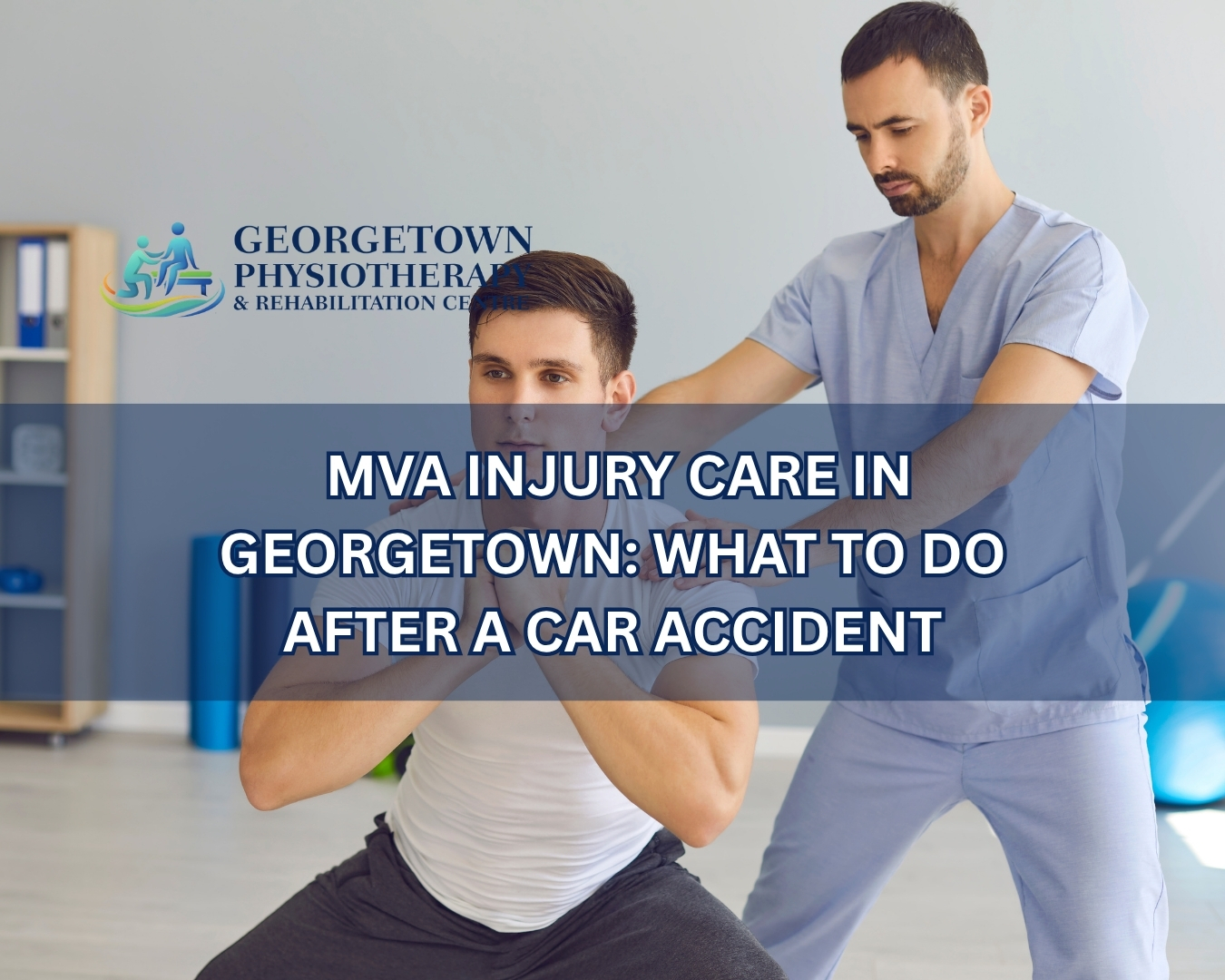
MVA Injury Care in Georgetown: What to Do After a Car Accident
A car accident can happen in seconds, but the physical and emotional effects can last for weeks, months, or even years. Whether it is a minor collision or a more serious crash, injuries sustained during a motor vehicle accident (MVA) can significantly impact your health, mobility, work performance, and quality of life.
Many people walk away from an accident believing they are unharmed, only to experience pain, stiffness, headaches, or mobility issues days later. Seeking professional medical assessment and rehabilitation as early as possible is one of the most important steps you can take after an accident.
At Georgetown Physiotherapy & Rehabilitation Centre, we provide comprehensive MVA injury care in Georgetown, helping accident victims recover safely and regain their strength, mobility, and confidence. Understanding what to do after a car accident can help improve your recovery and reduce the risk of long-term complications.
Why Immediate Action Matters After a Car Accident
After a collision, adrenaline often masks pain and injury symptoms. Even if you feel fine immediately after the accident, underlying injuries may not become noticeable until hours or days later.
Common delayed symptoms include:
- Neck pain and stiffness
- Back pain
- Headaches
- Shoulder pain
- Dizziness
- Muscle soreness
- Numbness or tingling
- Reduced range of motion
Early assessment and treatment can help identify hidden injuries before they worsen. Research and rehabilitation clinics consistently emphasize early intervention for accident-related musculoskeletal injuries to support faster recovery and reduce chronic pain risks.
Step 1: Seek Medical Attention Immediately
Your health should always be the first priority after a motor vehicle accident.
Even if your injuries seem minor, it is important to seek medical evaluation as soon as possible. A healthcare professional can identify injuries that may not be immediately obvious and provide documentation that may be important for insurance claims and rehabilitation programs.
Prompt medical attention can also help prevent untreated injuries from developing into chronic conditions.
Step 2: Report the Accident
After ensuring everyone’s safety, report the accident according to Ontario regulations and contact your insurance provider.
Accurate documentation is important for accessing accident benefits and rehabilitation services.
Keep records of:
- Medical assessments
- Injury symptoms
- Treatment appointments
- Accident reports
- Insurance communications
Having detailed records can help streamline the rehabilitation and claims process.
Step 3: Watch for Common Car Accident Injuries
Motor vehicle accidents can affect nearly every part of the body. Some injuries appear immediately, while others develop gradually.
Whiplash
Whiplash is one of the most common injuries following a rear-end collision.
It occurs when the neck is suddenly forced backward and forward, straining muscles, ligaments, and soft tissues.
Symptoms may include:
- Neck pain
- Stiffness
- Headaches
- Shoulder pain
- Reduced neck mobility
- Dizziness
Without proper treatment, whiplash can become a long-term source of discomfort.
Back Injuries
The force generated during a collision can place significant stress on the spine.
Common back injuries include:
- Muscle strains
- Ligament sprains
- Disc injuries
- Lower back pain
- Sciatic nerve irritation
Physiotherapy can help restore movement and reduce pain while strengthening the supporting muscles of the spine.
Shoulder Injuries
Seatbelts and impact forces often contribute to shoulder injuries during accidents.
Common conditions include:
- Rotator cuff strains
- Shoulder impingement
- Soft tissue injuries
- Joint dysfunction
Early rehabilitation can help restore shoulder mobility and prevent chronic limitations.
Headaches and Concussion Symptoms
Even relatively minor accidents can result in headaches or concussion-related symptoms.
Symptoms may include:
- Persistent headaches
- Dizziness
- Difficulty concentrating
- Sensitivity to light
- Fatigue
Proper assessment is essential to determine the most appropriate rehabilitation approach.
Knee and Joint Injuries
Impact with the dashboard or sudden twisting movements during a collision can cause injuries to the knees, hips, ankles, and other joints.
These injuries can affect mobility and daily activities if left untreated.
Step 4: Start Rehabilitation as Soon as Possible
Many accident victims wait until pain becomes severe before seeking treatment. Unfortunately, delayed care can prolong recovery and increase the risk of chronic pain.
Early rehabilitation helps:
- Reduce inflammation
- Improve mobility
- Restore strength
- Prevent stiffness
- Support tissue healing
- Improve long-term outcomes
Beginning treatment soon after the accident often leads to a faster and more complete recovery. Rehabilitation-focused physiotherapy programs are widely used to address pain, restore movement, and support return to daily activities after motor vehicle injuries.
How Physiotherapy Helps After a Car Accident
Physiotherapy is one of the most effective treatments for motor vehicle accident injuries.
At Georgetown Physiotherapy & Rehabilitation Centre, our physiotherapists create personalized rehabilitation plans based on each patient’s condition, symptoms, and recovery goals.
Pain Management
Pain can limit movement and interfere with daily life.
Physiotherapy techniques help reduce pain through:
- Manual therapy
- Therapeutic exercises
- Soft tissue treatment
- Stretching programs
- Mobility exercises
Restoring Range of Motion
Accident-related injuries often cause stiffness and restricted movement.
Targeted rehabilitation exercises help improve flexibility and restore normal joint function.
Strengthening Injured Areas
Muscles weakened by injury require progressive strengthening to support full recovery.
Customized exercise programs help rebuild strength while reducing reinjury risk.
Improving Functional Movement
The goal of rehabilitation is not only pain relief but also restoring your ability to perform everyday activities comfortably and safely.
Additional MVA Rehabilitation Services
A multidisciplinary approach often provides the most effective results for accident recovery.
At Georgetown Physiotherapy & Rehabilitation Centre, patients may benefit from a combination of rehabilitation services.
Laser Therapy
Laser therapy is a non-invasive treatment designed to stimulate healing and reduce inflammation.
Benefits may include:
- Faster tissue repair
- Reduced pain
- Improved circulation
- Decreased swelling
Laser therapy is commonly used alongside physiotherapy for soft tissue injuries.
Massage Therapy
Motor vehicle accidents often create significant muscle tension and soft tissue restrictions.
Massage therapy can help:
- Relieve muscle tightness
- Improve circulation
- Reduce stress
- Promote relaxation
- Support recovery
Chiropractic Care
Accident-related spinal and joint dysfunction may respond well to chiropractic treatment.
Chiropractic care focuses on restoring proper movement and alignment, helping reduce discomfort and improve function.
Emotional Effects of a Car Accident
Physical injuries are not the only challenge after a collision.
Many accident victims experience:
- Anxiety
- Stress
- Sleep disturbances
- Fear of driving
- Reduced confidence
Recovering physically often helps improve emotional well-being, but addressing both aspects of recovery is important for achieving the best outcome.
Returning to Daily Activities Safely
One of the biggest concerns after an accident is knowing when it is safe to return to normal activities.
Returning too quickly may worsen symptoms or delay healing.
Your rehabilitation team can help guide your recovery and determine when you are ready to:
- Return to work
- Resume exercise
- Drive comfortably
- Perform household tasks
- Participate in recreational activities
Gradual progression helps reduce the risk of reinjury.
Tips for a Successful Recovery After a Car Accident
Follow Your Treatment Plan
Consistency is one of the most important factors in recovery.
Attend scheduled appointments and follow your home exercise program as recommended.
Stay Active Within Your Limits
Gentle movement often supports healing better than prolonged inactivity.
Your physiotherapist will guide you on safe activity levels.
Communicate Your Symptoms
Report any new symptoms or changes in your condition so your treatment plan can be adjusted as needed.
Focus on Long-Term Recovery
Healing takes time. Staying committed to rehabilitation helps improve outcomes and reduce the risk of ongoing problems.
Why Choose Georgetown Physiotherapy & Rehabilitation Centre for MVA Injury Care?
At Georgetown Physiotherapy & Rehabilitation Centre, we understand how disruptive a motor vehicle accident can be.
Our team provides comprehensive rehabilitation services focused on:
- Pain relief
- Injury recovery
- Mobility restoration
- Strength improvement
- Functional rehabilitation
- Long-term wellness
We offer:
- Physiotherapy
- MVA Injury Care
- Laser Therapy
- Massage Therapy
- Chiropractic Care
- Personalized rehabilitation programs
Every treatment plan is tailored to the patient’s unique injuries, goals, and lifestyle needs.
Start Your Recovery Today
If you have recently been involved in a motor vehicle accident, do not ignore pain, stiffness, or mobility limitations. Even seemingly minor symptoms can become more serious if left untreated.
Early assessment and rehabilitation can make a significant difference in your recovery, helping you return to work, daily activities, and the life you enjoy.
Contact our clinic today to learn more about our MVA injury care services in Georgetown and take the first step toward recovery.
Georgetown Physiotherapy & Rehabilitation Centre
333 Mountainview Rd S, Unit #2
Georgetown, ON L7G 5S5, Canada
Phone: +1 905-702-6633
Website: https://georgetownphysiotherapy.ca/
Email: info@georgetownphysiotherapy.ca