




 Call For Appointment
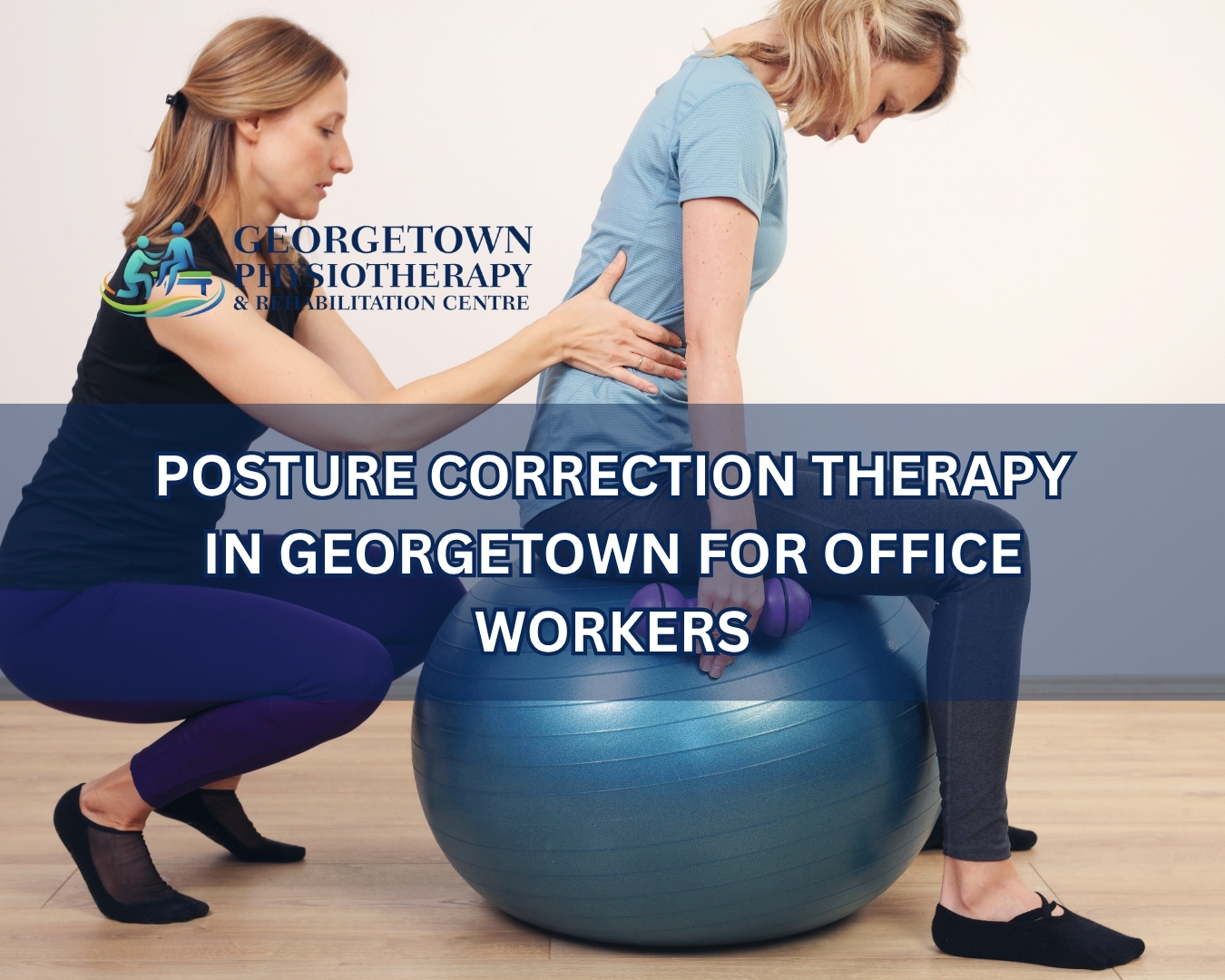
Posture Correction Therapy in Georgetown for Office Workers
Modern office jobs often require employees to spend long hours sitting at desks, working on computers, attending virtual meetings, and using mobile devices throughout the day. While technology has improved productivity, it has also contributed to a growing health concern among office workers: poor posture.
Many people do not realize how much their daily work habits affect their bodies until symptoms begin to appear. What starts as occasional neck stiffness or mild back discomfort can gradually develop into chronic pain, reduced mobility, headaches, muscle tension, and long-term spinal problems.
At Georgetown Physiotherapy & Rehabilitation Centre, we provide posture correction therapy in Georgetown designed to help office workers improve spinal alignment, reduce pain, restore mobility, and prevent future musculoskeletal issues.
Why Poor Posture Is So Common Among Office Workers
Office employees often spend six to ten hours a day sitting in front of screens. Prolonged sitting, combined with poor workstation setup and repetitive movements, places significant stress on the spine, muscles, and joints. Research on workplace ergonomics shows that poor posture, unsupported sitting positions, and extended desk work can contribute to chronic neck, shoulder, and back problems over time.
Common workplace habits that contribute to posture problems include:
- Slouching while sitting
- Leaning forward toward a screen
- Looking down at phones frequently
- Using poorly adjusted chairs
- Lack of movement throughout the workday
- Crossing legs for long periods
- Working on laptops without ergonomic support
Over time, these habits can create muscle imbalances and place excessive strain on the spine and surrounding tissues.
Understanding Poor Posture
Posture refers to the position in which you hold your body while sitting, standing, or moving.
Good posture allows the body’s muscles, joints, and ligaments to work efficiently while maintaining proper spinal alignment.
Poor posture develops when certain muscles become tight and overactive while others become weak and underused.
Common posture problems among office workers include:
Forward Head Posture
Often referred to as “tech neck,” this occurs when the head moves forward beyond its natural alignment.
Looking down at phones and leaning toward computer screens are common causes.
Rounded Shoulders
Rounded shoulders occur when the shoulders roll forward due to prolonged sitting and poor upper-body positioning.
Increased Upper Back Curvature
Extended desk work can contribute to excessive rounding of the upper back, creating tension and stiffness throughout the spine.
Poor Lower Back Support
Improper sitting positions often place excessive stress on the lumbar spine, leading to lower back discomfort and fatigue.
Posture-related spinal imbalances can gradually lead to pain, stiffness, headaches, muscle fatigue, and reduced mobility if left unaddressed.
Warning Signs Your Posture Needs Attention
Many office workers ignore early symptoms until they begin affecting work performance and daily activities.
Some common signs of posture-related problems include:
Persistent Neck Pain
Forward head posture places additional strain on the muscles supporting the neck.
This often results in:
- Neck stiffness
- Muscle tightness
- Reduced range of motion
- Discomfort after computer use
Frequent Headaches
Poor posture can contribute to tension headaches caused by tight neck and shoulder muscles.
Upper Back and Shoulder Pain
Rounded shoulders and prolonged sitting frequently create tension throughout the upper back region.
Lower Back Pain
Sitting for extended periods without proper spinal support can increase pressure on the lower back and surrounding muscles.
Fatigue During the Workday
Poor posture forces muscles to work harder than necessary to support the body.
This increased effort can lead to physical fatigue and reduced productivity.
Reduced Flexibility
Postural imbalances often cause stiffness in the:
- Neck
- Shoulders
- Hips
- Chest
- Lower back
How Poor Posture Affects Long-Term Health
Posture problems are not only about discomfort.
When poor alignment continues for months or years, it can contribute to:
- Chronic neck pain
- Ongoing back pain
- Joint dysfunction
- Muscle imbalances
- Reduced mobility
- Nerve irritation
- Decreased physical performance
Studies examining workplace musculoskeletal disorders have found that ergonomics and posture correction strategies can play an important role in reducing pain and improving physical function among workers.
How Physiotherapy Helps Correct Posture
Physiotherapy is one of the most effective non-surgical approaches for posture correction.
At Georgetown Physiotherapy & Rehabilitation Centre, treatment begins with a detailed assessment to identify the specific factors contributing to poor posture.
Your physiotherapist will evaluate:
- Sitting posture
- Standing alignment
- Muscle strength
- Flexibility
- Joint mobility
- Movement patterns
- Workplace habits
Based on the assessment findings, a personalized treatment plan is created.
Components of Posture Correction Therapy
Postural Assessment and Education
Understanding the root cause of poor posture is an important first step.
Patients learn how daily habits, workstation setup, and movement patterns affect spinal alignment.
Strengthening Weak Muscles
Many posture problems occur because key stabilizing muscles become weak.
Therapeutic exercises often focus on strengthening:
- Core muscles
- Upper back muscles
- Shoulder stabilizers
- Gluteal muscles
Strengthening these areas helps support proper alignment and reduce strain on the spine.
Stretching Tight Muscles
Certain muscles become shortened due to prolonged sitting and poor posture.
Common target areas include:
- Chest muscles
- Neck muscles
- Hip flexors
- Hamstrings
Stretching helps restore flexibility and improve movement patterns.
Manual Therapy
Hands-on treatment techniques may help reduce stiffness and improve mobility.
Manual therapy can include:
- Soft tissue release
- Joint mobilization
- Myofascial techniques
- Stretching assistance
Movement Retraining
Correcting posture requires more than temporary adjustments.
Physiotherapists help retrain movement patterns so proper alignment becomes a natural habit over time.
The Importance of Workplace Ergonomics
One of the most effective ways to prevent posture-related problems is improving workstation ergonomics.
Ergonomics focuses on designing work environments that support healthy body mechanics and reduce strain on muscles and joints.
Proper Screen Position
Your monitor should be positioned at eye level to reduce neck strain.
Chair Support
An ergonomic chair with proper lumbar support helps maintain the natural curve of the lower back.
Keyboard and Mouse Placement
Keeping arms relaxed and elbows at approximately 90 degrees reduces shoulder and wrist tension.
Frequent Movement Breaks
Standing, stretching, and walking briefly throughout the day helps reduce stiffness caused by prolonged sitting.
Experts consistently recommend combining ergonomic improvements with regular movement and posture awareness to reduce workplace discomfort.
Additional Treatments That Support Posture Correction
Massage Therapy
Massage therapy helps relieve muscle tension that often develops due to poor posture.
Benefits may include:
- Reduced stiffness
- Improved circulation
- Muscle relaxation
- Enhanced flexibility
Chiropractic Care
Chiropractic treatment may help improve joint mobility and spinal function in individuals experiencing posture-related discomfort.
Laser Therapy
Laser therapy is a non-invasive treatment that may help reduce inflammation and support tissue healing in areas affected by chronic strain.
Tips for Maintaining Better Posture at Work
Improving posture requires consistent daily habits.
Sit Tall
Keep your ears aligned over your shoulders and avoid slouching forward.
Keep Both Feet Flat on the Floor
Proper foot positioning supports better spinal alignment.
Take Regular Breaks
Standing and moving every 30 to 60 minutes can help reduce muscle fatigue.
Strengthen Your Core
A strong core helps support proper posture throughout the day.
Stretch Frequently
Simple stretches for the neck, chest, shoulders, and hips can reduce tension and improve flexibility.
Be Mindful of Phone Use
Avoid constantly looking down at mobile devices, which contributes to forward head posture.
Benefits of Posture Correction Therapy
Office workers who address posture problems early often experience:
- Reduced neck pain
- Less back discomfort
- Improved mobility
- Better flexibility
- Increased energy levels
- Improved work comfort
- Better productivity
- Reduced risk of chronic pain
Physiotherapy programs focused on posture correction and ergonomic education have been shown to improve body alignment, flexibility, and overall workplace comfort.
Why Choose Georgetown Physiotherapy & Rehabilitation Centre?
At Georgetown Physiotherapy & Rehabilitation Centre, we understand the unique physical demands placed on office workers.
Our personalized rehabilitation programs focus on:
- Posture correction
- Pain relief
- Mobility restoration
- Workplace injury prevention
- Long-term spinal health
We offer comprehensive services including:
- Physiotherapy
- Massage Therapy
- Chiropractic Care
- Laser Therapy
- Ergonomic Guidance
- Personalized Rehabilitation Programs
Every treatment plan is tailored to the individual’s needs, work environment, and recovery goals.
Improve Your Posture and Feel Better Every Day
Poor posture may seem like a minor issue at first, but over time it can affect your health, comfort, productivity, and quality of life. The good news is that posture-related problems can often be corrected with the right treatment and guidance.
If you are experiencing neck pain, back pain, headaches, stiffness, or discomfort related to prolonged desk work, professional posture correction therapy can help restore proper alignment and prevent long-term complications.
Contact our clinic today to learn more about posture correction therapy in Georgetown and take the first step toward better spinal health and workplace comfort.
Georgetown Physiotherapy & Rehabilitation Centre
333 Mountainview Rd S, Unit #2
Georgetown, ON L7G 5S5, Canada
Phone: +1 905-702-6633
Website: https://georgetownphysiotherapy.ca/
Email: info@georgetownphysiotherapy.ca