



 Call For Appointment
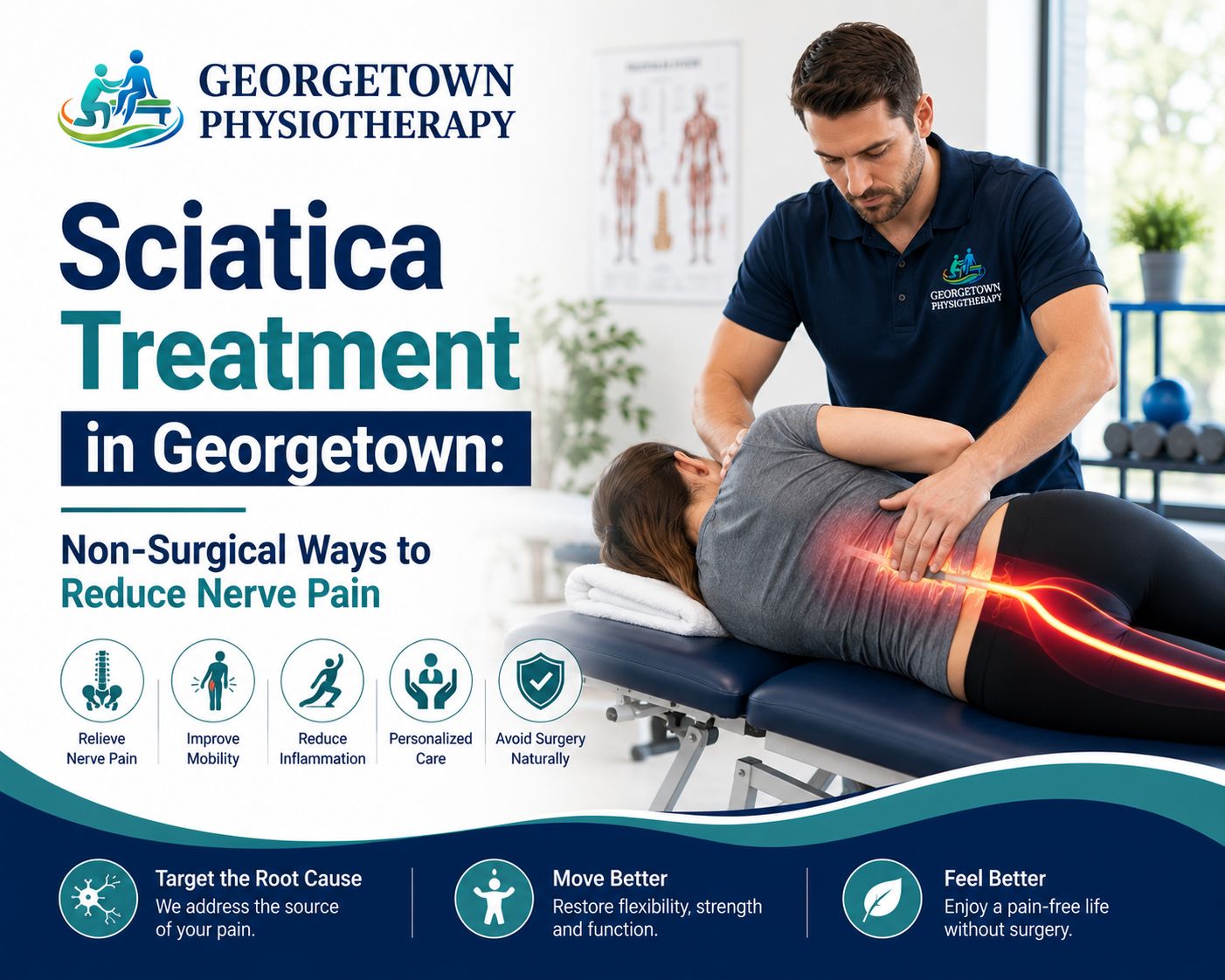
Sciatica Treatment in Georgetown: Non-Surgical Ways to Reduce Nerve Pain
Sciatica is one of the most common causes of lower back and leg pain, affecting people of all ages and activity levels. The sharp, radiating pain, tingling, numbness, or weakness associated with sciatica can make walking, sitting, standing, or even sleeping uncomfortable. While many people assume surgery is the only solution, most cases of sciatica can be successfully managed through conservative, non-surgical treatment.
At Georgetown Physiotherapy & Rehabilitation Centre, personalized rehabilitation programs focus on identifying the underlying cause of sciatica and helping patients reduce pain, restore mobility, and return to daily activities without unnecessary surgery or long-term reliance on medication.
Whether your symptoms developed gradually or appeared suddenly after an injury, early assessment and appropriate treatment can significantly improve recovery and reduce the risk of recurring episodes.
What Is Sciatica?
Sciatica refers to pain caused by irritation or compression of the sciatic nerve, the largest nerve in the body. This nerve begins in the lower spine and travels through the hips, buttocks, and down each leg to the feet.
When the sciatic nerve becomes compressed or inflamed, pain often travels along the path of the nerve instead of remaining only in the lower back.
Sciatica itself is not a medical condition—it is a symptom of an underlying problem affecting the lower spine or surrounding tissues.
Common Symptoms of Sciatica
Symptoms vary from person to person depending on the severity and location of nerve irritation.
Common signs include:
- Sharp or burning pain in the lower back
- Pain radiating into the buttock
- Pain traveling down one leg
- Tingling or “pins and needles”
- Numbness in the leg or foot
- Muscle weakness
- Increased pain while sitting
- Difficulty standing for long periods
- Pain during coughing or sneezing
- Reduced mobility
Some individuals experience mild discomfort, while others find the pain severe enough to interfere with work, exercise, and everyday activities.
What Causes Sciatica?
Several conditions can place pressure on the sciatic nerve.
Common causes include:
Herniated Disc
One of the most frequent causes of sciatica occurs when a spinal disc presses against the nerve.
Degenerative Disc Disease
Age-related wear and tear can reduce disc height and contribute to nerve irritation.
Spinal Stenosis
Narrowing of the spinal canal may compress nerves traveling through the lower back.
Piriformis Syndrome
A tight or inflamed piriformis muscle can irritate the sciatic nerve as it passes through the buttock.
Workplace Injuries
Heavy lifting, repetitive bending, prolonged sitting, or awkward movements can contribute to lower back injuries leading to sciatica.
Motor Vehicle Accidents
Sudden trauma from a collision may result in disc injuries or muscle inflammation affecting the sciatic nerve.
Why Early Treatment Matters
Ignoring sciatica often leads to prolonged pain, reduced mobility, muscle weakness, and difficulty performing everyday activities.
Early treatment helps:
- Reduce nerve irritation
- Improve mobility
- Prevent worsening symptoms
- Restore muscle strength
- Improve posture
- Reduce inflammation
- Minimize future flare-ups
Seeking professional care early can also reduce the likelihood of chronic pain developing.
Non-Surgical Treatments for Sciatica
Most patients improve with conservative care when treatment is tailored to the underlying cause of their symptoms.
Physiotherapy
Physiotherapy is considered one of the most effective non-surgical treatments for sciatica.
A physiotherapist performs a comprehensive assessment to identify movement limitations, muscle imbalances, posture issues, and the likely source of nerve irritation.
Treatment may include:
- Stretching exercises
- Core strengthening
- Mobility training
- Balance exercises
- Functional movement retraining
- Posture correction
- Walking programs
- Home exercise plans
Rather than simply reducing pain, physiotherapy focuses on correcting the mechanical causes contributing to sciatica.
Laser Therapy
Laser Therapy uses concentrated light energy to stimulate tissue healing and reduce inflammation around irritated nerves and soft tissues.
Benefits may include:
- Reduced inflammation
- Improved circulation
- Faster tissue healing
- Natural pain relief
- Improved comfort during rehabilitation
Laser Therapy is completely non-invasive and is often incorporated into a comprehensive rehabilitation program.
Chiropractic Care
When appropriate, Chiropractic Care may help improve spinal mobility and joint function.
Restoring normal movement in the spine can reduce stress placed on surrounding muscles and nerves while supporting overall rehabilitation.
Every patient receives an individualized assessment before chiropractic treatment is recommended.
Massage Therapy
Muscle tension often contributes to sciatica symptoms.
Massage Therapy may help:
- Relax tight muscles
- Improve circulation
- Reduce muscle spasms
- Improve flexibility
- Support rehabilitation exercises
Massage Therapy is commonly combined with Physiotherapy for optimal recovery.
Exercise Is an Important Part of Recovery
Many patients worry that movement will worsen their pain.
In reality, prolonged bed rest often delays recovery.
Your physiotherapist may recommend exercises designed to:
- Improve spinal mobility
- Strengthen core muscles
- Increase flexibility
- Improve posture
- Reduce nerve irritation
- Improve walking mechanics
Every exercise program is customized according to your symptoms and recovery stage.
Lifestyle Changes That Support Recovery
Simple daily habits can make a significant difference.
Helpful strategies include:
- Avoid sitting for long periods
- Maintain proper posture
- Lift objects safely
- Stay physically active
- Stretch regularly
- Sleep on a supportive mattress
- Maintain a healthy body weight
- Strengthen core muscles
These changes help reduce stress on the lower back and decrease the likelihood of recurring sciatica.
Sciatica Following Workplace or Motor Vehicle Injuries
Sciatica commonly develops after injuries involving the lower back.
WSIB Physiotherapy
Patients recovering from workplace injuries often experience disc irritation, muscle strains, or repetitive stress injuries that contribute to sciatica.
Comprehensive rehabilitation focuses on restoring movement while preparing patients for a safe return to work.
MVA Injury Care
Motor vehicle accidents frequently cause whiplash, lumbar strain, and disc injuries that may lead to sciatic nerve pain.
Individualized rehabilitation programs help patients recover safely while reducing long-term complications.
When Should You See a Physiotherapist?
You should seek professional assessment if:
- Pain lasts longer than a few days
- Leg pain becomes worse
- Walking becomes difficult
- You experience numbness or tingling
- Symptoms repeatedly return
- Pain interferes with work or sleep
- Home remedies are not helping
Early diagnosis allows treatment to begin before symptoms become more severe.
Why Choose Georgetown Physiotherapy & Rehabilitation Centre?
At Georgetown Physiotherapy & Rehabilitation Centre, every rehabilitation program begins with a thorough assessment to determine the underlying cause of your symptoms.
The clinic offers:
- Physiotherapy
- Laser Therapy
- Massage Therapy
- Chiropractic Care
- WSIB Physiotherapy
- MVA Injury Care
- Individualized rehabilitation plans
- Evidence-based treatment
Rather than focusing only on symptom relief, treatment addresses the root cause of pain to improve long-term function and reduce future flare-ups.
Patients from Georgetown, Acton, Glen Williams, Limehouse, Stewarttown, Norval, Halton Hills, and surrounding communities trust the clinic for personalized rehabilitation and compassionate care.
Preventing Future Sciatica Episodes
Recovery does not end when the pain disappears.
Long-term success depends on maintaining healthy movement habits, staying active, strengthening supporting muscles, and addressing posture or workplace ergonomics.
Your physiotherapist will provide education and exercises designed to help reduce the likelihood of future sciatica episodes while supporting overall spinal health.
Conclusion
Sciatica can make everyday life difficult, but surgery is not the answer for most people. With early assessment and personalized rehabilitation, many patients experience significant improvement through conservative treatment.
At Georgetown Physiotherapy & Rehabilitation Centre, comprehensive care may include Physiotherapy, Laser Therapy, Massage Therapy, Chiropractic Care, WSIB Physiotherapy, and MVA Injury Care to help reduce nerve pain, restore mobility, and improve quality of life. If you’re experiencing pain that travels from your lower back into your leg, seeking professional treatment early can help you recover safely and return to the activities you enjoy.
Contact Georgetown Physiotherapy & Rehabilitation Centre
Georgetown Physiotherapy & Rehabilitation Centre
Address: 333 Mountainview Rd S, Unit #2, Georgetown, ON L7G 5S5, Canada
Phone: +1 905-702-6633
Email: info@georgetownphysiotherapy.ca
Website: https://georgetownphysiotherapy.ca/
If you’re experiencing sciatica, lower back pain, or nerve-related discomfort, contact Georgetown Physiotherapy & Rehabilitation Centre to learn how personalized, non-surgical treatment can help you find lasting relief and get back to living an active, pain-free life