



 Call For Appointment
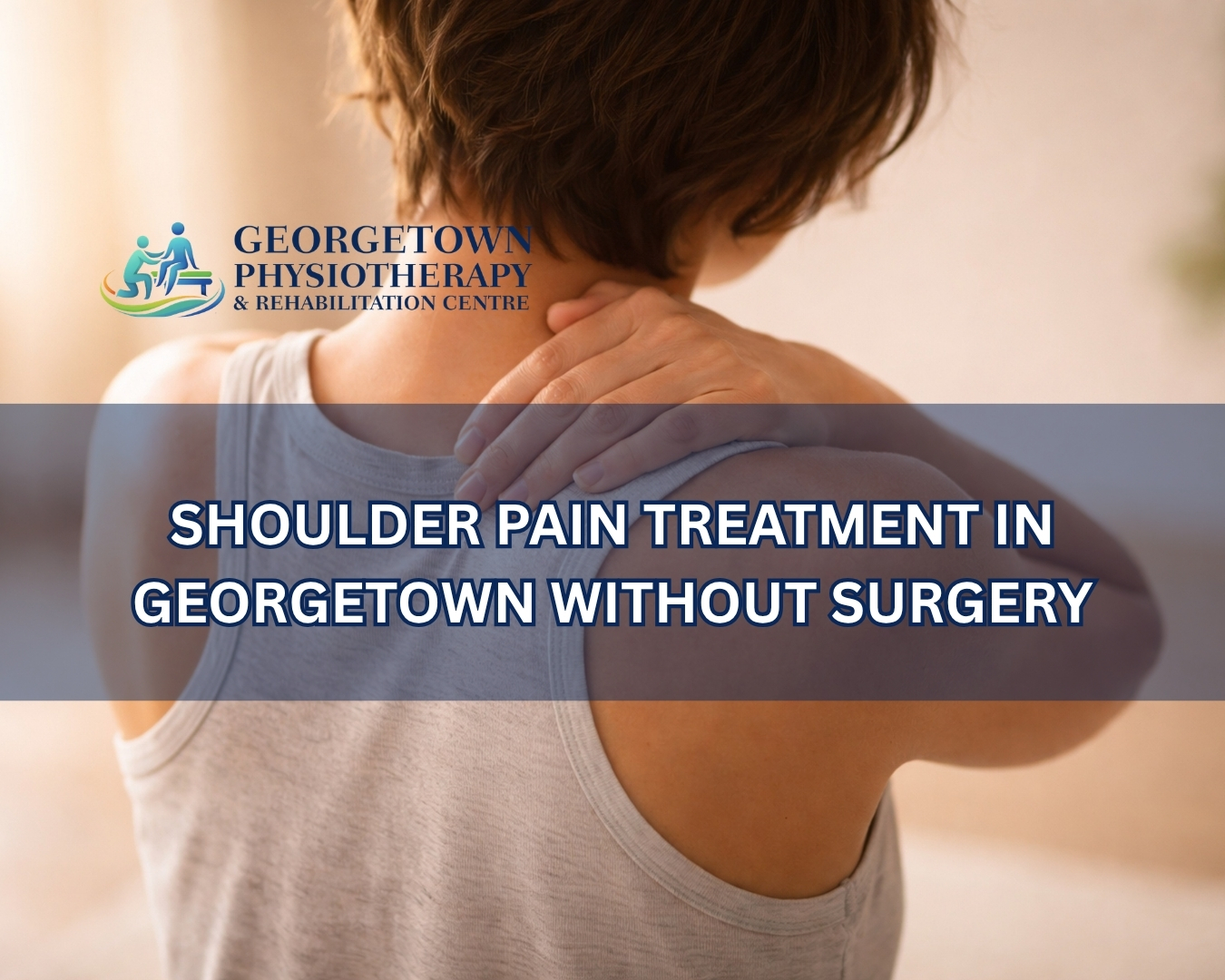
Shoulder Pain Treatment in Georgetown Without Surgery
Shoulder pain is one of the most common musculoskeletal problems affecting adults of all ages. Whether it develops gradually from repetitive movements or occurs suddenly after an injury, shoulder pain can make everyday activities difficult and uncomfortable. Simple tasks such as reaching overhead, lifting groceries, driving, getting dressed, or even sleeping can become challenging when shoulder discomfort is present.
Many people worry that persistent shoulder pain automatically means surgery is necessary. However, in many cases, non-surgical treatment options can successfully reduce pain, restore movement, and improve shoulder function without the need for invasive procedures. Conservative approaches such as physiotherapy are often recommended as a first-line treatment for many shoulder conditions before surgery is considered.
At Georgetown Physiotherapy & Rehabilitation Centre, we provide personalized shoulder pain treatment in Georgetown designed to help patients recover safely, improve mobility, and return to their daily activities with confidence.
Understanding Shoulder Pain
The shoulder is one of the most mobile joints in the human body. Its complex structure allows a wide range of movement, but this flexibility also makes it vulnerable to injury and dysfunction.
The shoulder consists of:
When any of these structures become injured, inflamed, irritated, or overworked, shoulder pain can develop.
Common Causes of Shoulder Pain
There are many possible causes of shoulder discomfort.
Rotator Cuff Injuries
The rotator cuff is a group of muscles and tendons that stabilize the shoulder joint.
Common rotator cuff problems include:
These injuries frequently occur in athletes, tradespeople, and individuals performing repetitive overhead activities.
Frozen Shoulder
Frozen shoulder, also known as adhesive capsulitis, causes progressive stiffness and pain in the shoulder joint.
Patients often experience:
- Reduced range of motion
- Difficulty reaching overhead
- Pain during daily activities
- Sleep disturbances
Targeted physiotherapy and stretching programs are commonly used to improve mobility and function.
Shoulder Impingement
Shoulder impingement occurs when tendons or soft tissues become compressed during arm movement.
Symptoms often include:
- Pain when lifting the arm
- Weakness
- Reduced mobility
- Discomfort during overhead activities
Tendonitis and Bursitis
Inflammation of the tendons or bursae around the shoulder can cause significant pain and movement restrictions.
Conservative treatments such as physiotherapy, manual therapy, and rehabilitation exercises are commonly recommended.
Postural Problems
Poor posture, especially among office workers, can place excessive strain on the shoulder and upper back muscles.
Forward head posture and rounded shoulders often contribute to chronic shoulder discomfort.
Sports and Workplace Injuries
Repetitive lifting, throwing, pushing, pulling, or physically demanding work can increase the risk of shoulder injuries over time.
Signs You Should Not Ignore
Many people wait too long before seeking treatment, assuming the pain will disappear on its own.
You should consider professional assessment if you experience:
Persistent Pain
Pain lasting several weeks without improvement may indicate an underlying issue that requires treatment.
Difficulty Lifting the Arm
Limited shoulder mobility can affect daily activities and may worsen if left untreated.
Weakness
Loss of strength may suggest tendon involvement, nerve irritation, or muscle dysfunction.
Pain While Sleeping
Many shoulder conditions become more noticeable at night, especially when lying on the affected side.
Clicking or Catching Sensations
Unusual shoulder movements may indicate joint dysfunction or soft tissue irritation.
Reduced Range of Motion
Difficulty reaching overhead, behind the back, or across the body may signal a developing shoulder condition.
Why Non-Surgical Treatment Is Often Effective
Many shoulder conditions respond well to conservative rehabilitation.
Research comparing surgery and exercise-based rehabilitation for certain shoulder problems has shown that structured physiotherapy programs can often provide similar long-term improvements without the risks and recovery time associated with surgery.
Non-surgical treatment offers several advantages:
- Lower risk of complications
- No surgical recovery period
- Improved natural healing
- Better movement restoration
- Reduced inflammation
- Long-term injury prevention
The goal is not simply to relieve pain but to address the underlying cause of the problem.
How Physiotherapy Helps Shoulder Pain
Physiotherapy is one of the most effective non-surgical approaches for treating shoulder pain.
At Georgetown Physiotherapy & Rehabilitation Centre, treatment begins with a detailed assessment to identify the root cause of symptoms.
Your physiotherapist will evaluate:
- Range of motion
- Strength
- Joint mobility
- Posture
- Movement patterns
- Functional limitations
A personalized rehabilitation plan is then created based on your specific condition and goals.
Pain Relief Techniques
Treatment may include:
- Manual therapy
- Soft tissue treatment
- Mobility exercises
- Stretching programs
- Joint mobilization
These techniques help reduce discomfort while improving movement.
Strengthening Exercises
Weak shoulder muscles can contribute to ongoing instability and pain.
Physiotherapy programs often include exercises targeting:
- Rotator cuff muscles
- Shoulder stabilizers
- Upper back muscles
- Core muscles
Strengthening helps support the joint and reduce future injury risk.
Flexibility and Mobility Training
Restricted movement is a common issue among patients with shoulder pain.
Stretching exercises can help improve:
- Flexibility
- Joint mobility
- Functional movement
- Daily comfort
Therapeutic stretching programs are widely used to improve shoulder range of motion and reduce stiffness.
Postural Correction
Many shoulder problems are linked to poor posture and movement habits.
Physiotherapists provide guidance on:
- Sitting posture
- Workstation setup
- Lifting mechanics
- Movement patterns
Addressing posture can significantly reduce strain on the shoulder joint.
Additional Non-Surgical Treatments for Shoulder Pain
A multidisciplinary approach often provides the best outcomes.
Laser Therapy
Laser therapy is a non-invasive treatment designed to stimulate healing and reduce inflammation.
Benefits may include:
- Pain reduction
- Improved circulation
- Faster tissue repair
- Reduced swelling
Massage Therapy
Massage therapy can help relieve muscle tightness and improve mobility around the shoulder complex.
It may be particularly beneficial for:
- Muscle tension
- Overuse injuries
- Postural strain
- Chronic discomfort
Chiropractic Care
Chiropractic treatment may help improve joint mobility and restore proper movement patterns in the shoulder, neck, and upper back.
When combined with physiotherapy, chiropractic care can support overall recovery and function.
Home Strategies That Support Recovery
In addition to professional treatment, certain lifestyle habits can support shoulder healing.
Stay Active Within Your Limits
Complete inactivity can sometimes worsen stiffness.
Gentle movement often helps maintain flexibility and circulation.
Follow Your Exercise Program
Consistency is one of the most important factors in rehabilitation success.
Improve Workplace Ergonomics
Proper desk setup can reduce unnecessary shoulder strain.
Avoid Repetitive Overhead Activities
Temporarily reducing aggravating movements may allow tissues to heal more effectively.
Practice Good Posture
Maintaining proper alignment reduces stress on the shoulder and upper back.
When Surgery May Be Necessary
Although many shoulder conditions improve with conservative care, some situations may require surgical consultation.
Examples may include:
- Severe tendon tears
- Significant joint damage
- Recurrent shoulder dislocations
- Conditions that fail to improve after extensive rehabilitation
However, for many individuals, non-surgical treatment remains the preferred first approach.
Why Choose Georgetown Physiotherapy & Rehabilitation Centre?
At Georgetown Physiotherapy & Rehabilitation Centre, we focus on helping patients achieve lasting shoulder pain relief through personalized, evidence-based treatment programs.
Our comprehensive services include:
Our treatment approach focuses on:
- Reducing pain
- Improving mobility
- Restoring strength
- Correcting movement dysfunction
- Preventing future injuries
Every rehabilitation plan is tailored to the individual’s condition, lifestyle, and recovery goals.
Start Your Recovery Without Surgery
Shoulder pain can affect every aspect of daily life, from work and exercise to sleep and simple household activities. The good news is that surgery is not always necessary.
With early intervention and the right rehabilitation program, many shoulder conditions can improve significantly through physiotherapy and other non-invasive treatments.
If you are experiencing shoulder pain, stiffness, weakness, or reduced mobility, seeking professional treatment early can help prevent the problem from becoming more severe.
Contact our clinic today to learn more about shoulder pain treatment in Georgetown and begin your journey toward lasting recovery.
Georgetown Physiotherapy & Rehabilitation Centre
333 Mountainview Rd S, Unit #2
Georgetown, ON L7G 5S5, Canada
Phone: +1 905-702-6633
Website: https://georgetownphysiotherapy.ca/
Email: info@georgetownphysiotherapy.ca