



 Call For Appointment
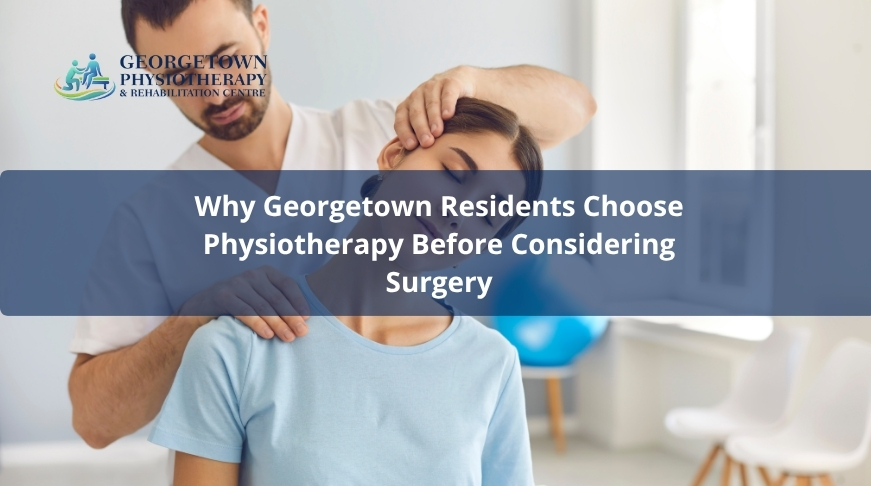
Why Georgetown Residents Choose Physiotherapy Before Considering Surgery
When pain begins to interfere with everyday life, it’s natural to wonder whether surgery is the only solution. Whether you’re dealing with chronic back pain, a shoulder injury, knee discomfort, neck stiffness, or a sports-related condition, the thought of surgery can feel overwhelming. Fortunately, many musculoskeletal conditions can often be managed with conservative treatments such as physiotherapy before surgery is considered, depending on the diagnosis and individual circumstances.
Physiotherapy focuses on improving how your body moves, identifying the underlying causes of pain, restoring strength and mobility, and helping you return to the activities you enjoy. For many people, it offers an effective first step before exploring more invasive treatment options.
At Georgetown Physiotherapy & Rehabilitation Centre, our team provides individualized, evidence-informed rehabilitation plans that support recovery through active treatment, education, and personalized care. When appropriate, physiotherapy may help patients improve function, reduce pain, and, in some cases, delay or avoid surgery.
Why Conservative Treatment Comes First
For many orthopedic and musculoskeletal conditions, healthcare providers recommend trying conservative care before surgery whenever it is clinically appropriate.
This approach may include:
- Physiotherapy
- Therapeutic exercise
- Manual therapy
- Education
- Activity modification
- Home exercise programs
- Lifestyle recommendations
- Pain management strategies
Clinical practice guidelines for many common conditions—including non-specific low back pain and knee osteoarthritis—support conservative management as an important first-line treatment before considering surgical intervention in appropriate cases.
The goal is not simply to postpone surgery but to determine whether symptoms can improve through rehabilitation while restoring function and quality of life.
Conditions That May Benefit From Physiotherapy Before Surgery
Every condition is different, and surgery is sometimes the most appropriate treatment. However, physiotherapy may play an important role before surgery for many musculoskeletal problems, including:
Back Pain
Many episodes of mechanical back pain improve with evidence-informed physiotherapy, strengthening exercises, movement education, and activity progression.
Physiotherapy may help:
- Improve spinal mobility
- Reduce movement-related pain
- Restore strength
- Improve flexibility
- Support everyday function
Neck Pain
Neck pain associated with posture, repetitive work, muscle tension, or movement restrictions often responds well to conservative rehabilitation.
Treatment may include:
Knee Pain
Conditions such as early osteoarthritis, patellofemoral pain, tendon-related pain, and some meniscal conditions may improve with individualized physiotherapy.
Rehabilitation often focuses on:
- Strengthening
- Balance
- Mobility
- Functional training
- Activity modification
Shoulder Pain
Many shoulder conditions—including rotator cuff-related pain, frozen shoulder, and shoulder impingement—may benefit from physiotherapy before surgery is considered.
Treatment focuses on restoring movement, improving strength, reducing pain, and gradually returning patients to daily activities.
Sports Injuries
Athletes frequently recover from sprains, strains, tendon injuries, and overuse conditions without surgery through progressive rehabilitation and sport-specific exercise programs.
How Physiotherapy Works
Physiotherapy is not simply about relieving symptoms.
The primary goal is to improve how your body functions while addressing the factors contributing to pain.
Following a comprehensive assessment, your physiotherapist develops an individualized rehabilitation plan that may include:
- Therapeutic exercise
- Manual therapy
- Stretching
- Strength training
- Balance training
- Movement education
- Functional rehabilitation
- Home exercise programs
- Laser therapy where appropriate
- Shockwave therapy when clinically indicated
Treatment plans evolve as you recover and are adjusted according to your progress and goals.
Benefits of Trying Physiotherapy Before Surgery
1. Non-Invasive Treatment
Physiotherapy does not involve surgery, incisions, or anesthesia. Many patients appreciate beginning with a treatment approach that supports recovery through movement and rehabilitation.
2. Individualized Care
No two patients have identical symptoms or goals.
Your physiotherapist develops a personalized treatment plan based on:
- Medical history
- Functional limitations
- Occupation
- Activity level
- Physical assessment
- Recovery goals
3. Improved Strength and Mobility
Pain often leads to reduced movement, which may contribute to weakness and stiffness.
Physiotherapy helps rebuild:
- Muscle strength
- Joint mobility
- Balance
- Coordination
- Functional movement
4. Better Long-Term Outcomes
Even if surgery eventually becomes necessary, entering surgery with better strength, mobility, and physical conditioning may contribute to improved postoperative recovery for many patients.
This concept is often called prehabilitation, where physiotherapy prepares the body before surgery.
5. Education and Self-Management
Physiotherapy teaches patients how to manage their condition independently.
You may learn:
- Safe lifting techniques
- Exercise progression
- Workplace strategies
- Posture and movement education
- Activity modification
- Injury prevention
These skills continue to provide value long after formal treatment ends.
Can Physiotherapy Help You Avoid Surgery?
The answer depends on your diagnosis.
Some musculoskeletal conditions respond very well to conservative rehabilitation, while others eventually require orthopedic consultation or surgery.
Physiotherapy should never be viewed as a guarantee that surgery can always be avoided.
Instead, it offers an evidence-informed opportunity to improve symptoms, restore function, and determine whether conservative treatment is sufficient before moving toward more invasive options.
A thorough assessment by your healthcare provider helps determine the most appropriate treatment pathway.
When Surgery May Still Be Necessary
There are situations where surgery may be the recommended option.
Examples may include:
- Certain fractures
- Complete tendon ruptures
- Significant ligament injuries
- Severe structural joint damage
- Progressive neurological symptoms
- Conditions that do not improve with appropriate conservative management
Even in these cases, physiotherapy often remains valuable before and after surgery.
The Role of Prehabilitation
Many patients are unfamiliar with the concept of prehabilitation.
Prehabilitation involves improving your physical condition before surgery through targeted exercise and rehabilitation.
Goals may include:
- Improving strength
- Enhancing mobility
- Increasing endurance
- Improving confidence
- Preparing for postoperative recovery
Research suggests that patients who participate in prehabilitation may experience better functional recovery after certain orthopedic procedures.
What to Expect During Your First Physiotherapy Appointment
Your first visit typically includes:
- Discussion of your symptoms
- Medical history review
- Functional assessment
- Movement analysis
- Strength testing
- Mobility assessment
- Goal setting
Based on these findings, your physiotherapist develops an individualized rehabilitation plan designed around your needs rather than following a standard protocol.
Common Misconceptions
“Pain Always Means Surgery”
Not necessarily.
Many painful musculoskeletal conditions improve with conservative treatment.
“Rest Is the Best Treatment”
For many conditions, prolonged inactivity may delay recovery.
Appropriate movement is often an important part of rehabilitation.
“Exercises Will Make Things Worse”
Exercises prescribed by a physiotherapist are selected according to your diagnosis, current abilities, and recovery goals.
They are progressed gradually and modified when needed.
“Surgery Provides an Instant Solution”
Surgery often requires rehabilitation afterward.
Physiotherapy frequently plays an important role both before and after surgical procedures.
Frequently Asked Questions
Should I try physiotherapy before surgery?
Many healthcare providers recommend conservative rehabilitation before surgery for appropriate musculoskeletal conditions. However, the most suitable treatment depends on your diagnosis and professional assessment.
Can physiotherapy completely eliminate pain?
Results vary. Physiotherapy aims to improve function, reduce pain where possible, and help patients achieve meaningful recovery, but outcomes differ between individuals.
How long should I try physiotherapy?
The appropriate duration depends on your condition, progress, and treatment goals. Your physiotherapist will monitor your recovery and discuss whether your current plan remains appropriate.
Can physiotherapy help arthritis?
Physiotherapy may help improve mobility, strength, function, and symptom management for many people living with osteoarthritis.
Will I still need surgery later?
Some people improve enough that surgery is no longer immediately necessary, while others eventually require surgical treatment. A thorough assessment helps guide decision-making.
Is physiotherapy safe?
Physiotherapy is generally considered a safe, evidence-informed treatment when delivered by qualified healthcare professionals following an appropriate assessment.
Why Choose Georgetown Physiotherapy & Rehabilitation Centre?
At Georgetown Physiotherapy & Rehabilitation Centre, we believe that every patient deserves an individualized treatment plan based on their specific condition, lifestyle, and goals.
Our experienced team combines comprehensive assessments with evidence-informed treatments such as physiotherapy, therapeutic exercise, manual therapy, laser therapy, shockwave therapy, massage therapy, and chiropractic care when clinically appropriate.
Whether your goal is returning to work, staying active, managing chronic pain, or preparing for surgery, we work with you to develop a personalized rehabilitation strategy focused on long-term function and quality of life.
Georgetown Physiotherapy & Rehabilitation Centre
Address: 333 Mountainview Rd S, Unit #2, Georgetown, ON L7G 5S5, Canada
Phone: +1 905-702-6633
Email: info@georgetownphysiotherapy.ca
Website: https://georgetownphysiotherapy.ca/
Take the First Step Toward Better Movement
Choosing physiotherapy before considering surgery allows many people to explore a conservative, evidence-informed approach to managing pain and improving function.
While surgery remains an important treatment option for some conditions, it is not always the first or only solution.
If you are experiencing back pain, neck pain, shoulder pain, knee pain, arthritis, or a sports injury, schedule an assessment with Georgetown Physiotherapy & Rehabilitation Centre. Our team will evaluate your condition, discuss your goals, and create a personalized rehabilitation plan designed to help you move better, feel stronger, and return to the activities you enjoy with confidence.