



 Call For Appointment
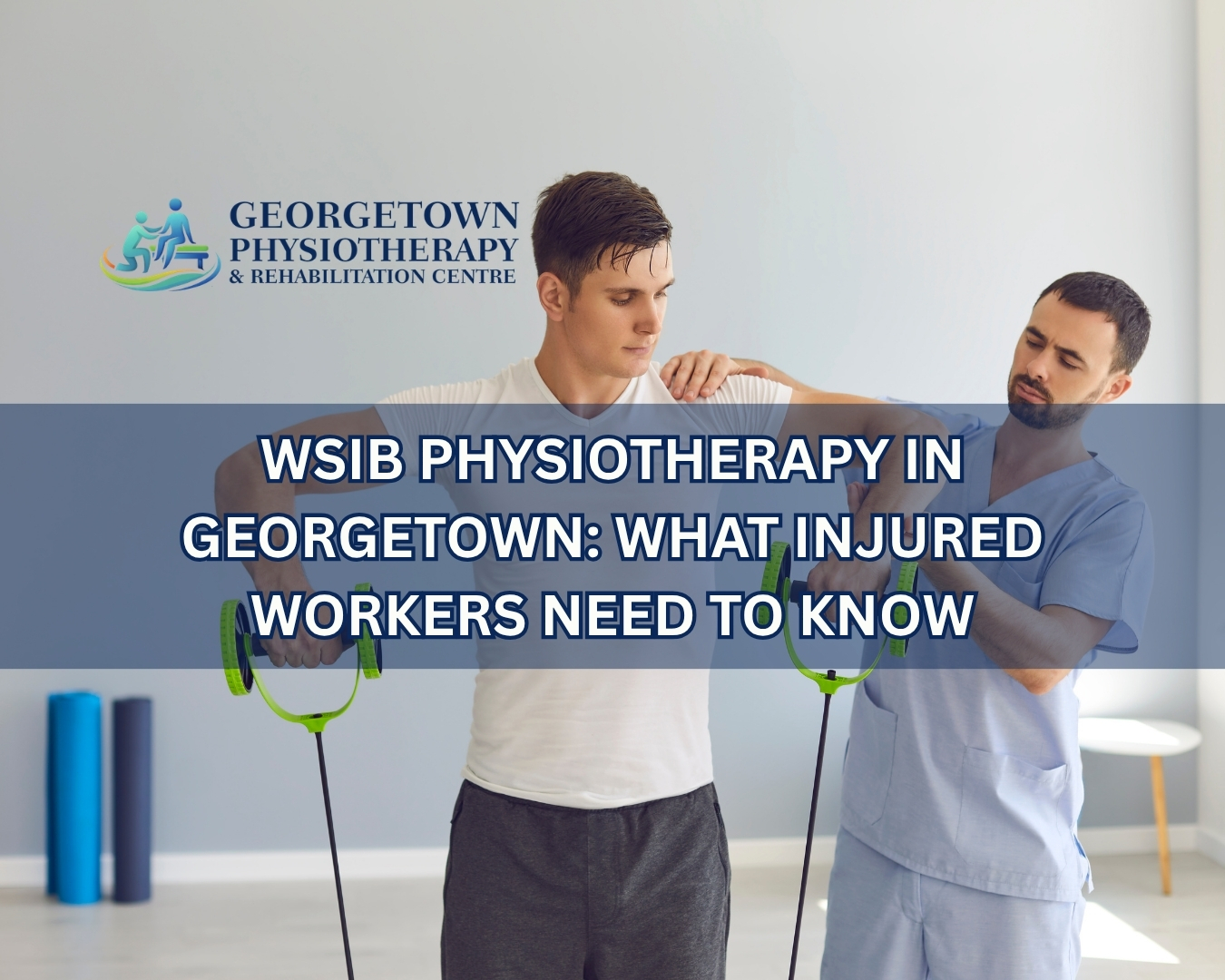
WSIB Physiotherapy in Georgetown: What Injured Workers Need to Know
Workplace injuries can happen suddenly and affect every aspect of daily life. Whether caused by lifting heavy materials, repetitive movements, slips and falls, or physically demanding work conditions, injuries on the job can lead to pain, reduced mobility, lost income, and emotional stress.
For many injured workers in Ontario, returning to normal activities safely becomes the top priority after an accident. Fortunately, the Workplace Safety and Insurance Board (WSIB) provides support for workers recovering from job-related injuries and illnesses. WSIB may cover medical care, rehabilitation, wage-loss benefits, and physiotherapy treatments designed to help workers recover and safely return to work.
At Georgetown Physiotherapy & Rehabilitation Centre, injured workers receive personalized rehabilitation programs focused on pain relief, mobility improvement, and long-term recovery support.
What Is WSIB?
WSIB benefits may include:
- Physiotherapy treatment
- Health-care benefits
- Wage-loss support
- Return-to-work programs
- Rehabilitation services
- Support for permanent impairments
The goal of WSIB rehabilitation is to help injured workers recover safely while improving function and mobility.
What Types of Workplace Injuries Are Covered?
Many different workplace injuries may qualify for WSIB-supported physiotherapy and rehabilitation.
Common workplace injuries include:
- Lower back injuries
- Neck pain
- Repetitive strain injuries
- Shoulder injuries
- Knee injuries
- Muscle sprains and strains
- Slip-and-fall injuries
- Joint pain
- Tendon injuries
- Work-related chronic pain
Physically demanding jobs, office work, construction, warehouse work, healthcare roles, and repetitive movement occupations can all contribute to musculoskeletal injuries.
Why Physiotherapy Is Important After a Workplace Injury
Early treatment plays a major role in recovery outcomes. Physiotherapy helps reduce pain, improve mobility, restore strength, and support safe return-to-work plans.
WSIB-supported physiotherapy programs focus on:
- Pain management
- Injury rehabilitation
- Restoring flexibility
- Strength rebuilding
- Mobility improvement
- Posture correction
- Functional recovery
Ontario’s WSIB musculoskeletal care programs are specifically designed to help injured workers recover and safely return to work activities.
How WSIB Physiotherapy Works
The process for receiving WSIB physiotherapy typically involves several steps.
Report the Injury Immediately
Workers should report workplace injuries to their employer as soon as possible. Delaying injury reporting may affect the claim process.
Seek Medical Attention
After reporting the injury, workers should seek professional medical care. In Ontario, physiotherapists can directly assess and treat workplace injuries without requiring a doctor’s referral in many cases.
File a WSIB Claim
Workers generally complete a Worker’s Report of Injury or Disease (Form 6), while employers submit their own reporting documentation.
Begin Rehabilitation
Once treatment begins, physiotherapists assess the injury, create a personalized treatment plan, and communicate recovery progress to WSIB when required.
Benefits of WSIB Physiotherapy
Faster Recovery
Structured rehabilitation programs help injured workers recover more efficiently and safely.
Reduced Pain and Stiffness
Physiotherapy treatments help decrease inflammation, muscle tension, and joint stiffness.
Improved Mobility
Injuries often limit movement and flexibility. Rehabilitation exercises help restore normal physical function.
Safe Return to Work
WSIB physiotherapy focuses on functional recovery that helps workers safely return to job duties within their physical capabilities.
Prevention of Long-Term Complications
Early physiotherapy intervention may help prevent chronic pain and long-term mobility limitations.
Common Physiotherapy Treatments for Injured Workers
Treatment plans depend on the nature and severity of the injury.
Physiotherapy may include:
- Manual therapy
- Mobility exercises
- Stretching programs
- Strengthening exercises
- Soft tissue therapy
- Laser therapy
- Posture correction
- Functional rehabilitation
- Return-to-work conditioning
Each treatment program is tailored to the worker’s specific recovery needs.
WSIB Coverage for Physiotherapy
WSIB may cover approved physiotherapy services related to workplace injuries. Coverage generally includes medically necessary rehabilitation aimed at restoring physical function and supporting recovery.
In Ontario, physiotherapists participating in WSIB programs follow structured rehabilitation guidelines and reporting procedures.
Treatment duration may vary depending on the injury type, severity, and recovery progress.
Laser Therapy for Workplace Injuries
- Muscle strains
- Joint inflammation
- Tendon injuries
- Chronic pain
- Soft tissue healing
This non-invasive treatment uses light energy to stimulate recovery in damaged tissues.
Massage Therapy for Muscle Recovery
Workplace injuries often create muscle tightness and tension that can slow recovery. Massage therapy helps improve circulation, reduce stiffness, and relax tight muscles.
Massage therapy may help injured workers experiencing:
- Back pain
- Neck stiffness
- Muscle tension
- Stress-related discomfort
- Soft tissue soreness
Combining massage therapy with physiotherapy often improves overall rehabilitation results.
Chiropractic Care for Spinal Injuries
Some workplace injuries affect spinal alignment and joint mobility. Chiropractic care focuses on restoring movement and improving spinal function.
Chiropractic treatments may help reduce:
- Lower back pain
- Neck stiffness
- Joint discomfort
- Mobility limitations
- Postural imbalances
Integrated rehabilitation plans can provide more complete recovery support for injured workers.
What Injured Workers Should Know About Recovery
Recovery timelines vary depending on:
- Injury severity
- Age and physical condition
- Job demands
- Treatment consistency
- Early intervention
Following treatment recommendations, attending appointments regularly, and participating actively in rehabilitation exercises can improve recovery outcomes significantly.
When to Seek Professional Help
Workers should seek professional rehabilitation support if they experience:
- Persistent pain after a workplace injury
- Difficulty moving normally
- Muscle weakness
- Reduced mobility
- Ongoing stiffness
- Pain interfering with work duties
- Symptoms worsening over time
Early physiotherapy treatment often helps reduce long-term complications and improves recovery success.
Why Georgetown Residents Choose Georgetown Physiotherapy & Rehabilitation Centre
Patients across Georgetown trust Georgetown Physiotherapy & Rehabilitation Centre for personalized rehabilitation and injury recovery care.
The clinic offers services including:
Professional rehabilitation programs are designed to help injured workers reduce pain, improve strength, regain mobility, and safely return to daily activities.
Final Thoughts
Workplace injuries can affect both physical health and overall quality of life. However, with early treatment and proper rehabilitation support, many injured workers can recover safely and return to normal activities with greater confidence.
WSIB physiotherapy provides important support for Ontario workers recovering from job-related injuries. Personalized rehabilitation programs help reduce pain, improve movement, and support long-term recovery outcomes.
If you are experiencing pain or mobility problems after a workplace injury, professional physiotherapy care can help guide your recovery process safely and effectively.
Contact Information
Georgetown Physiotherapy & Rehabilitation Centre
333 Mountainview Rd S, Unit #2, Georgetown, ON L7G 5S5, Canada
Phone: +1 905 702 6633
Email: info@georgetownphysiotherapy.ca
Website: Georgetown Physiotherapy & Rehabilitation Centre Official Website